
co-presented by
ASSOCIATE SPONSORS
co-presented by


ASSOCIATE SPONSORS




Dear Reader,
The India Composite Purchasing Managers Index (PMI), which tracks month-on-month changes in the private sector of the economy, came in at a scorching 59 for February, up from a respectable 57.5 in January. The surge was led by the services sector PMI, which was at a torrid 59.4, up from 57.2 in January. A reading of above 50 signals expansion from the previous month.
The good news was amplified by prices charged for goods and services increasing at the weakest rate in 12 months, with weaker rates of inflation noticed in both manufacturing and services, according to the survey. That suggests core inflation pressures could be contained, in spite of strong growth.
That’s probably because some of the firms surveyed were unsure whether demand would be sustained and hence, they were wary of raising prices. S&P Global Market Intelligence’s Pollyanna de Lima said, “Hiring growth was also dampened by a lack of confidence in the business environment. The degree of optimism recorded in February was the lowest for seven months and below the historical trend as some companies doubted demand would remain this resilient.”
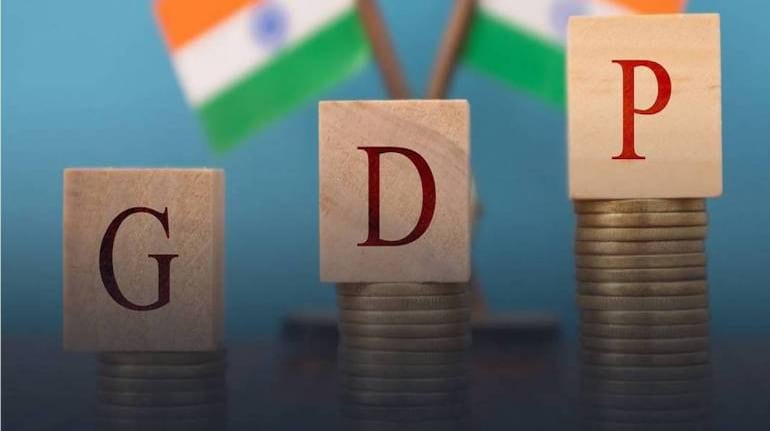
One reason for the subdued business sentiment was perhaps the GDP growth data, which came in at a lower-than-expected 4.4 percent in Q3. We had said that real private consumption growth was a mere 2.1 percent in Q3 and projected to fall further in Q4. We had also pointed out the divergence between the PMI numbers and the GDP data, attributing it to the K-shaped recovery.
A closer look, however, shows that the consumption data may not be as appalling as they appear at first glance. If we compare the data with that prevailing in the pre-COVID period, we get a more nuanced picture.
Private consumption in the December 2022 quarter, for instance, was 14.9 percent higher than in the December 2019 quarter, three years ago. In the September 2022 quarter, private consumption was higher by 15.2 percent than in the September 2019 quarter. And in the June 2022 quarter, private consumption was higher by 8.7 percent compared to the June 2019 quarter. As for the projections of private consumption for the current quarter, they are 13.4 percent higher than in the March 2020 quarter, which admittedly saw a slump in consumption in the last week because of the lockdown.
The picture that emerges then is of a sharp jump in consumption in the September 2022 quarter as all restrictions were eased and the fear of infection dissipated. There has been a slowdown in the rate of consumption growth in the December 2022 quarter, but it’s nowhere as bad as the year-on-year (yoy) data show. And the projection for the March 2023 quarter assumes that pent-up demand will dissipate even further.
Even more interesting is the long-term trend in real GDP growth. If we look at yoy GDP growth rates, they were 13.2 percent in the June 2022 quarter, 6.3 percent in the September quarter and 4.4 percent in the December 2022 quarter. But if you look at GDP growth compared to pre-COVID 2019, then the growth has been 5.4 percent in the three years to the June 2022 quarter, 9.3 percent in the three years to the September quarter and 11.5 percent in the December 2019 to December 2022 period. Considering three-year growth, therefore, gives an entirely different picture -- it shows growth gathering momentum while yoy growth shows a deceleration. Such are the wonders of base effects.
There is one caveat to this long-term analysis, though. GDP growth rates fell every quarter in 2019, reaching a mere 3.3 percent in the December 2019 quarter. The same holds true for private consumption growth. To that extent then, the three-year growth numbers show a progressively higher bias.
There is little doubt, though, that private consumption is slowing, though not to the alarming extent painted by the yoy GDP numbers. This article from our research colleagues pointed to the wide divergence between volume and value growth in FMCG companies, with a few discretionary categories in travel and tourism and high-end consumption still going strong. Another piece by Ravi Ananthanarayanan said, “NielsenIQ’s retail sales data show that volume growth declined in all four quarters in 2022, with the December quarter reporting a 0.3 percent decline.” As for the K-shaped recovery, Nitin Agarwal points out that while auto sales growth has been strong in February, it is the high-end bike manufacturers that have done well among 2-wheeler makers.
More support for the K-shaped economy thesis comes from the government’s Period Labour Force Survey data that show the percentage of workers employed in the informal sector has been going up. On the other hand, the upper crust has been spending with a vengeance, and this FT story, free to read for Moneycontrol Pro subscribers, points to the ‘relentless demand for travel’ boosting airlines.
Indeed, global growth is on the mend, with the PMI numbers from China indicating a sharp rebound. That “lays out a bullish scenario for industrial metals, especially if the commentary signals more support for China’s stressed real estate sector”, says this story. Most countries have shown a jump in their PMI readings in February.
The longer-term view mentioned above should be reassuring to Indian markets, especially since the Adani imbroglio has pulled down valuations. Indeed, we recommended several stocks this week based on their now undemanding valuations, including Endurance Tech, NTPC, Mas Financial and this weekly tactical pick.
A report by Jefferies analysts Mahesh Nandurkar and Abhinav Sinha points out that India’s underperformance compared to emerging markets has driven down valuations vis-à-vis MSCI EM and MSCI Asia ex-Japan back to the 10-year average and history shows that Indian equities typically outperform after such episodes.
I leave you with two vignettes from the PMI surveys. The first one, on the UK Composite PMI, says, “At 53.1 in February, up from 48.5 in January, the latest reading signalled the strongest increase in private sector output since June 2022.” The second one says, “The S&P Global Russia Composite PMI Output Index posted at 53.1 in February, up notably from 49.7 in January.”
Cheers,
Manas Chakravarty
Here are some of the stories and insights we published this week, apart from our technical picks in the equity, commodity and forex markets:
Stocks
Info Edge, Nelcast, Sundaram Finance, Vesuvius India, Radico Khaitan, Repco Home Finance, NCC, Axis’s buy of Citi’s consumer business, A quality chemical play
Markets
A tale of two IPO markets
Are retail investors losing faith?
BIS quarterly review: markets need to listen to central banks
Stock traders should watch out for the Ides of March
Why investors shouldn’t fear heat waves yet
Financial conditions in emerging markets ease
Companies and Industry
Agrochemicals and El Nino
Global Capability Centres and Indian tech
El Nino impact on sectors
Financial Times
Money mistakes even wealthy people make
Deluge of inflation data pushes US borrowing costs to 2007 levels
Record-breaking bond rally crumbles as inflation fears grip investors
Time for the US to upgrade its fight against inflation
Why Europe is the next battleground for investor control
Economy
Average earnings from employment in India
GDP growth analysis
Signals from shipping containers about the global economy
Geopolitics
G20 foreign ministers’ meet
The Eastern Window: India should play a more active role in Ukraine peace process
What lessons does the Ukraine war have for business
China’s deep game in the Middle East
Policy
Mergers have actually worked for Indian banks
Why the demographic dividend may slip out of our hands
As UPI goes global, what’s in it for Indian business?
SEBI’s radical proposals on shareholders’ agreements
Others
Personal Finance—how to tackle emergencies, Lithium’s environmental dilemma, Citibank’s failure, Startup Street: is reverse flipping going to trend?

Discover the latest Business News, Sensex, and Nifty updates. Obtain Personal Finance insights, tax queries, and expert opinions on Moneycontrol or download the Moneycontrol App to stay updated!
Find the best of Al News in one place, specially curated for you every weekend.
Stay on top of the latest tech trends and biggest startup news.