-
NavIC satellite disruption hits India’s ability to deploy system for military use
India's push to develop NavIC dates back to the Kargil War, when the United States declined to share GPS data
-

Lance Naik Albert Ekka, 1971: The soldier who cleared enemy bunkers under relentless fire at Gangasagar
In a brutal night assault in East Pakistan, one wounded soldier kept advancing through machine-gun fire, neutralising bunker after bunker and helping turn the battle in India’s favour.
-
Rajnath Singh chairs key security huddle on West Asia war, reviews India's preparedness
The meeting that was held in New Delhi was attended by all three service chiefs, Chief of Defence Staff and other key officials of the defence ministry.
-
Operation Cactus Lily, 1971: How coordinated tri-service planning helped India achieve a swift and decisive victory in East Pakistan
How India’s armed forces worked in sync across land, air and sea to compress a complex war into just 13 decisive days.
-
India’s mountain strike corps: A plan shaped as much by terrain as by politics
Raised after the shock of 1962, reworked after Doklam and Galwan, the mountain strike corps remains one of India’s most debated military ideas
-
India targets drone self-reliance by 2030, Rajnath Singh says
The push comes as unmanned systems increasingly shape modern warfare and supply chains face disruptions amid ongoing geopolitical tensions
-
Bridging the war: How combat engineers kept the 1971 advance from stalling at every river
In a theatre defined by water, it was the engineers who made speed possible and turned geography into an advantage.
-
Operation Ginger, 2011: The quiet cross-LoC strike few knew about
A covert Indian Army raid, carried out after a brutal border incident, stayed hidden for years before coming into public view.
-
The battle of Kalidhar ridge, 1948: A forgotten mountain fight in the first Kashmir war
Long before Kargil made the world familiar with high-altitude combat, Indian soldiers were already fighting brutal uphill battles in Jammu’s hills. The struggle for Kalidhar Ridge near Naushera in 1948 showed how decisive the heights could be in mountain warfare.
-
Operation Riddle, 1965: When India chose to take the war across the border
Facing pressure in Kashmir, India made a risky decision in September 1965 to open a new front across the Punjab border
-
‘Poor man’s cruise missiles’: How Iran’s drone doctrine may force India to rethink air defence
Iran’s drone doctrine is reshaping air defence economics globally. Here’s how it works, and why India must rethink its strategy.
-
The raising of the Special Frontier Force: India’s covert edge on the China front
A little-known unit built after 1962, the Special Frontier Force combines covert operations, high-altitude expertise and a unique Tibetan core to give India a quiet but critical advantage along the China border.
-
The defence of Akhnoor in 1965: The battle that could have changed Kashmir
A small bridge town in Jammu became the focus of a high-stakes offensive that shaped the course of the war.
-
The naval blockade of East Pakistan, 1971: How India cut off Pakistan’s eastern army from the sea
Control of the Bay of Bengal quietly became one of the decisive factors in the war that created Bangladesh.
-
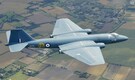
The Indian Air Force’s Canberra missions over Pakistan in the 1965 war
How Indian Air Force Canberra bombers carried out long-range night raids on Pakistani air bases and military targets during the 1965 war, striking deep inside enemy territory under the threat of radar interception and fighter attack.
-
Operation Falcon: The 1980s standoff that reshaped India’s defence of Arunachal Pradesh
A tense confrontation with China in 1986 forced India to act quickly in the eastern Himalayas. Operation Falcon marked a turning point in how India defended Arunachal Pradesh after the painful lessons of 1962.
-
The role of the BSF in the 1971 war – Border skirmishes before the full invasion
Months before the Indian Army launched its campaign, the Border Security Force was already facing gunfire along the frontier and quietly helping shape the Bangladesh liberation struggle.
-
The liberation of Jessore, 1971: Breaking Pakistan’s western defensive belt
In the first week of December 1971, Indian troops and Mukti Bahini fighters advanced toward Jessore, one of Pakistan’s strongest garrisons in southwestern East Pakistan. Within days the defensive line began to crumble, opening the road toward Khulna and signalling the rapid collapse of Pakistani control in the region
-
The Battle of Jassar, 1948: The fight that kept Kashmir’s supply road open
In the early months of the Kashmir war, a little-remembered clash near Jassar helped protect a vital route linking Indian forces in Jammu with the embattled Kashmir front.
-
Did American Tomahawk missile hit Iranian school that killed over 100 girls? New viral clip sparks buzz
A former US Navy official who worked on the Tomahawk program also told The Washington Post that the projectile's profile and wings appear consistent with the weapon.
-
1965 India-Pakistan war hero KG George dies in Kerala at 95
He was born in Kerala and died at his residence in Kottayam due to age-related factors, his grandson said
-
Operation Parakram, 2001-02: The longest full-scale mobilisation without war
After the 2001 attack on India’s Parliament, India moved hundreds of thousands of troops to the border with Pakistan. For nearly ten months the armies of two nuclear-armed countries stood ready for war that never came.
-
The Sumdorong Chu crisis, 1986-87: Military signalling on the China front
In 1986, a small valley north of Tawang suddenly became the focus of the most serious India–China military confrontation since 1962. For months, soldiers from both sides occupied opposing heights, watching each other across the mountains while diplomats worked quietly to prevent a war.
-
The role of the Indian Navy in the 1965 war – Why it remained largely inactive
The Indo-Pakistan War of 1965 saw fierce fighting on land and in the air, but the sea remained strangely quiet. The Indian Navy, despite having a capable fleet, was largely kept out of the conflict for political and strategic reasons.
-
When Indian Navy sank Pakistan's PNS Ghazi: US submarine strike on Iranian warship echoes 1971 war moment
-
US submarine USS Charlotte sank Iranian warship IRIS Dena off Sri Lanka: Report
The incident took place on March 4 in international waters about 40 nautical miles off Galle on Sri Lanka's southern coast
-
The defence of Ladakh in 1948: How Leh was held against overwhelming odds
Stranded behind closed passes and thinly defended, Leh survived because of a risky winter trek, a daring air landing, and a stubborn holding action until Zoji La was cracked open.
-
India seals Rs 5,083 crore defence boost with ALH Mk-III helicopters and Shtil missiles
In a parallel deal worth Rs 2,182 crore, the ministry signed a contract with JSC Rosoboronexport of the Russian Federation for the procurement of VL-Shtil surface-to-air missiles and associated missile holding frames
-
Capture of Cox’s Bazar in 1971 and why it mattered in the Bangladesh war
Striking the airfield, sealing the coast, and blocking the Arakan road helped shut the last door on Pakistan’s escape route in the southeast.
-
Operation Jackpot, 1971: The naval commandos who sank ships and strangled East Pakistan’s river lifelines
A covert swimmer-saboteur campaign trained in India and executed inside East Pakistan hit ports, ferries and cargo traffic hard months before the formal war began.
-
India, Iran and intelligence in the Cold War years
A look at how Cold War caution, regional geography and quiet information-sharing shaped India-Iran intelligence contacts without ever forming a formal alliance.
-
India’s 1998 nuclear tests: The military planning behind Pokhran II
Operation Shakti was remembered for the explosions, but it succeeded first as a logistics-and-deception operation run under tight civil-military control in the Rajasthan desert
-
India-Pakistan Siachen ceasefire (2003): Why the guns fell silent
After years of attrition on the Saltoro Ridge, a wider ceasefire decision finally travelled north to the glacier, changing daily life on the world’s highest battlefield even though the dispute itself stayed frozen
-
Operation Brasstacks (1986-87): The near-war with Pakistan
A desert exercise meant to test India’s modernised Army ended up triggering months of mobilisation, nuclear signalling, and a crisis both sides struggled to control
-
Tejas Mk-1 skips IAF's Vayu Shakti rehearsal, unlikely to feature in main event
HAL is currently working to meet delivery timelines for the Tejas Mark-1A variant amid delays linked to engines supplied by GE Aerospace
-
Life at 20,000 feet: What glacier warfare does to the human body
On the world’s highest battlefields, the enemy is often thin air, brutal cold, and a body that is always one mistake away from shutting down.
-
Psychological warfare in 1971: How leaflets, radio and surrender messaging helped break Pakistan’s will
Beyond tanks and infantry, the 1971 war also ran on words and signal, shaping morale, panic, and the choice to lay down arms.
-
Dassault Mirage 2000 in Kargil: Precision strikes in rarefied air
When conventional bombing failed in the Himalayas, the Mirage 2000 became known for its accuracy and performance in high altitudes and added credibility to India’s air campaign.
-
Point 4875 (1999): The cliff assault that sealed Dras
In the thin air above Dras, a near-vertical climb under fire broke a key Pakistani hold and helped secure the Srinagar–Leh highway
-
Operation Talwar (1999): The Indian Navy’s silent pressure on Pakistan
When Pakistani intrusions were detected along the Line of Control in May 1999, India’s military response initially centred on ground forces and the Indian Air Force’s Operation Safed Sagar. But within days, the Indian Navy began mobilising.
-
Emmanuel Macron signals more 'Made-in-India' content in Rafale
Citing the Rafale partnership as a template, he said he hoped similar collaboration would extend to submarines, noting that France has offered additional capabilities
-
Airbus ready to build two new European fighters if countries want
A German industrial source has floated the possibility of a partnership with Swedish aerospace and defence company Saab, with which Airbus management has a ‘good relationship.’
-
Battle of Burki, 1965: The canal-line fight that carried Indian troops to the edge of Lahore
How the September thrust towards the Ichhogil Canal turned Burki into one of the defining clashes of the western front.
-
Chawinda 1965: How a small Punjabi town became a tank battlefield
Chawinda became the centre of gravity for a huge armoured contest as Pakistan chose to concentrate its armour to stop India’s thrust in the Sialkot sector.
-
Amber Enterprises: Does the broad-based earnings revival mean the worst is over?
The outlook for the contract manufacturer is bright as its business diversification strategy is working out
-
Saltoro Ridge battles (1987): Bana Post and the fight for dominance
At nearly 22,000 feet on a wall of ice and rock, a small team of Indian soldiers climbed into a blizzard and changed the balance on the Siachen Glacier.
-
World staring at n- armageddon? US says will match alleged Chinese low-yield nuclear tests
New START, the last treaty between the United States and Russia that limited deployment of nuclear warheads, expired this month as US President Donald Trump called for a new agreement that also includes China
-
'Pakistan was finished': Expert cites 'ample proof' IAF struck Kirana Hills nuclear site during Operation Sindoor
Aviation historian Tom Cooper described the alleged attack as a calibrated message designed to demonstrate capability without triggering catastrophic escalation
-
Rafale deal: India seeks up to 50% local content from France, pushes for engine production and overhaul at home
The discussions between Singh and his French counterpart, Catherine Vautrin, covered a wide spectrum of defence and security cooperation, including co-development and co-production initiatives
-
Battle of Phillora, 1965: The tank fight that punched a hole in Pakistan’s Sialkot armour
In four violent days on the Sialkot front, Indian armour forced Pakistan’s elite tank formations to fall back, setting up the bigger showdown that followed at Chawinda.