






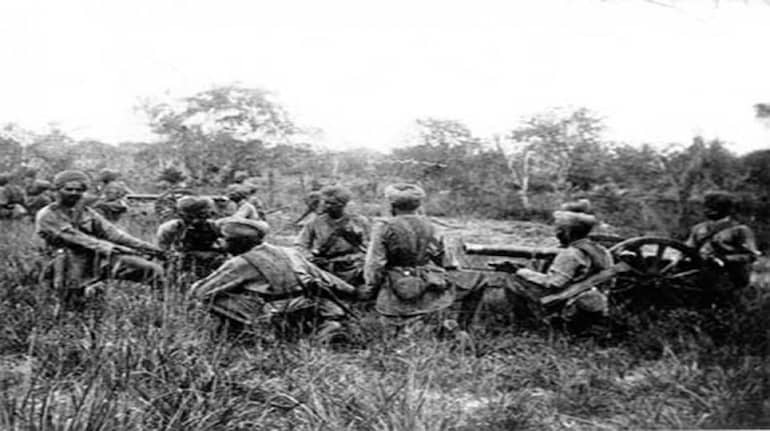
The fighting between India and Pakistan dragged on through most of 1948. Battles broke out across several sectors, from the hills around Jammu to the valleys and passes deeper inside Kashmir. Neither side managed a decisive breakthrough, and the front slowly hardened as both armies dug into the ground they held.
Eventually the United Nations stepped in to mediate. After months of diplomatic pressure and negotiations, a ceasefire came into effect on January 1, 1949. The line where the fighting stopped effectively divided the region between Indian and Pakistani control. Over time that ceasefire boundary came to be known as the Line of Control, a frontier that still defines the conflict today.
The war that erupted after partition
The Kashmir conflict began in October 1947 when tribal fighters from Pakistan’s North-West Frontier Province entered the princely state. Facing the advance, the state’s ruler, Maharaja Hari Singh, signed the Instrument of Accession to India on October 26, 1947. Indian troops were flown into Srinagar almost immediately.
As reported in accounts of the war by outlets such as The Hindu and The Indian Express, the fighting soon expanded beyond the tribal invasion and developed into a conventional conflict between India and Pakistan. The front stretched across the Kashmir Valley, the Jammu plains and the high mountains of Ladakh.
Both sides were trying to capture strategic ground while also interfering with each other’s supply routes.
Why Jassar drew attention
The Jammu region formed the logistical base for much of India’s early military effort in Kashmir. From here, troops and equipment moved north toward the contested areas.
The problem was that the road network was limited. In several places, a single road or bridge carried the burden of supplying entire formations. If that route was threatened, the impact could ripple across the battlefield.
The area around Jassar lay near such a corridor. Pakistani-backed forces were attempting to disrupt communication lines across multiple sectors, and the Jassar area became one of the places where this pressure was felt.
Indian commanders understood that allowing enemy forces to interfere with the route could weaken their ability to sustain the campaign.
The fighting around the sector
Indian units were deployed to secure the Jassar sector and prevent infiltration toward the road network. The fighting that followed did not unfold as one large battle but as a series of tense engagements across the area.
Troops had to patrol the surrounding ground, guard the routes and push back attempts to threaten the corridor. The terrain made every movement difficult. Narrow roads, uneven ground and river crossings meant that much of the fighting took place in small groups rather than large formations.
Despite these challenges, Indian forces managed to stabilise the area and secure the communication line.
A war shaped by logistics
Historians often note that the first Kashmir war was shaped by geography. Control of mountain passes, bridges and narrow roads frequently mattered more than dramatic battlefield advances.
Many well-known engagements of the war, such as the defence of Srinagar and the fighting around key passes in the north, were closely tied to protecting supply routes. The struggle near Jassar belonged to the same pattern.
The objective was simple: ensure that the flow of troops and supplies into Kashmir continued.
The quiet importance of the battle
The Battle of Jassar rarely appears in popular accounts of the Kashmir war. It was not a dramatic offensive or a large set-piece engagement. But that does not mean it was unimportant.
What the fighting around Jassar really achieved was something simpler but essential. It kept the road open.
That road helped connect Indian forces in Jammu with the troops holding ground deeper in Kashmir. As long as the route remained secure, reinforcements, ammunition and supplies could continue moving forward. Without it, entire positions could have been left exposed.
In mountain warfare, that kind of logistical stability can mean everything. The clash near Jassar was one of those moments where holding a stretch of road quietly helped sustain the larger war effort.
Discover the latest Business News, Sensex, and Nifty updates. Obtain Personal Finance insights, tax queries, and expert opinions on Moneycontrol or download the Moneycontrol App to stay updated!
Find the best of Al News in one place, specially curated for you every weekend.
Stay on top of the latest tech trends and biggest startup news.




