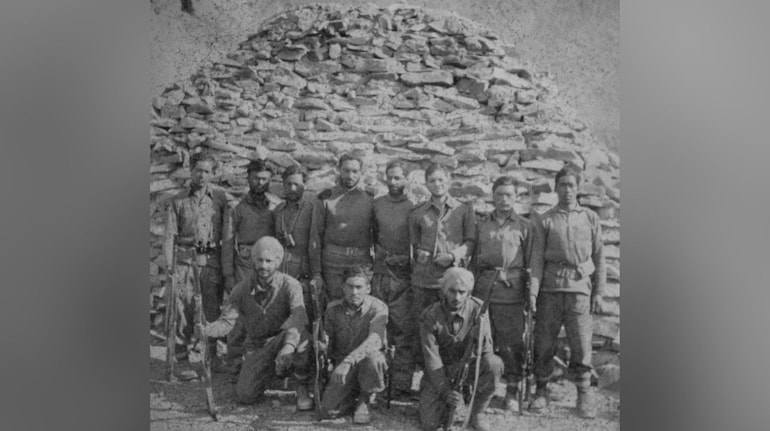

For years after the 1962 India-China war, the eastern Himalayas remained a sensitive frontier for India. The defeat had shaken the country deeply and exposed serious gaps in planning, logistics and military preparedness.
Chinese troops had made rapid progress across challenging mountain terrain in Arunachal Pradesh, which was then known as the North-East Frontier Agency. Indian forces were pushed back and had to abandon several forward areas, including the strategically important town of Tawang.
For a long period, it event influenced Indian thought. Military planners believed that in a future conflict it might again be necessary to fall back to defensive positions further south rather than trying to hold the forward areas near the border.
But over time that thinking began to change. By the late 1970s and early 1980s, many in the Indian Army felt that the country needed a more confident approach along the frontier. Simply yielding ground in a crisis, they argued, could encourage further pressure from China.
The idea slowly gained ground that India needed to defend Arunachal Pradesh more firmly and occupy stronger positions closer to the disputed boundary.
Trouble in a remote valley
In 1986, in a secluded valley north of Tawang known as Sumdorong Chu, India was compelled to take action. Indian patrols had been visiting the area in the summer for a number of years. The valley itself was mostly occupied by local grazers and was peaceful. However, Indian patrols observed a change in 1986. Chinese forces had entered the valley ahead of schedule and started erecting makeshift buildings. From India's perspective, this appeared to be an attempt to create a long-term presence in what it saw as its side of the McMahon Line, the British-drawn border that China disputes but India acknowledges. Despite diplomatic protests from New Delhi, the Chinese presence persisted. The scenario was worrying to Indian military planners. It was still easy to recall how tensions had risen up to the conflict in 1962.
A bold decision
At the time, the Indian Army was led by General K. Sundarji, a chief known for bold thinking and a willingness to take calculated risks.
Instead of withdrawing or waiting for negotiations to resolve the issue, Sundarji approved a plan to quickly reinforce the area and occupy the high ground overlooking the valley.
The operation was called Operation Falcon.
The Indian Army started deploying troops into the area north of Tawang in October 1986. Due to the extraordinarily challenging terrain, soldiers and equipment were airlifted into front positions using helicopters.
Indian troops then moved onto ridgelines such as Hathung La, which overlooked the Sumdorong Chu valley. From those heights they could observe Chinese movements below and hold a strong defensive advantage.
The move caught the Chinese by surprise. Rather than backing away, India had suddenly established a commanding position above the disputed area.
A tense standoff begins
The situation quickly turned into a tense military standoff.
Both sides began reinforcing their positions along the border. Troops were moved forward, and supply lines were strengthened.
At one point tens of thousands of soldiers were believed to be deployed in the wider region. India relied heavily on helicopters and transport aircraft to keep forward posts supplied.
The Indian Army also carried out large exercises in the eastern sector. One of these, known as Operation Chequerboard, demonstrated that India could rapidly move troops across the region if the crisis escalated.
China, too, increased its military presence in Tibet.
For several months the two armies faced each other across the mountains in what became the most serious confrontation between India and China since the 1962 war.
Politics and diplomacy
A political decision made in New Delhi further compounded the impasse. Arunachal Pradesh was awarded full sovereignty by India in 1986. China, which claims a large portion of the area as "South Tibet," vehemently opposed the action. Both sides recognized the dangers of allowing the issue to escalate into open combat despite the growing tension. Discreetly, diplomatic channels reopened. To minimize miscommunication, military leaders from both sides met at the border. Over time, efforts started to move from military signalling to political discourse.
The Rajiv Gandhi breakthrough
When Prime Minister Rajiv Gandhi visited Beijing in 1988, the genuine breakthrough occurred. For the first time in over thirty years, an Indian prime minister travelled to China. After decades of animosity, the tour assisted in mending ties between the two nations.
Both parties committed to starting a formal discussion about the boundary dispute and looking at methods to avoid future conflicts. The Sumdorong Chu region experienced a slow cooling of the atmosphere.
Why Operation Falcon mattered
Although there was no combat during Operation Falcon, it had a significant effect on India's defence strategy. For starters, it demonstrated that India was ready to maintain forward positions and defend its territory with greater assertiveness than it had previously done. The army's ability to function in the Himalayas had increased, as seen by the quick airlift of soldiers to the high mountains. It also emphasized how crucial air mobility and supplies are to mountain warfare. Helicopters were essential for transporting troops and supplies to far-off locations. Most significantly, the crisis forced China and India to reach accords aimed at maintaining peace along the border. In order to avoid confrontations along the Line of Actual Control, the two nations negotiated confidence-building agreements in the early 1990s.
A quiet but important chapter
Seldom does Operation Falcon come up in talks about India's military past. However, it had a significant influence on how India currently handles its border with China. It was the turning point in India's decision to stop giving up ground in Arunachal Pradesh. Rather, it opted to maintain its superior position and show that it was prepared to protect its boundary. There are still times of tension along the border with China more than thirty years later. However, the events of 1986 demonstrated that diplomacy and a strong military posture can occasionally stop a situation from escalating into another conflict.
Discover the latest Business News, Sensex, and Nifty updates. Obtain Personal Finance insights, tax queries, and expert opinions on Moneycontrol or download the Moneycontrol App to stay updated!





Find the best of Al News in one place, specially curated for you every weekend.
Stay on top of the latest tech trends and biggest startup news.