






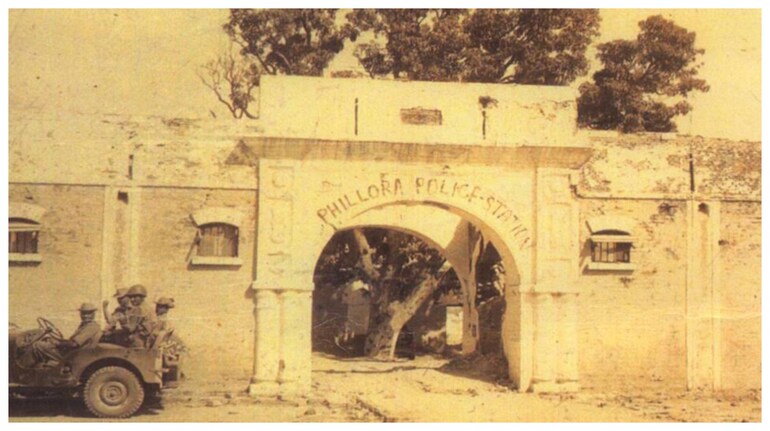
When people talk about tank battles of the 1965 India Pakistan war, they usually jump straight to Asal Uttar and the “Patton Nagar” story. But on the other side of Punjab, around the villages and cane fields of the Sialkot sector, another armour clash was unfolding at the same time. Phillora became one of the decisive points of that campaign, not because it ended the war, but because it cracked Pakistan’s armoured screen and pushed the fight deeper toward Chawinda.
Why Phillora mattered in the Sialkot sector
By early September 1965, India had opened multiple fronts to relieve pressure elsewhere and to force Pakistan to spread its forces. The Sialkot sector was crucial because it offered space for large armoured manoeuvre, and it sat on routes that could threaten key Pakistani positions if Indian armour broke through. In simple terms, if you can push armour through Sialkot’s corridor, you make the other side nervous very quickly.
Pakistan, anticipating an armoured thrust, had deployed major tank strength in the region, including its 6 Armoured Division, equipped with US supplied Patton tanks that were seen as technologically superior to much of India’s older inventory.
The build up: Two armoured forces collide
The fighting around Phillora sits inside the larger Indian offensive in the Sialkot sector led by I Corps and anchored by India’s 1 Armoured Division. The operational idea was to hit Pakistani armour, seize ground, and keep the initiative long enough to force Pakistan into defensive counter moves rather than chosen offensives elsewhere.
Phillora itself became a magnet for armour because it was tied to road links and local terrain that allowed tanks to move, regroup and counter attack. Once both sides committed armour, it stopped being a tidy “objective on a map” and turned into a grinding, close range tank fight.
What happened at Phillora
Accounts vary in the fine detail, but the broad shape is consistent. Indian armour pushed toward Phillora and met fierce Pakistani resistance and counter attacks. Tanks fought at short distances, often in confusing conditions, with infantry and artillery trying to keep up and keep lanes open. The fighting stretched across several days in early- to mid-September.
One reason Phillora stands out is the scale of armour involved. An Indian Express report recalling the battle described a massive concentration of tanks in a relatively tight area, the sort of “steel on steel” engagement that is rare outside world war era battlefields.
By 12 September, Indian accounts describe the battle ending with Pakistani forces pulling back and regrouping toward Chawinda. The official National War Memorial narration also frames Phillora as an important Indian victory that forced that retreat and set the stage for the next phase of the Sialkot fighting.
The men and units behind the headlines
No Phillora story is complete without Lieutenant Colonel A. B. Tarapore and Poona Horse, because his leadership became one of the defining Indian narratives from the armoured battles of 1965. Tarapore was later awarded the Param Vir Chakra, with the effective date listed as 11 September 1965.
The official gallantry record captures the essence of why he is remembered: he continued to lead and fight while wounded, keeping his regiment in action under heavy armour pressure.
Other armoured units also played key roles across the Sialkot battles, with Indian armour repeatedly trying to outfight Pakistani Pattons through tactics, gunnery, crew skill and sheer persistence. The popular framing often makes it sound like “old tanks beat new tanks”. The truth is more practical. Training, leadership, recovery under fire, and who can keep formations coherent after the first shock often matter as much as the tank’s brochure specs.
Losses, claims, and why numbers are messy
Like most wars, 1965 produced competing claims. Even today, you will see different figures for tank losses at Phillora and across the broader Sialkot front. Some sources cite heavy Pakistani tank losses at Phillora, while Pakistan’s own admissions and later accounts sometimes give lower numbers.
Two things can be true at once. First, Phillora did cause serious attrition and forced a tactical pullback. Second, exact counts are hard because “destroyed,” “disabled,” “recovered,” and “written off later” are not the same thing, and both sides had incentives to shape the narrative.
A safer way to read Phillora is through outcome. The immediate operational outcome was Pakistani withdrawal and regrouping toward Chawinda, which is consistent across Indian institutional memory and multiple reporting accounts.
How Phillora fed into Chawinda
Phillora did not end the Sialkot offensive. It shifted it.
Once Pakistan’s forward armoured screen around Phillora was pushed back, the battlefront moved toward Chawinda, where Pakistan concentrated defence and where the Indian thrust eventually met its limit. That sequencing matters. Phillora is the fight that opens the door, while Chawinda is where the door gets slammed.
This is also why Phillora is remembered inside the Indian Army’s regimental histories and commemorations, including anniversary events that frame it as a decisive armoured victory in that phase of the war.
The bigger meaning of Phillora in 1965
At a strategic level, the 1965 war ended without India or Pakistan getting the clean, unmistakable victory each side wanted. But within that broader ambiguity, battles like Phillora had clarity. India proved it could take on Pakistan’s best armour in a head on contest and force it to give ground.
Phillora also exposed a hard truth about armoured warfare. A tank’s reputation does not win battles by itself. Terrain, crew proficiency, leadership under stress, and the ability to keep attacking after losses often decide more than model numbers and manufacturer claims.
Discover the latest Business News, Sensex, and Nifty updates. Obtain Personal Finance insights, tax queries, and expert opinions on Moneycontrol or download the Moneycontrol App to stay updated!
Find the best of Al News in one place, specially curated for you every weekend.
Stay on top of the latest tech trends and biggest startup news.




