-
World Aquatic Animal Day 2026: Endangered for 30 years, can India save the Ganges River Dolphin?
On World Aquatic Animal Day 2026, discover why the Ganges River Dolphin remains endangered after 30 years and whether India can still save it.
-

Comet MAPS approaches the Sun on April 4: Will it be visible in India?
A rare sungrazing comet, Comet C/2026 A1 (MAPS), is making a dramatic close approach to the Sun on 4 April. If it survives the intense heat, skywatchers in India may get a chance to spot it shortly after sunset in the western sky.
-
NASA confirms a car-sized asteroid "2025 GL" will zoom past Earth on April 3— Scientists revealed the details
A 14-foot car-sized asteroid, 2025 GL, will safely pass Earth on April 3, 2026, at 2.33 million miles away. NASA tracks its orbit and confirms no threat.
-
Artemis II astronauts rocket toward moon after spending day around Earth
The so-called translunar ignition came 25 hours after liftoff, putting the three Americans and a Canadian on course for a lunar fly-around early next week.
-
NASA gives Artemis crew green light to head towards Moon
The 5min and 49sec burn is scheduled to take place at 7:49 pm Eastern Time (2349 GMT) and send the astronauts out of Earth orbit to begin the three-day voyage toward the Moon, the first since 1972.
-
Artemis II Launch captured from commercial flight by passengers over Florida! Watch this
Passengers on a commercial flight captured NASA’s Artemis II launch over Florida. The 10-day lunar mission will take astronauts around the Moon. The spacecraft lifted off from Kennedy Space Center at Launch Complex 39B at 6:37 PM EDT.
-
Just 3 centimetres, this female frog hides a rare secret — How this newly discovered species amazed science?
Just 3 cm long, this newly discovered female frog from Peru carries its eggs in a special pouch-like structure on her back. The eggs remain protected there until they develop into tiny froglets.
-
Mercury to light up the pre-dawn sky on April 3; Here's when, where and how to watch this celestial event
Mercury reaches its greatest western elongation on April 3, 2026. The planet is expected to shine at around magnitude +0.4 making it visible before sunrise. Know the timing and best countries to watch this early morning event.
-
Is Jonathan, the world’s oldest tortoise, "dead"? Here's what happened to the animal
Jonathan is once again trending on social media after fake death rumours sparked confusion online. Officials have confirmed that the world’s oldest known tortoise is alive and well on St Helena.
-
12,000-year-old mystery object found in North America— Could this be the world’s oldest dice?
Scientists may have discovered the world’s oldest dice dating back 12,000 years, revealing how ancient humans may have understood chance and probability. Researchers suggest the objects may have been used in rituals or divination practices.
-
Why did Crete’s sky suddenly turn blood red? Scientists uncover the mystery behind "red skies"
Scientists explain why Crete’s skies turned red after Saharan dust swept across the Mediterranean. The dust can affect air quality and health of a particular region. But this dust carries such particles that help enrich the soil when settled down.
-
Mediterranean at Risk: UNESCO warns of hidden Tsunami threat over the next 30 years
UNESCO warns the Mediterranean Sea faces a significant tsunami risk in the next 30 years due to tectonic activity, earthquakes, and underwater landslides. Scientists flagged coastal cities in France, Italy, Greece and Spain are especially vulnerable.
-
Two massive asteroids to zoom past Earth today at dangerous speeds, NASA alerts
Two near-Earth asteroids, 2026 FD4 and 2026 FQ8, will safely fly past Earth on April 2, 2026. NASA and other space agencies constantly watch near-Earth objects (NEOs).
-
Artemis II successfully launches: NASA’s 322-feet-tall rocket with four astronauts heads towards Moon
NASA’s Artemis II has launched, carrying four astronauts around the Moon. From Earth orbit tests to deep-space challenges, the mission sets the stage for future lunar exploration. What will they discover?
-
Artemis II Spacecraft: Everything about 322-foot-tall rocket carrying four astronauts around the Moon
NASA’s Artemis II is poised for a historic lunar journey, testing Orion’s systems and pioneering deep-space exploration with a diverse crew. How will this mission shape humanity’s next Moon landing?
-
Artemis 2 launch highlights: NASA’s Moon rocket successfully lifted off from Kennedy Space Center
NASA’s Artemis II is set for liftoff with a crewed Moon flyby, testing deep space systems over 10 days, but with high risks and no landing, what happens next remains compelling.
-
53 years of Project Tiger: Started in 1973, but it was "Machali" that gave Project Tiger its biggest boost!
As India marks 53 years of Project Tiger on April 1 every year. Machli’s legacy continues to define one of the world’s biggest conservation success stories, with 3,682 wild tigers today.
-
Why NASA’s Artemis II mission astronauts won’t land on the Moon surface
NASA’s Artemis II will send astronauts around the Moon without landing, testing critical systems, but with high risks and no rescue options, the mission reveals how challenging future lunar landings remain.
-
"I am really proud": First Black astronaut Ed Dwight sees his dream fly with Artemis II astronaut Victor Glover
Denied his own Moon chance decades ago, Ed Dwight now sees history through Victor Glover’s upcoming Artemis II mission, but the journey also raises deeper questions about race, recognition, and legacy.
-
NASA's Perseverance rover finds a "strange rock" on Mars—Could it hold signs of ancient life?
Scientists studying Mars rocks have found a metal-rich mineral. This raised news question about whether the red planet once had conditions suitable for ancient life.
-
Artemis II astronauts will vanish behind the Moon for 41 minutes—NASA reveals why Earth will lose contact
NASA’s Artemis II astronauts will lose contact with Earth for 41 minutes as Orion moves behind the Moon. Here’s why the Moon blocks the signal and what the crew will do during the mission.
-
Not one, but 4 King Cobras? India study on snake species drops a shocker after 188 years
Scientists led by P. Gowri Shankar has revealed that the king cobra is not one species. He found that there are four distinct species of Cobra snakes across Asia. This discovery shows the power of modern genetics.
-
NASA tracks two huge asteroids zooming past Earth today—Here’s what you should know
On April 1, two relatively big asteroids will zip past Earth. One about the size of a bus at 2.8 million miles away and another the size of a small airplane at over 4.5 million miles away. NASA confirms these asteroids is no danger to Earth.
-
IIT Bombay scientist turns fallen leaves into cooking fuel—How will this reduce LPG use?
IIT Bombay scientists have created a patented system that turns dry leaves into cooking fuel, offering India a scalable, science-driven alternative to LPG. This project was led by Professor Sanjay M. Mahajani in 2014.
-
30-minute space bursts leave Indian scientists stunned—What’s really hiding in this Galaxy?
Scientists at Raman Research Institute have decoded mysterious repeating X-ray flares from deep space, suggesting the source may hide a stellar-mass black hole. New study estimates its mass to be around 7 times that of the Sun.
-
'Pink Moon' to rise this weekend: How and when to see April’s full moon
April’s Pink Moon will peak with a rare sunset alignment and a close pass by a bright star, but why this full moon shapes Easter and stands out in 2026 is worth exploring.
-
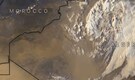
A 1,500-km dust wall is sweeping across the Sahara Desert— and it's visible from space
A giant dust storm stretching over 1,500 kilometres is sweeping across the Sahara, with satellite images revealing one of the most dramatic haboob events seen in recent times. Recent NASA-backed research found that heavy Saharan dust can significantly reduce sunlight reaching solar panels.
-
Alive but already dying? Scientists warn Australia’s ‘Zombie Tree’ may be doomed forever
A rare Australian rainforest tree nicknamed the “zombie tree” could vanish within decades after a fungal disease stopped it from flowering and reproducing. Researchers said 17 plant species affected by myrtle rust could face extinction.
-
NASA Artemis II launch: When and where to watch crewed Moon mission lift off live
NASA’s Artemis II will send humans near the Moon after decades, testing vital systems on a 10-day journey, but what makes this mission crucial for future lunar landings remains intriguing.
-
If not landing on the Moon, what will Artemis II astronauts do? NASA’s 10-Day Moon mission explained!
NASA’s Artemis II will not land on the Moon, but it will send four astronauts on a historic 10-day flyby mission around the Moon and back to Earth. Artemis II focus on testing critical systems with humans in deep space.
-
Artemis II launch tomorrow: How Artemis I’s 1.4 million-mile journey shapes NASA’s crewed Moon mission
NASA’s Artemis missions are stepping closer to sending humans around the Moon again, but what did Artemis I reveal, and how will Artemis II change space travel forever?
-
Is meteor activity increasing on Earth? Another bright fireball seen across US and Canada
A bright fireball streaked across the skies of Washington, Oregon and British Columbia, with over 100 witnesses reporting the meteor as it raced at 39,000 mph before burning up.
-
Colorado opens North America’s largest wildlife overpass – Could this save wildlife?
Colorado unveils the largest wildlife overpass in North America, designed to prevent accidents, protect elk, bears, and mountain lions and reconnect habitats. Research indicates that quality wildlife crossings with good fencing, can reduce accidents by up to 90%.
-
NASA confirms triple asteroid will zoom past Earth on March 31– What it means for Earth?
On March 31, 2026, Earth will witness three near-Earth asteroid flybys. From a 36-foot bus-sized rock to a 72-foot airplane-sized giant, NASA is keeping a track on these three asteroids, thought they possess no danger to Earth.
-
April 2026 Night Sky: 8 must-see celestial events lighting up the night; Here's what to know
Night skies will light up in April 2026. Do not miss 8 spectacular night sky events, including meteors, comets, planets and the iconic Pink Moon. Find out what to watch, when, and where.
-
The 800-metre "Beaver Dam" in Canada was first spotted from space in 2007; What is this exactly?
A giant 800-metre beaver dam in Canada’s Wood Buffalo National Park was first spotted from space in 2007. Scientists later solved the mystery of how beavers could build such a massive structure, often compared to the Burj Khalifa.
-
Meet Blub: The Goldfish who drove a car for 1 minute and set a World Record in Italy—But how?
Blub, an Italian goldfish, has set a Guinness World Record by driving a motion-sensing vehicle over 40 feet in one minute in Milan. This record was made on a TV show in Milan. The experiment was designed to demonstrate the possibilities of motion-sensing technology.
-
From 40°C heat to storm alerts: IMD confirms 'no heatwave' in April but rain to hit north India
The IMD has confirmed that there will be no heatwave in April, while periodic rainfall is likely across central and northern India. Rain and storms are expected in these Indian states.
-
Countdown begins: Few days for NASA’s Artemis II mission to launch on April 1; Here's what to know
NASA is all set for its Artemis II mission that will launch on 1st April 2026. 4 Astronauts will be sent to space as this is the first crewed Moon mission since Apollo 17. The launch window opens at 6:24 PM EDT from Kennedy Space Center’s Launch.
-
Eggs in Black Colour? What Japanese scientists found 6,200 metres below Pacific amazed everyone!
Mysterious black egg-like cocoons 6,200 metres beneath the Pacific Ocean by Japanese scientists. When opened, scientists found 3 to 7 developing flatworm embryos inside each capsule. Dr Keiichi Kakui of Hokkaido University directed the study.
-
NASA alerts as 2 heavy asteroids will make a close encounter with Earth today; Is there any real danger?
Two asteroids, 2026 FN1 and 2026 FA4, will pass Earth on March 30 at safe distances. NASA confirms no threat, highlighting ongoing efforts to track near-Earth objects.
-
NASA has officially confirmed that Voyager 1 is at "One Light-Day" distance, stunning scientists
NASA scientists confirmed that Voyager 1 is now one light-day from Earth, with signals taking almost 24 hours, as the 1977 spacecraft continues sending data from interstellar space using just 4 watts of power.
-
'Mukhi', India’s first-born Cheetah in turns 3—A turning point for Project Cheetah
Mukhi, India’s first cheetah born in the wild under Project Cheetah, turns 3 and becomes a mother. This marks a major milestone in the country’s wildlife conservation efforts. Mukhi’s growth is being seen as a major boost for Madhya Pradesh.
-
Was this India’s first smart water system? The 1,000-year-old mystery of Anangpur Dam in Delhi
Anangpur Dam, built over 1,000 years ago in the Aravallis, reveals how ancient India mastered water science, using natural systems to store and manage rainwater sustainably.
-
Meet Aiden Andrews: How did a 16-year-old find a rare 6-Inch 'megalodon tooth' in Florida? Watch Here
A 16-year-old diver discovered a rare 6-inch megalodon tooth off Florida’s coast, offering scientists new insights into the prehistoric ocean’s most powerful predator. The tooth is in the custody of the Aiden Andrews who found the tooth.
-
Blood-Red sky in Australia turns day into dusk—What really happened behind the viral “Eerie” phenomenon?
A viral video of a blood-red sky in Australia sparked fear online. Scientists explained it is a natural dust storm effect where particles scatter sunlight, turning the sky eerie crimson.
-
First Sighting in 10 Years: Great Indian Bustard mother and chick seen in Gujarat, sparks concern
A Great Indian Bustard chick born in Gujarat was seen after 10 years. The mother-chick duo was wandering in the field of Gujarat. Scientists use a “jumpstart” approach to revive one of India’s rarest birds.
-
A huge 110-foot asteroid is making a close approach to Earth today, NASA confirms
A fast-moving 2026 FF6 will pass close to Earth, but if it poses no danger, why are scientists still tracking it so closely?
-
Asteroid Alert! A massive 83-foot and fast-moving space rock to come near Earth today, NASA confirms
A fast-moving asteroid, 2026 FR2, will pass Earth at a “close” distance, but if it poses no danger, why are scientists still watching it so carefully?
-
‘Denim-diaper’-wearing kangaroo goes rogue after dramatic escape from Wisconsin petting zoo
A runaway kangaroo in Wisconsin and a missing capybara in the UK spark searches, but where are they hiding and how long can they stay unseen?