






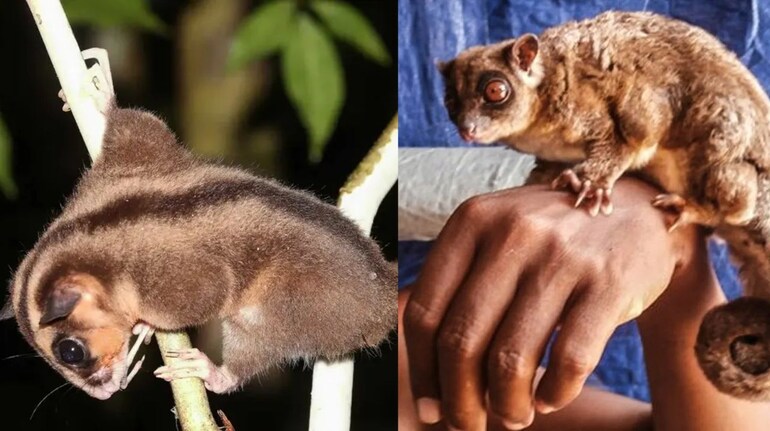

Scientists have rediscovered two rare marsupial species in the remote forests of New Guinea. They were long believed to have gone extinct around 6,000 years ago. The remarkable finding highlights how little scientists still know about wildlife in some of the world’s most unexplored ecosystems.
The animals were documented during field surveys in the dense rainforests of the Vogelkop Peninsula. This is also known as the Bird’s Head region, in Indonesia’s Papua province.
Rare creatures hidden in remote rainforests
The Vogelkop Peninsula is considered one of the most biologically diverse regions on Earth. During these surveys, scientists obtained photographs and field observations that confirmed the presence of the two marsupials.
The discovery of the ring-tailed glider (Tous ayamaruensis) and the pygmy long-fingered possum (Dactylonax kambuayai) suggests that the forests of New Guinea may still harbour species previously thought to be lost to history.
Scientists say the finding reinforces the idea that remote tropical ecosystems often contain hidden biodiversity that remains undocumented.
Distinctive animals with unusual adaptations
The ring-tailed glider is a tree-dwelling marsupial related to gliding possums found in Australia. As its name suggests, it has a strong and grasping tail that helps it navigate through forest canopies.
Meanwhile, the pygmy long-fingered possum is a tiny mammal about the size of a small rodent. It possesses an unusually long finger that it uses to extract insect larvae from inside tree bark.
Indigenous knowledge played a key role
Local Indigenous communities were instrumental in helping scientists locate the animals. The forests guided researchers through the difficult terrain and shared traditional knowledge about wildlife in the region.
In some communities, the ring-tailed glider is considered culturally significant and is not hunted. This may have helped the species survive despite environmental pressures.
Conservation concerns remain
Although the rediscovery is encouraging, scientists warn that the animals may still face significant threats. Rapid deforestation, logging and habitat fragmentation are increasing across parts of New Guinea.
Researchers say further studies are needed to determine the population sizes of these marsupials and to assess their conservation status.
The discovery also highlights the importance of protecting New Guinea’s forests. Scientists believe New Guinea may still hold many species yet to be discovered.
Discover the latest Business News, Sensex, and Nifty updates. Obtain Personal Finance insights, tax queries, and expert opinions on Moneycontrol or download the Moneycontrol App to stay updated!
Find the best of Al News in one place, specially curated for you every weekend.
Stay on top of the latest tech trends and biggest startup news.





