






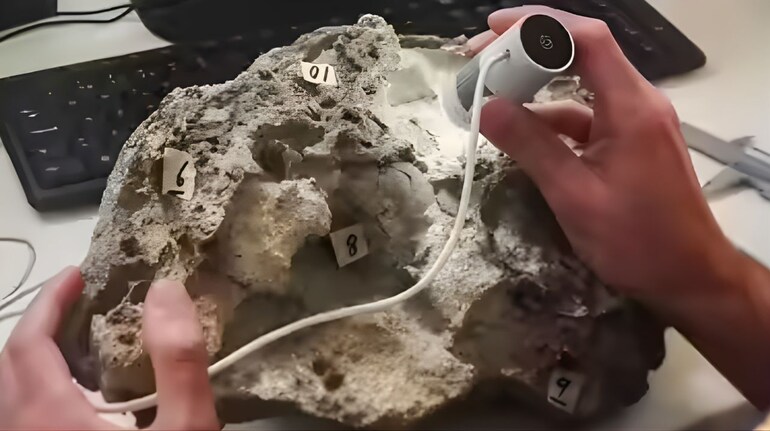

In a remarkable find, paleontologists have uncovered a 150-million-year-old dinosaur egg nest on the cliffs of Santa Cruz Beach. This discovery offers an unprecedented glimpse into dinosaur reproductive behaviour during the Upper Jurassic period. The eggs were preserved exactly where they were laid, a rarity in the fossil record.
The fossils remained intact over millions of years, providing scientists with a unique snapshot of nesting arrangements and behaviours that are usually lost to time.
What Did Researchers Find?
The research team discovered a nest containing around ten dinosaur eggs. These eggs were preserved inside sandstone rock along the cliffs near Santa Cruz Beach on Portugal’s Atlantic coast.
The eggs appear to have remained in the same place where they were originally laid roughly 150 million years ago. Finding dinosaur eggs is rare, but discovering an entire nest preserved together is even more unusual.
In What Condition were the Eggs found?
The eggs were found embedded within sandstone in a 3D arrangement, suggesting that they were buried quickly after being laid. These eggs were remarkably intact and organised in their original layout.
Each egg measures roughly 5 centimetres in diameter. This indicate that they likely belonged to a relatively small species of dinosaur.
How Did Scientists Discover the Eggs?
The fossil nest was discovered during geological investigations of the sandstone cliffs in the Torres Vedras region. Researchers noticed unusual and rounded structures embedded in the rock. This rock turned out to be fossilised eggs.
Scientists began examining the fossils using high-resolution CT scanning, allowing them to look inside the eggs without damaging them. The entire block of sandstone containing the eggs was carefully removed and transported to a laboratory.
This “virtual excavation” may reveal whether embryonic dinosaur remains are still preserved inside.
Which Dinosaur Did These Eggs Belong To?
Based on their size, shape and shell structure, researchers believe the eggs likely belonged to a small carnivorous theropod dinosaur.
Theropods were a group of two-legged predators that included famous dinosaurs such as Velociraptor and Tyrannosaurus rex, though those species lived much later.
Does This Discovery Change Science?
This discovery does not rewrite dinosaur evolution, it provides valuable new evidence about dinosaur reproduction and nesting habits during the Jurassic. Intact nests are extremely rare in the fossil record, especially from this time period.
Because these eggs remained preserved in their original position for millions of years, the nest offers scientists a unique opportunity to study how dinosaurs reproduced and cared for their offspring.
Discover the latest Business News, Sensex, and Nifty updates. Obtain Personal Finance insights, tax queries, and expert opinions on Moneycontrol or download the Moneycontrol App to stay updated!
Find the best of Al News in one place, specially curated for you every weekend.
Stay on top of the latest tech trends and biggest startup news.





