






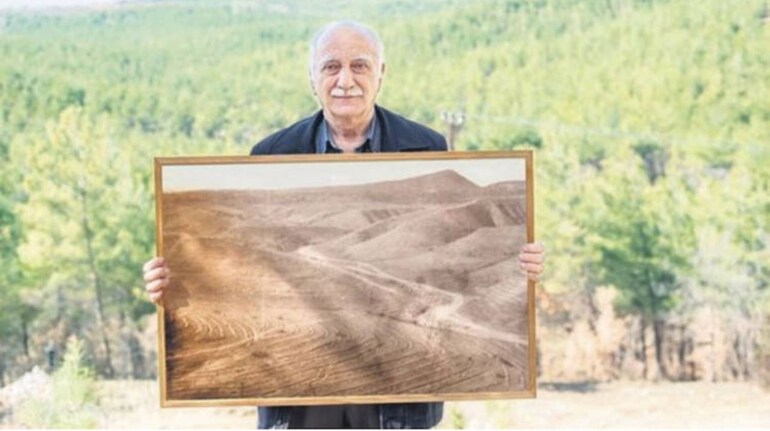

A quiet environmental transformation in northern Turkey has drawn attention worldwide after decades of steady reforestation work. The effort was led by retired forestry official Hikmet Kaya in the district of Boyabat within Sinop Province. Once barren hills in the region now stand covered with dense forest. The transformation followed years of planting and protecting millions of trees.
Hikmet Kaya leads reforestation effort across Boyabat hills
Kaya began his forestry career during the late 1970s. He served as operations chief in Boyabat district. The region then faced severe soil erosion and deforestation. Hillsides had lost vegetation after decades of environmental damage. Flooding and land degradation became frequent concerns for communities. As a forestry officer, Kaya received responsibility for restoring state land.
Rather than launching short campaigns, he pursued long plans. The programme expanded forest cover slowly but steadily. Teams planted millions of saplings across degraded slopes. Careful selection of species suited the local climate conditions. Pine and other hardy trees formed the core plantings. Protection of young trees proved as important as planting.
Over roughly two decades the project gained remarkable scale. Nearly 30 million saplings were planted across surrounding hills. The effort restored around 10,000 hectares of degraded terrain. Barren land slowly turned into continuous forest areas. Soil stability improved as tree roots strengthened the landscape.
Millions of trees transform barren land into forest
Kaya often described the transformation as deeply personal. He said the forest represented his greatest professional achievement. The project demanded patience, dedication and strong belief. Trees grow slowly and require protection during early years. Kaya reminded teams that visible results arrive gradually.
Local villagers played a crucial role in the project. Community members helped plant and protect young saplings. Their labour and experience improved survival rates considerably. Workers returned each season to repair damage and expand forests. Early failures occurred but teams continued planting every year.
The growing forest delivered clear environmental benefits. Tree cover reduced erosion and helped soil retain moisture. Wildlife gradually returned to areas once stripped of vegetation. Mature forests also capture carbon from the atmosphere. Scientists say such restoration contributes to climate mitigation.
Photograph highlights decades of environmental restoration
Public attention arrived long after the planting work finished. A photograph showing Kaya holding an older landscape image circulated widely online. The earlier picture revealed bare hills covered with rocks. Behind him now stood dense forests covering the same slopes. The contrast clearly showed decades of patient restoration.
Kaya now lives quietly after retirement from forestry service. He often speaks modestly about the project’s success. The forest, he says, belongs to future generations. Seeing trees where dust once covered hills brings satisfaction. His story demonstrates how persistence can reshape entire landscapes.

Discover the latest Business News, Sensex, and Nifty updates. Obtain Personal Finance insights, tax queries, and expert opinions on Moneycontrol or download the Moneycontrol App to stay updated!
Find the best of Al News in one place, specially curated for you every weekend.
Stay on top of the latest tech trends and biggest startup news.





