






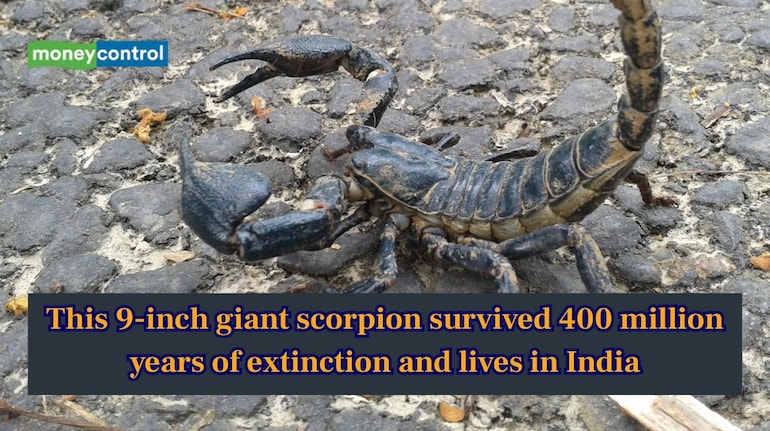

The world’s largest scorpion, the Gigantometrus swammerdami, can grow to nearly nine inches (around 23cm) in length. It is roughly the size of a dinner plate from claw to tail. Native to India’s tropical forests, this formidable-looking arachnid outweighs most of its relatives and is the heavyweight champion of the scorpion world.
Despite its imposing size and thick, armour-like exoskeleton, researchers say the species is surprisingly docile compared with many smaller, more venomous scorpions.
Large pincers over lethal venom
Unlike highly venomous desert species, Gigantometrus swammerdami relies more on its powerful pincers than its sting. Its venom is considered relatively mild and is not typically life-threatening to humans. When threatened, it is more likely to raise its claws in defence than lash out with its tail.
The scorpion’s robust build reflects its hunting strategy. Rather than depending on potent toxins, it subdues prey using sheer strength. This trait is common among larger scorpion species, where physical force replaces chemical potency.
A nocturnal hunter with hidden senses
Found mainly in forested regions of India, the giant forest scorpion is nocturnal, emerging after dark to hunt. Like all scorpions, it has poor eyesight.
Instead, it detects vibrations through fine sensory hairs and specialised comb-like organs known as pectines, located on its underside. Under ultraviolet light, its exoskeleton emits an eerie blue-green glow.
Courtship dance and conservation concerns
Mating involves an intricate courtship ritual often described as a “dance”, during which the male and female grasp each other’s pincers and move in synchrony before reproduction occurs.
However, the species faces pressures beyond the forest floor. Its impressive size has made it a target in the illegal exotic pet trade.
Ancient Survivors: Predators Older Than the Dinosaurs
Fossil evidence shows that their ancestors emerged more than 400 million years ago, during the Silurian period. This makes them among the planet’s earliest land-dwelling predators.
Modern giants like Gigantometrus swammerdami are distant descendants of those ancient arachnids. While today’s species are smaller than some prehistoric sea scorpions that once reached over two metres in length
Discover the latest Business News, Sensex, and Nifty updates. Obtain Personal Finance insights, tax queries, and expert opinions on Moneycontrol or download the Moneycontrol App to stay updated!
Find the best of Al News in one place, specially curated for you every weekend.
Stay on top of the latest tech trends and biggest startup news.





