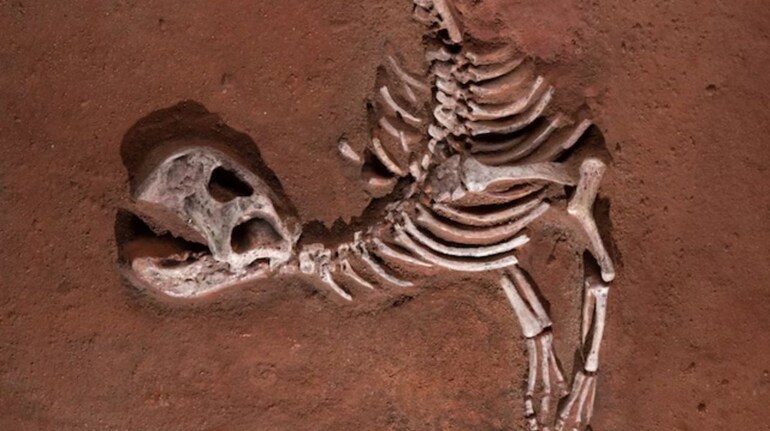

Scientists have identified the fossil of an extremely small dinosaur. This roughly the size of a water bottle that lived alongside giant prehistoric predators nearly 95 million years ago. The species, named Alnashetri cerropoliciensis, was discovered in fossil-rich deposits in Patagonia, Argentina.
Researchers believe the tiny predator is one of the smallest dinosaurs ever discovered. The finding highlights how ancient ecosystems were not dominated solely by massive dinosaurs but also included surprisingly small hunters.
A tiny predator from the age of giants
The fossil was found in the La Buitrera fossil site, a famous paleontological region in northern Patagonia known for its diverse prehistoric fauna. Despite its miniature size, Alnashetri belonged to the theropod group of dinosaurs.
This is same broad family that includes formidable predators such as Velociraptor and Tyrannosaurus rex.
Diet of this tiny dinosaur
The tiny predator measured around 70 centimetres in length and weighed only about 0.7 kilograms. This makes it one of the smallest dinosaurs ever discovered. Scientists believe the tiny dinosaur likely hunted insects, small reptiles, early mammals and other small animals. Its teeth resembled miniature versions of the sharp teeth seen in larger theropods.
A rare and well-preserved fossil
What makes the discovery particularly valuable is the excellent preservation of the skeleton. Researchers recovered a nearly complete set of bones, which allowed them to study the dinosaur’s anatomy in detail.
Scientists believe the animal died at around four years of age and was quickly buried by shifting sand dunes, protecting the skeleton from scavengers and erosion.
Why this discovery matters?
Small dinosaurs are rarely preserved in the fossil record because their delicate bones break down more easily over millions of years.
Because of this, many prehistoric ecosystems appear dominated by large dinosaurs in fossils, even though smaller animals likely played equally important ecological roles.
Discoveries like Alnashetri cerropoliciensis help scientists better understand the true diversity of dinosaur life during the Cretaceous Period.
Discover the latest Business News, Sensex, and Nifty updates. Obtain Personal Finance insights, tax queries, and expert opinions on Moneycontrol or download the Moneycontrol App to stay updated!
Find the best of Al News in one place, specially curated for you every weekend.
Stay on top of the latest tech trends and biggest startup news.