






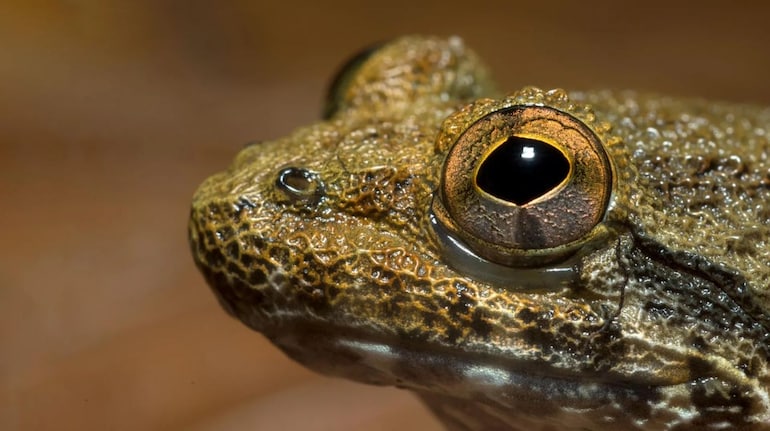

A new genetic study has revealed that the so-called “fanged frogs” living in the rainforests of Borneo may represent several hidden species rather than a single one. Researchers from Michigan State University analysed the DNA of frogs.
It belongs to genus Limnonectes, a group of amphibians known for tooth-like structures on their lower jaws. The advanced genetic testing suggests that multiple distinct species may exist within what scientists once believed to be a single species group.
What did scientists find?
Researchers from Michigan State University have uncovered soemthing unsual about fanged frogs. They found that these frogs are part of the genus Limnonectes, that may actually consist of multiple hidden species rather than a single one.
These frogs are found in the rainforests of Borneo. The frogs appear physically very similar. The scientists suspected more diversity might exist beneath the surface.
Are these fanged frogs rare species?
Yes, fanged frogs are considered rare and ecologically important amphibians. Their populations are limited to certain rainforest habitats, making them vulnerable to deforestation, climate change and human activity.
Identifying hidden species is essential to understand which groups may need urgent conservation measures.
How did scientists get to know about the species?
Scientists collected frog samples across different regions of Borneo. Later, they conducted extensive genetic testing. They analysed more than 13,000 genes from these amphibians to study their evolutionary relationships.
Traditional methods based only on physical characteristics were not enough. So, scientists used advanced DNA techniques provided a clearer view of their hidden diversity.
What did DNA of Fanged Frogs revealed?
The DNA analysis revealed that the previously assumed single species of fanged frog likely consists of 6 to 7 genetically distinct species. Researchers also found evidence of gene flow, indicating occasional interbreeding between some populations.
This shows that species formation is a gradual and complex process, making the identification of new species challenging.
A deeper look into Earth’s hidden biodiversity
The study highlights how much hidden biodiversity remains on our planet, especially in tropical ecosystems like Borneo’s rainforests. Many species that appear similar may actually be cryptic species, only distinguishable through genetic analysis.
Understanding these hidden species is critical for biodiversity conservation. It gives scientists a better understanding of evolutionary processes and ecosystem health.
Discover the latest Business News, Sensex, and Nifty updates. Obtain Personal Finance insights, tax queries, and expert opinions on Moneycontrol or download the Moneycontrol App to stay updated!
Find the best of Al News in one place, specially curated for you every weekend.
Stay on top of the latest tech trends and biggest startup news.





