-
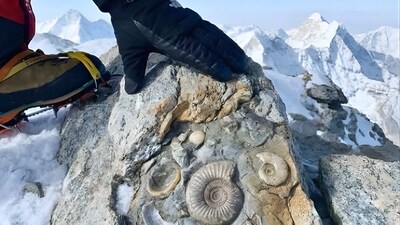
Marine Fossils on Everest? Sea fossils found on Mount Everest reveal 500-million-year ocean mystery
Marine fossils discovered near the summit of Mount Everest reveal that the world’s highest mountain was once part of an ancient ocean floor before tectonic collisions lifted the Himalayas.
-

So, they are alive! Two “extinct” marsupials thought lost for 6,000 years found alive in New Guinea
Scientists have rediscovered two marsupial species in New Guinea that were believed to have gone extinct 6,000 years ago. The finding highlights the hidden biodiversity of remote rainforests.
-
She hunted with a Limp: India's famous ‘Langdi’ the tigress dies at 18 in Pench Tiger Reserve
The famous tigress “Langdi” from Pench Tiger Reserve has died at 18 due to old age. Known for her limp, she survived in the wild and raised 10 cubs.
-
Why did scientists planted Sunflowers? These yellow flowers can remove toxic metals and radiation from soil
Sunflowers can remove toxic metals and radioactive elements from soil through phytoremediation, a plant-based cleanup process used after disasters like Chernobyl and Fukushima to reduce environmental contamination.
-
A23a, the world’s oldest giant iceberg is finally breaking apart after 40 years in South Atlantic
The massive Antarctic iceberg A23a, once twice the size of London, is rapidly breaking apart in the South Atlantic after drifting for nearly 40 years since separating from Antarctica.
-
2,000 baby jellyfish into space? NASA’s 1991 experiment revealed how biology works in microgravity
NASA once sent over 2,000 jellyfish into space to study how gravity affects biological development. The unusual experiment revealed surprising insights about balance, microgravity and life beyond Earth.
-
No "Showers" in Space: Shubhanshu Shukla explains how astronauts stay clean on the International Space Station
Astronaut Shubhanshu Shukla revealed how astronauts stay clean aboard the International Space Station, where showers are impossible and water is carefully recycled to survive in microgravity.
-
What is "Avataar"? India’s first drone that can fly in the air and dive underwater
India has unveiled Avataar, its first amphibious drone capable of flying in the air and diving underwater. The innovation could transform maritime surveillance, coastal security and underwater infrastructure inspection.
-
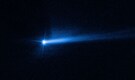
NASA’s DART mission changed an asteroid system’s orbit around the Sun — Scientists revealed how!
NASA’s DART mission not only altered Dimorphos’ orbit around Didymos but also slightly shifted the asteroid system’s path around the Sun, marking a milestone in planetary defence technology.
-
India Heatwave 2026: IMD warns of rising temperatures as India records unusual heatwave of 8°C above normal
India is witnessing an unusually early heatwave as temperatures rise 4–8°C above normal across several regions. IMD warns of heatwave conditions while rain may bring temporary relief.
-
Meet Hikmet Kaya: The Turkish forester who planted 30 million trees and turned 25,000 acres of barren hills into a forest
A once barren landscape in Turkey has become a vast forest after decades of effort. Hikmet Kaya helped plant 30 million trees there. How did this quiet mission transform thousands of acres?
-
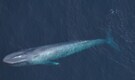
Massive Endangered blue whales spotted near Massachusetts coast, surprising scientists and sparking new concerns
Rare sightings of massive Blue whale near the Massachusetts coast have surprised scientists. Researchers suspect shifting ocean conditions may be changing whale migration routes, raising new questions about the future of these ocean giants.
-
A fast-moving, 93-foot airplane-sized asteroid is making a close approach to Earth today, NASA warns
A fast-moving asteroid called 2026 DG7 is set to pass relatively close to Earth. Scientists say it poses no danger, but the event is drawing attention from space agencies worldwide. Why?
-
James Webb’s mysterious ‘little red dots’ may be the Universe’s first giant stars moments before collapsing into black holes
Mysterious “little red dots” spotted by the James Webb Space Telescope may not hide black holes after all. Scientists now suspect they could be gigantic early stars, raising new questions about the universe’s first cosmic giants.
-
A violent solar superstorm hit Mars and the planet’s atmosphere reacted in a way scientists didn’t expect
A powerful 2024 solar superstorm struck Mars, flooding its atmosphere with electrons and briefly disrupting orbiting spacecraft. Scientists reveal surprising new details about the event and what it could mean for future missions.
-
What happens to "knots" in 4D Space? Mathematics professor in Sydney revealed a mind-bending answer
Mathematicians say knots cannot exist in four-dimensional space because the extra dimension allows a rope to move around itself and untangle, revealing surprising insights into geometry and topology.
-
Best "superbloom" since 2016: Death Valley sees its biggest wildflower bloom after 10 years
Death Valley National Park is witnessing its best wildflower superbloom since 2016, as rare desert flowers blanket the landscape after winter rains transformed one of Earth’s driest places.
-
Mystifying Cloud: A glowing “Jellyfish” cloud appears over Florida after SpaceX Starlink launch
A SpaceX Falcon 9 launch carrying Starlink satellites created a glowing “space jellyfish” cloud over Florida as sunlight illuminated the rocket’s expanding exhaust plume high in the atmosphere.
-
Lose 1-hour of sleep on March 8! Clocks ‘spring forward’ as Daylight Saving Time returns across North America
Daylight Saving Time begins March 8, 2026, in the U.S. and Canada as clocks move forward one hour, bringing longer evenings but reviving debates about the system.
-
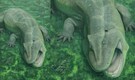
Meet Tanyka: A 275-million-year-old ‘weirdo’ with sideways teeth found in Brazil, considered as living fossil
Scientists discovered a bizarre 275-million-year-old aquatic animal with sideways teeth and a twisted jaw in Brazil, revealing a rare “living fossil” lineage from the Permian period.
-
Fireball over Canada: Bolide meteor explodes over British Columbia, shakes up the night sky | WATCH
A bright meteor streaked across the sky above Vancouver, lighting up the night and producing loud booms as it exploded in Earth’s atmosphere, startling residents across British Columbia.
-
Seeing "bats" around your house at night? Experts say it could mean something surprising about your garden
Bats flying around your home at night may signal a healthy ecosystem. These nocturnal mammals help control insects, pollinate plants and play a crucial role in maintaining biodiversity.
-
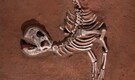
Water-bottle sized Dinosaur: Scientists identify one of the world’s smallest dinosaurs from 95-million-years ago
Scientists have discovered a water-bottle sized dinosaur fossil in Patagonia, Argentina. The tiny predator lived 95 million years ago and ranks among the smallest dinosaurs ever identified.
-
Are birds getting smaller worldwide? Indigenous memory reveals an 80-year shift
A global study reveals birds are becoming smaller as large species disappear, with Indigenous communities’ ecological memory providing one of the longest records of environmental change.
-
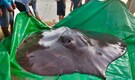
World’s largest freshwater Stingray weighing up to 300-kg discovered in Mekong River, stunned scientists
A giant 300-kg freshwater stingray discovered in Cambodia’s Mekong River has become the largest freshwater fish ever recorded, highlighting the river’s biodiversity and urgent conservation concerns.
-
Back to Earth: NASA and JAXA's spacecraft HTV‑X1 is all set to depart from ISS on 6th March
After completing its primary mission, HTV‑X1 cargo spacecraft, which is operated by JAXA and NASA, will depart the ISS on 6 March 2026. Live coverage will begin at 11:45 a.m. EST.
-
Who is Omar Yaghi? This Nobel Prize winner made a device that pulls 1,000 litres of water from desert Air
Nobel-winning chemist Omar Yaghi has created a solar-powered, off-grid device that produces 1,000 litres of drinking water daily from desert air even in extremely low humidity.
-
NASA decoded first data collected by Europa Clipper — Here's what it reveals about Jupiter’s ocean moon
NASA’s Europa Clipper has begun decoding its first data, revealing fresh clues about Europa’s hidden ocean, radiation environment and the moon’s potential to support life.
-
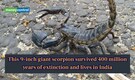
World's Largest Scorpion: This 9-inch giant survived 400-million-years of extinction
The world’s largest scorpion, Gigantometrus swammerdami, can grow nearly nine inches long. Native to India, this ancient predator predates dinosaurs and is surprisingly mild-mannered.
-
Space Debris may be polluting Earth’s atmosphere, experts warn — ISRO steps up monitoring
ISRO’s Project NETRA aims to track space debris, prevent satellite collisions and protect India’s space assets as concerns grow over Kessler Syndrome and atmospheric pollution from re-entering satellites.
-
Don’t miss Chandra Grahan 2026: Exact lunar eclipse start and end times for Delhi, Mumbai, Bengaluru, Hyderabad and more cities
On 3 March 2026, a rare Blood Moon will briefly rise over India during Chandra Grahan. With just 15 minutes of visibility in many cities, will you catch the fading lunar spectacle?
-
World Wildlife Day 2026: PM Modi calls for stronger action to protect India’s wild heritage
India marked World Wildlife Day 2026 with new species discoveries as PM Modi reaffirmed commitment to conservation and sustainable habitats.
-
Space-travelled female mouse gives birth to 28 pups after return from China’s Tiangong Station
A mouse that travelled aboard China’s Tiangong Space Station has produced 28 pups after returning to Earth, offering rare insight into how microgravity may influence mammalian reproduction.
-
World's Largest Coral Colony: At just 15 metres deep, a mother-daughter duo found biggest coral colony ever recorded in Australia
A mother–daughter dive on the Great Barrier Reef led to the discovery of a 34-metre-wide coral colony, now confirmed as the largest documented single coral structure on Earth.
-
Chandra Grahan 2026 highlights: Lunar eclipse ends, spectacular Blood Moon was visible worldwide
Tonight, 03 March 2026, India watches the last total lunar eclipse until 2029 as the Moon turns deep red. Why is this brief Blood Moon such a rare and unmissable spectacle?
-
Discovered in 1930, Pluto still has not finished one full orbit— And it won’t until year 2178
Pluto has not completed a single orbit since its 1930 discovery. With a 248-year journey around the Sun, the dwarf planet will finish its first full circuit in 2178.
-
507-year-old sea survivor: An ocean quahog, named “Ming” is the oldest non-colonial animal ever recorded!
A 507-year-old Atlantic clam stunned scientists with its extraordinary lifespan. Known as Ming, this ocean quahog offers rare insight into ageing, marine survival and centuries of climate history.
-
Meet Fancy: 37-year-old mare from Virginia breaks record of world's oldest living horse
Fancy, a 37-year-old Arabian mare from Virginia, has been named the world’s oldest living horse. Experts say her age is exceptionally rare even for this long-lived breed.
-
Last Total Lunar Eclipse until 2029, arrives tomorrow — Why you should not miss this night sky event?
March 3 brings a rare crimson Moon as Earth’s shadow engulfs it completely. This total lunar eclipse would not return until 2029.
-
If humans vanished overnight, would "Octopuses" seize control of Earth? Oxford professor names a shocking successor!
If humans vanished overnight, which species would dominate Earth? An Oxford biologist suggests octopuses possess intelligence, adaptability and evolutionary traits that could reshape life’s future.
-
Total Lunar Eclipse 2026 Tomorrow: Several Indian cities set to witness the rare celestial event
A lunar eclipse will be visible across several Indian cities tomorrow, offering skywatchers a rare chance to see the Moon pass through Earth’s shadow without special viewing equipment. Major cities including Delhi, Mumbai and Kolkata may witness it.
-
Tamil Nadu turns into "bird haven" as hundreds of Glossy Ibises and Terns gathered in Panjappur Lake | WATCH
Panjappur Lake in Tiruchirappalli has become a seasonal refuge for Glossy Ibises and terns, drawing large evening congregations and highlighting the wetland’s ecological importance in Tamil Nadu.
-
What Lies Beneath Raichur? GSD leads high-tech Heliborne mineral search in Karnataka
A heliborne mineral survey in Raichur, led by GSD, is scanning for rare earth deposits until April 2026, using advanced airborne technology to map critical underground resources.
-
Think the Sahara is biggest? Antarctica is the world's largest desert that stretches across14-million-square kilometres
Antarctica, not the Sahara, is the world’s largest desert. Defined by extreme dryness rather than heat, this frozen continent stretches across 14 million square kilometres of ice.
-
Total lunar eclipse 2026 tomorrow: How and Where to watch the blood moon live
A rare Total Lunar Eclipse on 3 March 2026 will turn the Moon deep red. Discover exact timings, global visibility details, and how to watch it live worldwide.
-
800,000 alerts in a single night: Rubin Observatory launched real-time alerts to track asteroids and exploding stars
The Rubin Observatory’s real-time alert system can detect millions of cosmic events per night, from asteroids to supernovae, helping astronomers track threats and study dynamic celestial phenomena.
-
Astronomers stunned as black hole "ID830" grows 13 times faster than expected cosmic speed limit, defying physics
Astronomers have discovered a black hole in the early universe, ID830, growing thirteen times faster than physics allows, defying cosmic rules and challenging long-held theories of black hole evolution.
-
A rare “twinned” rainbow dazzled Florida Sky! Five arcs spotted at sunrise in this multi-rainbow event
Rare “twinned” rainbows appeared over Pensacola, Florida, with up to five arcs visible. Scientists explain how unique droplet sizes created the stunning display.
-
Meet the “Underwater Panda”: This sea creature found 20 metres below Japan’s Coast, is barely an inch long
Divers off Japan’s coast discovered a panda-like marine creature at 10–20 metres deep. Scientists later confirmed it as a newly identified sea squirt species. Scientists are still trying to find out more about this unique species.
-
Total Lunar Eclipse on March 3: Blood Moon and Sunrise to appear at the same time— How is this possible?
A rare total lunar eclipse on March 3 could coincide with sunrise, creating a stunning “blood moon” illusion visible in select regions of the world. This is one of the impossible sky events for observers to witness a red “blood moon” and the rising Sun simultaneously.