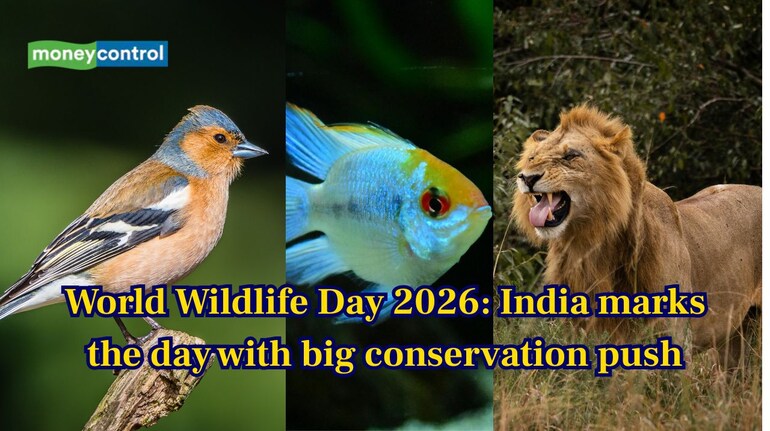

India marked World Wildlife Day with a clear message. Protect nature. Protect the future. Prime Minister Narendra Modi stated “incredible faunal diversity” that sustains our ecosystems. PM Modi promised India that it will stay committed to conservation. To sustainable practices and protecting habitats. He underlined the need to safeguard habitats to ensure wildlife “continues to thrive” amid growing environmental pressures.
World Wildlife Day on March 3
Observed annually on March 3 under the aegis of the United Nations, World Wildlife Day raises awareness about the world’s wild animals and plants. India is home to nearly 8% of the world’s recorded species.
It holds some of the most iconic wildlife populations starting from Bengal tigers and Asiatic lions to one-horned rhinoceroses and Asian elephants.
Global Theme of 2026: Investing in Nature
World Wildlife Day is observed each year under the United Nations. The 2026 global theme focuses on strengthening conservation through sustainable financing and ecosystem restoration.
Forests, wetlands and marine ecosystems cannot survive on short-term attention. Nations are being encouraged to integrate biodiversity into economic planning and climate strategies.
India and Conservation Gains
Government-backed initiatives such as Project Tiger, Project Elephant and rhino conservation programmes have expanded protected areas. These projects have improved monitoring through technology-driven wildlife surveys.
Prime Minister’s message reinforced the idea that wildlife protection is not solely a governmental responsibility but a collective one.
World Wildlife Day is about celebrating the incredible faunal diversity that enriches our planet and sustains our ecosystems. It is a day to acknowledge everyone working towards wildlife protection. We reaffirm our commitment to conservation, sustainable practices and protecting… pic.twitter.com/eR20kbPWNO— Narendra Modi (@narendramodi) March 3, 2026
Wildlife Update in India: January–March 2026
India began 2026 with fresh additions to its biodiversity records. Scientists documented new plant and animal species across biodiversity hotspots. A newly identified frog species from the Western Ghats and a rare orchid variety discovered in Arunachal Pradesh.
Transfer of 9 Cheetahs from Botswana also took place recently as an initiative for Project Cheetah. By choosing March 3, the United Nations linked World Wildlife Day to one of the most significant conservation treaties in history.
India to host Global Big Cat Summit this year
India will host the first-ever Global Big Cat Summit under the International Big Cat Alliance this year. This marks a major milestone in the country’s growing leadership in global wildlife conservation. The alliance stresses that protecting big cats has wider ecological benefits. As apex predators, they regulate prey populations and help maintain healthy landscapes.
What Lies Ahead for Wildlife Conservation?
India has expanded protected areas and strengthened anti-poaching surveillance in recent years. Technology now plays a growing role. From satellite mapping to AI-powered camera traps, such tools are helping zoologists to track new species and rare wildlife sightings taking place in forests of India.
Discover the latest Business News, Sensex, and Nifty updates. Obtain Personal Finance insights, tax queries, and expert opinions on Moneycontrol or download the Moneycontrol App to stay updated!
Find the best of Al News in one place, specially curated for you every weekend.
Stay on top of the latest tech trends and biggest startup news.