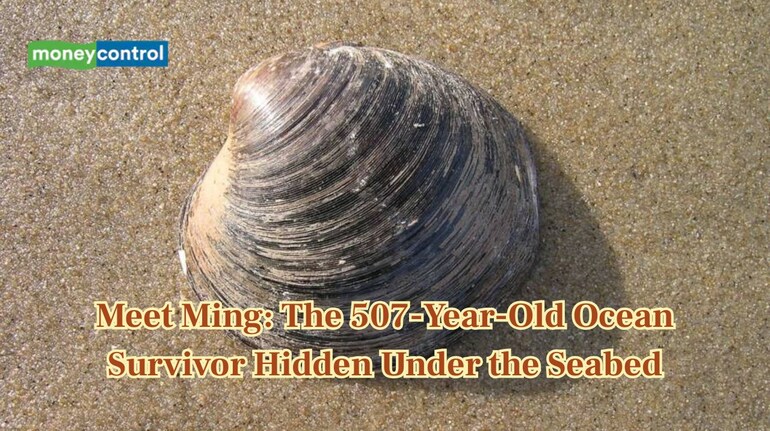

In the cold, dark waters of the North Atlantic, a clam quietly survived for more than five centuries. Long before modern science existed, it was already alive. By the time it was discovered, it had outlived empires.
The animal, nicknamed Ming, belongs to the species Arctica islandica, commonly known as the ocean quahog. When researchers analysed its shell, they determined it was around 507 years old, making it the oldest documented non-colonial animal ever recorded.
A Life Buried Beneath the Seabed
Ocean quahogs live buried in sediment along the Atlantic Ocean floor. They survive by filtering microscopic food particles from seawater. This slow, steady lifestyle may be the secret to their extreme longevity.
Unlike corals or sponges that form colonies, Ming was a single organism. It means one individual body endured for over five centuries.
The oldest known animal, a 507-year-old ocean quahog clam named Ming, was discovered in 2006. It died during scientific research when scientists, unaware of its age, froze it to study its shell, which revealed 507 years of ocean history. pic.twitter.com/MkAm0DohcD— Not Forbidden To Know (@not_forbid2) August 11, 2025
How Scientists Measured Its Age?
Determining Ming’s age required careful scientific examination. Researchers counted growth rings in its shell, much like studying tree rings. Each ring represents one year of life.
Advanced dating techniques later refined the estimate, revealing the clam was even older than initially thought. At 507 years, Ming had lived through dramatic shifts in global climate and human history.
Why Do Ocean Quahogs Age So Slowly?
The species Arctica islandica has an unusually slow metabolism. Lower metabolic rates reduce cellular damage over time. Some studies suggest strong DNA repair mechanisms may also play a role.
Scientists are investigating whether these clams resist oxidative stress better than most animals. Understanding this could transform ageing research. The secret to living longer may lie beneath the seabed.
Why This Discovery Matters?
The species Arctica islandica is known for remarkable lifespans. However, Ming represents an extreme biological outlier. Studying such long-lived organisms helps scientists understand ageing processes.
Researchers examine cellular repair systems, metabolic rates and resistance to environmental stress. Insights from these clams may even contribute to ageing research in other animals.
Discover the latest Business News, Sensex, and Nifty updates. Obtain Personal Finance insights, tax queries, and expert opinions on Moneycontrol or download the Moneycontrol App to stay updated!
Find the best of Al News in one place, specially curated for you every weekend.
Stay on top of the latest tech trends and biggest startup news.