






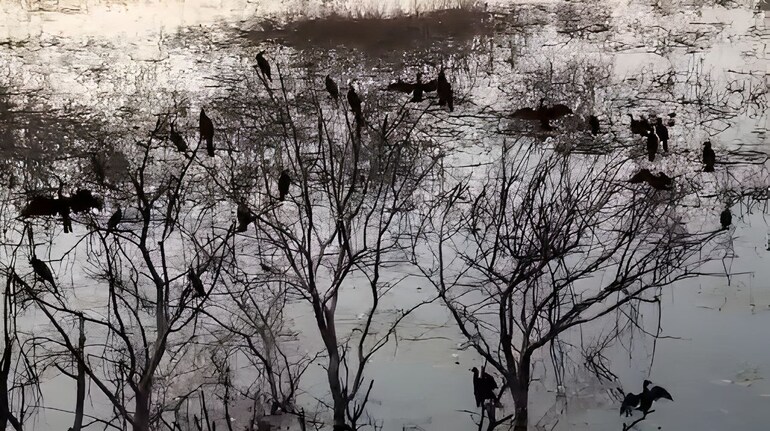

Panjappur Lake in Tiruchirappalli is attracting remarkable birdlife. Large evening congregations gather at the wetland daily. Glossy Ibises arrive in shimmering coordinated flocks. Terns sweep low before settling on waters. The lake serves as a secure roosting site. Observers describe this sighting as one of best sunset aerial displays.
What Are These Waterbirds?
Glossy Ibises are medium sized wading birds. They display iridescent bronze and green plumage. Long curved bills help probe muddy shallows. They feed on insects and crustaceans.
Terns are slender seabirds with pointed wings. They hunt fish by plunge diving swiftly. Both species rely on wetlands heavily. Their presence reflects balanced aquatic ecosystems. They often gather in mixed species flocks.
#WATCH | Tamil Nadu | Panjappur Lake in Tiruchirappalli attracts a wide range of waterbirds, which also serves as a secure roosting site, with large evening congregations of Glossy Ibises and flocks of terns recorded regularly. pic.twitter.com/8LvhC2vRIT— ANI (@ANI) March 2, 2026
Do These Birds Visit Every Year?
Many waterbirds follow predictable migration routes. Glossy Ibises are partly migratory across India. Some populations remain resident year-round. Others arrive seasonally from northern regions. Terns also migrate along coastal corridors. Regular records suggest repeated annual visits.
When Do These Birds Visit India?
Most migratory waterbirds arrive during winter months. Migration typically begins from October onwards. Peak numbers appear between November and February. They depart before intense summer heat arrives. Some resident groups remain throughout year.
Seasonal rainfall influences wetland attractiveness. India’s wetlands provide crucial winter refuge. Milder climate supports feeding and breeding cycles.
Why Glossy Ibises Choose This Wetland?
Glossy Ibises prefer shallow nutrient rich waters. Soft mud supports abundant prey populations. The lake offers expansive open visibility. Evening roosting reduces predation threats significantly.
Calm surroundings limit human disturbance presently. Water depth remains suitable for foraging. Communal roosting improves survival chances collectively.
What Makes A Secure Roosting Site?
Minimal disturbance is absolutely essential. Predictable water levels ensure stable habitat. Open sightlines help detect approaching predators. Panjappur Lake currently meets many criteria.
Its growing bird numbers confirm ecological health. With continued protection, flocks will return annually. Each winter evening, Tiruchirappalli’s skies transform gracefully.
Discover the latest Business News, Sensex, and Nifty updates. Obtain Personal Finance insights, tax queries, and expert opinions on Moneycontrol or download the Moneycontrol App to stay updated!
Find the best of Al News in one place, specially curated for you every weekend.
Stay on top of the latest tech trends and biggest startup news.





