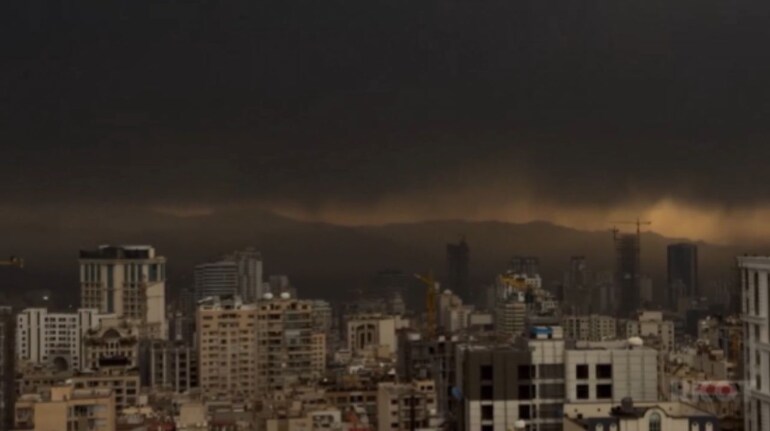

Since the United States and Israel launched strikes on Iran on 28 February, at least four oil storage and refinery facilities around Tehran have been hit. Residents say thick smog and pollution have darkened the sky, blocking sunlight and leaving a strong burning smell across parts of the capital.
Dark smoke now hangs heavily above Tehran as experts warn the scale of released pollutants could be unprecedented. Health specialists say toxic emissions may trigger dangerous acid rain and serious respiratory problems. The warning came from the World Health Organization after reports of oil-tainted rainfall and thick black smoke spreading across the Iranian capital. Scientists say chemicals from burning fuel can mix with moisture in the atmosphere, forming acidic rainfall that threatens both people and ecosystems.
Toxic Smoke and Acid Rain Over Tehran
Large plumes of smoke rose after attacks struck oil facilities. The smoke carries sulphur dioxide, nitrogen oxides and hydrocarbons. Scientists say these chemicals mix easily with atmospheric moisture. When combined with rain clouds they create acidic rainfall. The process produces sulphuric and nitric acids in precipitation.
Acid rain has long been known for damaging ecosystems. Soil nutrients like calcium and magnesium can quickly disappear. Trees weaken as roots lose important minerals and strength. Leaves suffer damage while forest biodiversity steadily declines. Freshwater lakes and rivers may also suffer severe impacts.
History offers examples of similar environmental destruction after conflict. Burning oil wells during the Gulf War oil fires left large stretches of land barren. Scientists fear similar consequences could follow in Iran. The Iranian capital already struggles with heavy urban smog. Toxic smoke may worsen respiratory illnesses among millions of residents.
Read Also: Tehran’s air is cleaner than Delhi’s despite bombs, burning oil and war in Iran — why is that so?
Health Risks From Toxic Air Pollution
Experts warn prolonged exposure to polluted air threatens public health. Residents could face rising cases of asthma and bronchitis. Heart attacks and chronic lung disease risks may increase. Infants could also face complications including lower birth weight.
According to the World Health Organization, several reports describe oil-contaminated rainfall across affected areas. WHO spokesperson Christian Lindmeier said the rain and polluted air could harm breathing. Iranian authorities have advised people to remain indoors for safety. Lindmeier supported that advice during a press briefing in Geneva.
Scientists say smoke particles may cause headaches and skin irritation. Eye discomfort and breathing difficulties are also possible symptoms. Longer exposure to some compounds may raise cancer risks. Toxic metals and chemicals may enter food chains gradually. Researchers note similar long term effects followed chemical pollution in the Vietnam War.
Pollution May Travel Beyond Iran
Environmental scientists say polluted air rarely stays confined locally. Winds can carry small particles across large distances. Dust from the Middle East has previously travelled across seas. It sometimes reaches regions near Arabian Sea before drifting further east.
Experts warn neighbouring areas could also face pollution exposure. Regions including Balochistan may receive direct spillover. Air currents might also push particles towards Afghanistan and Turkmenistan. Strong upper winds may eventually carry pollution further east.
Meteorologists say fine particles might even approach parts of India. Possible pathways include Gujarat, Rajasthan and Punjab. Research scientist Akshay Deoras from the University of Reading said rainfall combined with polluted air created the black rain effect.
He added that remaining indoors may reduce exposure risks. Masks and skin protection could also help outdoors. Forecasts suggest dry weather conditions may dominate later. Air quality may gradually improve if strikes cease. Scientists warn renewed attacks could again worsen pollution levels.
(With inputs from Reuters)

Discover the latest Business News, Sensex, and Nifty updates. Obtain Personal Finance insights, tax queries, and expert opinions on Moneycontrol or download the Moneycontrol App to stay updated!
Find the best of Al News in one place, specially curated for you every weekend.
Stay on top of the latest tech trends and biggest startup news.