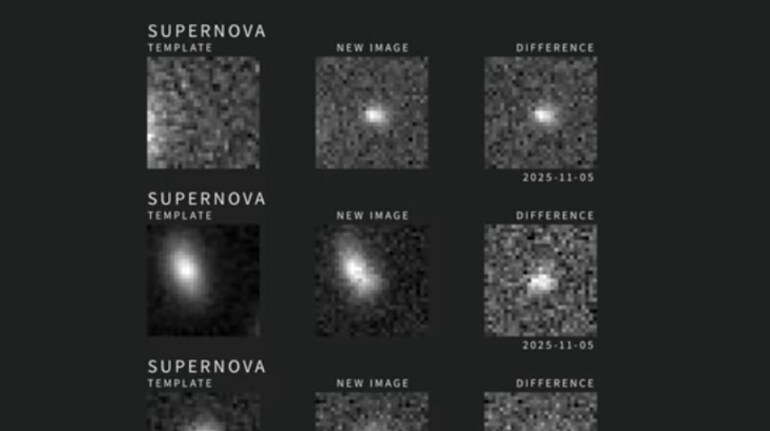

The NSF–DOE Vera C. Rubin Observatory has launched a groundbreaking real-time alert system that monitors the night sky and notifies astronomers of changing cosmic events within minutes.
The observatory sent out about 800,000 alerts in a single night, detecting objects such as asteroids, supernovae, variable stars and active galactic nuclei. Once fully operational, the system could generate up to 7 million alerts per night. This makes it one of the most powerful tools for monitoring the dynamic universe.
A Powerful Collaboration Between NSF and DOE
The Rubin Observatory represents decades of planning and international collaboration.
The NSF provided funding and oversight for the telescope’s construction, while the DOE contributed high-performance computing and data management capabilities.
Together, the agencies have built a system capable of processing millions of images per night, comparing them to existing sky templates, and issuing alerts within minutes of a new detection.
How the System Works?
The observatory automatically compares new images of the Southern Hemisphere sky with a reference template. If an object has changed, an alert is issued within minutes. This allows astronomers worldwide to follow up on transient events almost immediately, ensuring rare phenomena are observed in their earliest stages.
Types of Objects the Observatory Will Detect?
The real-time alert system is designed to spot a wide variety of transient and moving celestial objects. These include Asteroids, Supernovae, Variable stars, Active galactic nuclei and quasars. By alerting scientists quickly, the system ensures that rare or fast-evolving phenomena can be studied in their earliest stages.
How Rubin Observatory Can Help Prevent Asteroid Collisions?
Perhaps the most practical application of the real-time alerts is in tracking potentially hazardous asteroids. By detecting these objects early, astronomers can calculate their trajectories and determine whether any may approach Earth.
This early warning system could provide crucial time to plan mitigation strategies, such as deflection or evacuation, if a threat were ever identified.
A New Era of Dynamic Astronomy
By combining high-tech imaging, fast data processing, and global collaboration, the Rubin Observatory is transforming the way we watch the sky.
Astronomers, students and citizen scientists alike will benefit from instant alerts, opening a new chapter in understanding the dynamic, ever-changing universe from exploding stars to objects hurtling through our solar system.
Discover the latest Business News, Sensex, and Nifty updates. Obtain Personal Finance insights, tax queries, and expert opinions on Moneycontrol or download the Moneycontrol App to stay updated!
Find the best of Al News in one place, specially curated for you every weekend.
Stay on top of the latest tech trends and biggest startup news.