-
45-minute night sky event: Know When, Where and How to see the "Moon–Mercury pairing" on 18 February
A stunning Moon–Mercury conjunction will light up the western sky on 18 February. The slim crescent Moon will appear close to Mercury just after sunset. Here’s when to look, where it will be visible and why this cosmic pairing is special.
-

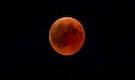
Total lunar eclipse 2026 to bring ‘Blood Moon’: Will India miss it just like the ‘Ring of Fire’? Check Here
After missing February’s Ring of Fire, India will finally see the Moon darken and possibly glow red on 03/03/2026, but how long will the spectacle last?
-
Nature is losing its colours: From animals to birds, the World is becoming colourless, why are scientists worried?
From bleaching coral reefs to fading forests and duller birds, scientists warn Earth is losing its colours under climate stress, but could these subtle shifts reveal deeper environmental truths?
-
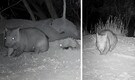
Australia’s rarest Wombat caught on camera — Is this endangered species making a comeback?
A camera trap in Queensland has captured one of the world’s rarest marsupials known as the Northern Hairy-nosed Wombat. They are listed as critically endangered and exist in three main populations in Australia.
-
Thailand’s mythical ‘fire tiger’ captured on camera: Rare Asian golden cat emerges from dense forests
A mysterious “fire tiger” has reappeared in Thailand’s forests, caught briefly on camera, but why is this elusive Asian golden cat both culturally revered and increasingly at risk?
-
Season of "flame of the forest" returns, as Palash sets Central India ablaze with orange-red blooms
The striking orange-red blooms of Palash have begun lighting up the Central Indian highlands and Deccan plateau. But beyond its beauty, the ‘flame of the forest’ signals important seasonal and ecological shifts.
-
Total Lunar Eclipse 2026: Date, timings and where the “Blood Moon” will light up the night sky
A rare total lunar eclipse will turn the Moon deep red across parts of the world on 03/03/2026, but why does it glow like a global sunset, and who will actually see it?
-
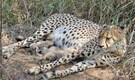
From 35 to 38: Cheetah "Gamini" gave birth to three newborns, marks major milestone at Kuno National Park
Gamini, a South African cheetah relocated to Kuno National Park, has given birth to three cubs, pushing India’s total cheetah population to 38. The ninth successful litter under Project Cheetah is being seen as a crucial milestone.
-
What this IIT Physicist found about the universe has amazed scientists- Here's what Muhammad Ghulam Khuwajah Khan proposed!
A physicist proposes that the universe might not be empty but act like a viscous fluid, resisting expansion. This bold idea could explain fluctuations in cosmic growth and challenge traditional dark energy models.
-
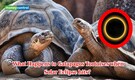
What "strange" thing happens to the Galapagos Tortoises during a Solar Eclipse? Watch Here
During a solar eclipse, Galapagos tortoises show strange and fascinating behaviour. They mate, lift their heads, and seem to stare at the sky. Scientists say this rare reaction highlights how cosmic events can influence animal behaviour.
-
Forget concrete: Scientists develop living building material that grows and self-heals over time
Architecture meets biology at the Venice Biennale as 3D-printed walls host living cyanobacteria, capturing carbon while strengthening themselves. Could buildings of the future become self-sustaining environmental systems?
-
Meet Prototaxites Taiti: This 26-foot fossil from Devonian-period has baffled scientists for 165 years
For 165 years, the giant fossil Prototaxites taiti puzzled scientists. Standing 26 feet tall, it may belong to an unknown branch of multicellular life, reshaping our understanding of early terrestrial ecosystems.
-
Queen of the jungle: Fearless lioness takes on dominant male lion in intense Gir National Park showdown
A lioness challenges a roaring male in Gir National Park, and his sudden pause stuns viewers. The viral safari clip reveals surprising power dynamics inside the wild pride.
-
India Makes History: AIIMS performed its first remote ultrasound in Antarctica to patient-volunteer located over 13,000 km away
In a first for India, AIIMS has successfully conducted a remote ultrasound in Antarctica. The milestone could redefine telemedicine on Earth and even in space. This happened from a distance more than 13,000 kilometres, offering new insights in Indian science and research.
-
Snakes keep turning cannibal but why? Study reveals the surprising evolutionary pattern behind it
Cannibal snakes may be far more common than thought. A global review found the behaviour evolved 11 times, raising new questions about survival strategies hidden within the reptile world.
-
Earth’s next big threat? NASA says 15,000 ‘city-killer’ asteroids still undetected in space
Thousands of “city killer” asteroids remain undetected, NASA warns, and no ready spacecraft exists to stop one. A recent close call exposed gaps that scientists say still leave Earth vulnerable.
-
Found in Lakshadweep waters, this 3mm crab species is a major discovery who is named after T. Balasubramanian
A tiny 3-millimetre crab has been discovered in Lakshadweep’s coral reefs. Named Galathea balasubramaniani, the species reveals how much of India’s marine biodiversity remains unexplored.
-
Who is Sophie Adenot? Meet the first French woman astronaut in space since 2001
Sophie Adenot becomes first French woman astronaut after Claudie Haigneré to go to space after 25 years. She was selected for a long-duration mission, where her role is to carry out over 200 experiments aboard the International Space Station.
-
Solar Eclipse highlights: Surya Grahan in its last phase, moon continues to slide away
Today’s annular solar eclipse will turn the sun into a blazing “ring of fire” for just over two minutes — but only a few places will see it fully.
-
Lake Victoria goes Green! World's largest tropical lake is carrying harmful toxins; Scientists warned of "algae bloom"
Lake Victoria, the world’s largest tropical lake, has turned toxic green due to a massive algae bloom. Scientists warn of harmful toxins affecting humans, wildlife and fisheries.
-
Seen after 5 Years: World's fastest bird, "Peregrine Falcon" has been spotted soaring in Telangana
After five years, the Peregrine Falcon returns to Kawal Tiger Reserve, thrilling scientists. The fastest bird on Earth reflects the health of Telangana’s rich ecosystem.
-
Is Earth really middle-aged? Scientists explain what 4.5 billion years means for life!
Earth, now 4.5 billion years old, has reached middle age. Scientists explain how the Sun will shape its future and why studying Earth matters for human survival.
-
Annular Eclipse set to create “Ring of Fire” in Southern skies on 17 February; Here’s when and where to watch!
A rare annular solar eclipse, the Ring of Fire, occurs on 17 February 2026. See where, when and how to watch this spectacular celestial event safely. The eclipse will begin at 07:01 UTC. The maximum phase will be seen over Antarctica.
-
Meet Larry the Cat: The Downing Street’s "chief mouser" turned 15, enters rare feline longevity club!
Larry the Cat, the long-time resident of 10 Downing Street, has turned 15 on15th February 2026. His age places him among most senior domestic cats. Know more what science says about feline longevity.
-
NASA replaces evacuated crew as 4 new astronauts arrive at ISS—Know who's on board?
Four new astronauts have arrived at the International Space Station after NASA brought part of its earlier crew back to Earth. The move ensures research in orbit continues without disruption.
-
This Japanese bag dissolves in water within minutes — Here’s how scientists made it!
Japanese researchers have developed shopping bags made from potato starch that dissolve in water and leave no microplastics behind. The innovation could mark a major step towards reducing global plastic pollution.
-
The "City of Iron" is Real! Archeologists found this 1,500-year-old mountain city in Uzbekistan
Archaeologists believe they may have found Marsmanda, a legendary medieval “city of iron” in Uzbekistan’s mountains. Scientists are covering on how did people survive at 2,000 metres and why did the industrial hub disappear?
-
ISRO rocket debris reaches Maldives shore. How did it drift this far? Here’s what you need to know
A fragment bearing the ISRO logo has washed ashore on an uninhabited Maldivian island. Experts believe it is a rocket fairing from a recent Indian launch, raising fresh questions about drifting space debris and its marine impact.
-
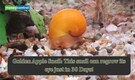
Golden Apple Snail: The snail that can regrow a complete "eye" in just 30 days!
The golden apple snail can fully regrow its entire eye in just 30 days, revealing extraordinary regenerative abilities with potential implications for human vision and medical research.
-
"Farewell Rivaldo": This iconic wild elephant dies at 50 in Mudumalai Tiger Reserve
Rivaldo, the friendly wild tusker of Mudumalai, has died at 50 symbolising rare human-elephant coexistence, reigniting debate over rewilding, conservation ethics and India’s growing habitat pressures.
-
WATCH | Elusive spot-bellied Eagle-Owl also known as "ghost of the forest" sighted within Jim Corbett in Uttarakhand
A rare spot-bellied eagle-owl, known as the “Ghost of the Forest,” has been sighted near Ramnagar in the Corbett landscape, sparking excitement and renewed conservation focus.
-
Meet Aditya Pandya: This 17-year-old became India’s youngest analogue astronaut to complete a lunar mission held in Gujarat
Seventeen-year-old Aditya Pandya becomes India’s youngest analogue astronaut after spending eight days inside a Moon-like habitat in Gujarat. He not only lived in a lunar-like habitat under strict isolation but also designed key hardware systems, including air-quality sensors and biometric monitoring tools.
-
World Hippo Day 2026: Why this massive 1,500-kilogram animal needs protection?
World Hippo Day 2026 is celebrated every year on 15th February. On this day, scientists warn that despite being Africa’s most dangerous mammal, hippos face habitat loss, poaching and climate threats.
-
Eyes on the sky as solar storm hits Earth on February 15: Date, best timings and what you’ll see
A G1 geomagnetic storm is forecast for February 15 as a CME and high-speed solar wind reach Earth, increasing chances of Northern Lights at higher latitudes.
-
First Time Sighting: A rare Southern Sleeper Shark was filmed 490 metres deep in Antarctic waters
Scientists have captured the first-ever footage of a rare southern sleeper shark in Antarctic waters, reshaping what we know about life in extreme oceans.
-
Who was Dennis Bell? Antarctica reveals 66-year-old mystery of "british scientist" missing since 1959
After 66 years beneath Antarctic ice, the remains of British meteorologist Dennis Bell have been recovered, as retreating glaciers reveal a frozen chapter of history.
-
The world’s biggest waterfall is invisible to the human eye but why and how?
Beneath the icy waters between Greenland and Iceland flows Earth’s largest waterfall, three times taller than Angel Falls — yet completely invisible from the surface. How can something so vast remain hidden?
-
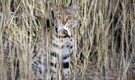
Meet the World’s deadliest cat: A 2-pound hunter hiding in abandoned holes across Africa
In Namibia’s dry grasslands, the tiny black-footed cat survives by borrowing underground homes from springhares. New research reveals a hidden partnership that could decide this rare predator’s fragile future.
-
Meet the World’s largest flower and discover the secret forests it calls home
Deep in Southeast Asia’s rainforests blooms a giant flower that smells like rotting flesh. Rare, parasitic and short-lived, Rafflesia arnoldii survives against the odds, but for how long?
-
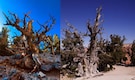
The World’s oldest tree is 5,000 years old and its secret location is closely guarded
Hidden high in California’s White Mountains, a solitary bristlecone pine has survived nearly 5,000 years. Guarded in secrecy, it holds climate secrets that stretch back to early civilisation.
-
NASA detects life’s building blocks streaming from interstellar Comet 3I/ATLAS
An interstellar comet racing through our solar system released methanol, methane and cyanide, NASA says. Could these life linked molecules hint at how worlds across the cosmos are seeded?
-
Are these molecules clues to ancient life? NASA study questions chemical origins of Mars organics
A new Astrobiology study suggests non biological processes may not fully explain organic molecules found by NASA’s Curiosity rover on Mars. Could ancient life be a possible answer?
-
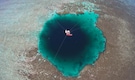
Inside the Dragon Hole of the South China sea, where oxygen vanishes from the ocean
Beneath the calm waters of the South China Sea, the Dragon Hole plunges over 301 metres, hiding twisting tunnels, vanishing oxygen and chemical secrets that scientists are only beginning to decode.
-
Did renowned mathematician Abraham de Moivre predict his death date? Here's the truth
A famous legend claims Abraham de Moivre calculated the exact date of his death using a sleep pattern formula. But did he truly predict it, or is history hiding a myth?
-
NASA’s Crew-12 lifts off successfully on a SpaceX Falcon 9 rocket from Florida
SpaceX has launched Crew 12 to the ISS at 3:45 pm IST, carrying four astronauts for an eight-month mission packed with 200 experiments. What discoveries await them in microgravity?
-
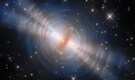
Hubble Space Telescope Captures the Final Breaths of a Dying Star in Stunning Detail
Hubble’s latest image reveals a young pre planetary nebula where a dying star expels dust and light. Why does this brief phase matter so much for understanding stellar evolution?
-
Astronomers detect ‘impossible’ solar system that defies planet formation theories
Astronomers have found a rocky planet where it should not exist, orbiting far from a cool red star. Could this strange “inside out” system rewrite how we think planets form?
-
Bacteria can ‘talk’ and are multilingual, says biologist exploring microbial language
Bacteria can make us sick or keep us alive. A leading scientist says they “talk” using chemical signals. Could silencing their conversations change how we treat deadly infections?
-
NASA’s Crew-12 to lift off soon: Here’s how to watch the SpaceX Falcon 9 launch live
Four astronauts are set to launch aboard SpaceX’s Falcon 9 at 3:45 pm IST, heading to the ISS for an eight-month mission packed with 200 experiments. What discoveries await in orbit?
-
Inside the 'World’s largest snake den': 100,000 red-sided garter snakes huddle beneath Manitoba
Every spring in Manitoba, up to 100000 red sided garter snakes emerge from underground limestone dens, forming swirling mating balls. Why do they gather here in such astonishing numbers?