






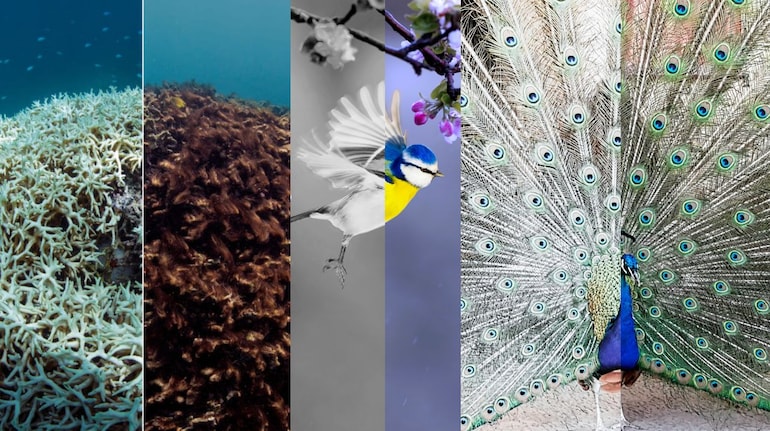

Scientists are reporting widespread colour shifts across global ecosystems as rising temperatures and atmospheric stress alter reefs, oceans and forests, raising fresh concerns about environmental health and long term stability.
Colour Loss Signals Ecosystem Health Stress
Researchers say colour reflects biological vitality clearly. Under mounting heat, that vitality fades. Coral reefs offer the starkest example. Marine heatwaves are stripping reefs of pigment. Once vivid corals now appear ghostly white.
Corals depend on symbiotic algae for colour. These algae provide essential energy through photosynthesis. Prolonged heat forces corals to expel them. Without algae, reefs bleach rapidly white. Scientists report severe bleaching worldwide recently. More than half of reefs suffered. Many events occurred within two decades.
Bleached reefs lose more than appearance. They become weaker and disease prone. Fish and invertebrates lose vital shelter. Mortality rises when temperatures remain elevated. Colour loss therefore signals functional decline.
Satellite studies show oceans shifting colour too. Two decades of imagery reveal changes. Over half the ocean surface altered. Warming seas are reshaping phytoplankton communities. These organisms influence light absorption strongly. As populations shift, waters appear uniform. Subtle chromatic changes mark food web shifts.
Drought, Forest Greenness And Carbon Balance
On land, drought drives similar colour changes. Forests owe greenness to chlorophyll pigments. Chlorophyll enables carbon capture and cooling. Heat raises atmospheric demand for moisture.
Dr. César Terrer of Massachusetts Institute of Technology explains plant responses clearly. He says plants close leaf pores. This shuts down photosynthesis processes quickly. Chlorophyll breaks down under prolonged stress. Forest canopies thin across large regions.
He notes weakening carbon absorption recently. Parts of the Amazon show decline. Repeated droughts and fires worsen impacts. Windstorms compound ecological strain further. Fading green may warn deeper trouble.
Colour As Communication In Birds
Scientists observe colour shifts among birds. Plumage carries signals beyond decoration. Dr. Mary Caswell Stoddard of Princeton University studies evolutionary biology closely. She says colour guides communication. Birds use colour to attract mates. They also evade predators through camouflage. Rivals may be deceived by signals. Food sources are sometimes located visually.
Across reefs, forests and meadows, hues shift. Heat and seasonal disruption drive responses. Yet recovery remains possible in places. After drought, Californian landscapes regained colour. Strong rainfall restored forest greenness quickly.
Researchers say reduced stress enables revival. Ecosystems can brighten when pressures ease. Colour, they argue, remains a warning system. It may also signal hope.
Discover the latest Business News, Sensex, and Nifty updates. Obtain Personal Finance insights, tax queries, and expert opinions on Moneycontrol or download the Moneycontrol App to stay updated!
Find the best of Al News in one place, specially curated for you every weekend.
Stay on top of the latest tech trends and biggest startup news.





