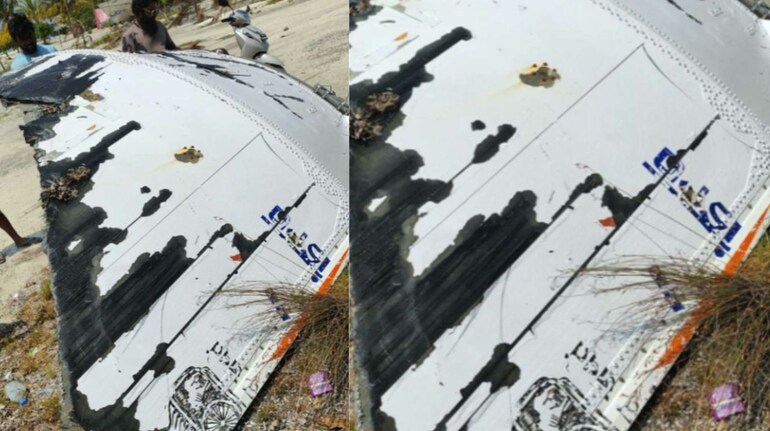

Something intriguing landed on an isolated island. It bore the brand name of the Indian Space Research Organisation (ISRO). This has created an interest within the region. It connects the space exploration to floating ocean currents. The debris was located deeper in the Maldives more specifically in an uninhabited isle within Laamu Atoll. The island is very distant to the active settlements. But it soon was centre of attention.
What Exactly Was Found?
It was a big and curved object. It had a white paint on its surface that had markings left with the ISRO logo and Indian emblem. There were several numbers printed on it indicating a recent mission. The experts are of the opinion that it is a fragment of payload fairing. A fairing can protect satellites during the ascent of the rocket. It insulates frail tools against heat and pressure.
How are these Debris of Rockets end up in Seas?
When in space the fairing burns of and falls away. Such disposed portions usually spill into the open seas. Their location would be carefully calculated to avoid the population areas. Majority of the pieces sink into deep water. A few, though, are able to endure the deadly trip across the ocean.
Where Did It Come From?
Fairings go down into the sea after being separated. Most of them get drowned in deep water. There are some that take up long durations before they sink. The circulations of the Indian Ocean are strong. Surface currents are changed with seasonal monsoon winds.
The debris may travel hundreds of kilometres within a span of weeks. According to the oceanographers, the fragment was transported southwards by currents. It must have been posteriorly swept along the eastern coast of India. It ended up in the far off shore of Laamu Atoll.
Mission Link: Which Launch Could It Be?
Evidence on the debris indicates that there was a recent launch. The prominent logo and insignia have not been altered a lot. Scholars believe that it must have been a mission of 2025. India has several kinds of launches annually. The majority take off at Sriharikota along the east.
The name of this spaceport is officially known as Satish Dhawan Space Centre. Potential options are PSLVs, and GSLV. Fairings used by both vehicles are employing a similar design of payload fairings.
How Was It Discovered?
The genuine forerunner of the local fisherman had first observed the strange object. It was flying not much above the island. It had a sloping surface that contrasted with blue waters. and he rowed it very cautiously ashore. The people of the island assembled to explore the building. The authorities were alerted after the discovery of the ISRO ministry logo which was quite evident.
Becoming A Marine Problem: Space Debris?
The use of space launches around the globe is growing at a very fast rate. India has been carrying out many missions every year. NASA and SpaceX organisations, as well, dump hardware in oceans.
A vast part of it is made to sink innocently. but here and there bits are found of long sea expeditions. Such incidents are being monitored by the environmental scientists. A lot of fairings are composite in nature.
Even they are not very toxic following splashdown. The Maldives discovery is a broader question. With the rise in launches, so will discard hardware. Still more space remnants may be coming to the seas.
Discover the latest Business News, Sensex, and Nifty updates. Obtain Personal Finance insights, tax queries, and expert opinions on Moneycontrol or download the Moneycontrol App to stay updated!
Find the best of Al News in one place, specially curated for you every weekend.
Stay on top of the latest tech trends and biggest startup news.