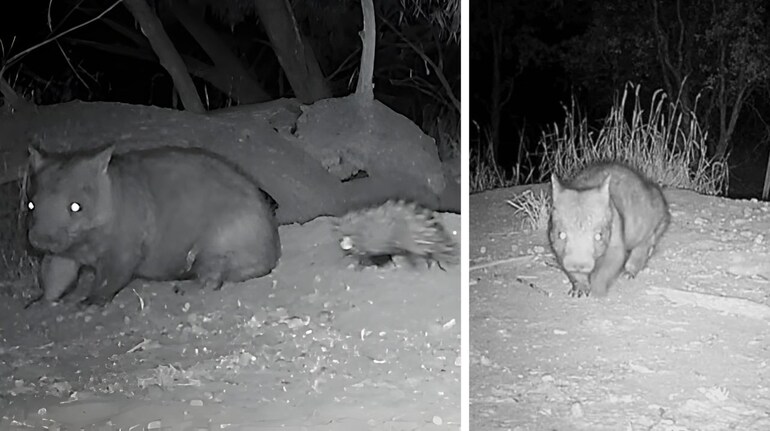

In the stillness of an Australian night, a hidden camera recorded something extraordinary. One of the rarest mammals on Earth, a Northern Hairy-nosed Wombat was caught on camera. Even more intriguing, the wombat appeared unfazed as a curious Echidna approached.
The footage was captured at Richard Underwood Nature Refuge in Australia. For wildlife scientists, this video is not more than a surprise as this endangered wombat is rare to be seen.
Where Was This Rare Wombat Seen?
The rare sighting was recorded at Richard Underwood Nature Refuge in Australia. This protected refuge is one of only two locations in the world where the Northern Hairy-nosed Wombat survives.
The footage was captured using a motion-sensitive camera trap placed near active burrow systems. Such cameras operate silently at night, documenting wildlife movements without disturbing them.
What Was the Wombat Doing in the Video?
The camera trap footage shows the wombat emerging from its burrow during the night. As it moves cautiously across the landscape, a curious Echidna approaches. The interaction appears calm, almost indifferent.
A post shared by Australian Wildlife Conservancy (@australianwildlifeconservancy)View this post on Instagram
The wombat continues its activity, seemingly unbothered by the spiny visitor. For researchers, such behaviour provides valuable insights. The video confirms active burrow use and normal nocturnal movement.
About the Species: The Northern Hairy-nosed Wombat
There are approximately 400 Northern Hairy-nosed Wombats remaining in the wild. As of 2024–2025, this data marked a significant recovery from just 35 individuals in the 1980s. They are listed as critically endangered and exist in three main populations in Queensland, Australia.
These wombats are nocturnal and spend most of their lives underground in extensive burrow systems. They feed primarily on native grasses and can survive in dry, semi-arid environments.
Why Is This Wombat So Rare?
The decline of the Northern Hairy-nosed Wombat began over a century ago. Habitat clearing for agriculture drastically reduced suitable grassland. Competition with livestock for food further strained the population.
Introduced predators such as foxes also contributed to losses. Their limited distribution makes them highly vulnerable to disease, drought and extreme weather events.
Is the Species Recovering?
There has been slow but measurable growth in population numbers over recent decades due to predator control, habitat restoration and protective fencing. However, the species is still classified as "critically endangered".
Each camera trap recording, each healthy individual, adds to a growing body of evidence that conservation efforts are working. For now, the Australia’s rarest wombat is still on the verge of recovery.
Discover the latest Business News, Sensex, and Nifty updates. Obtain Personal Finance insights, tax queries, and expert opinions on Moneycontrol or download the Moneycontrol App to stay updated!
Find the best of Al News in one place, specially curated for you every weekend.
Stay on top of the latest tech trends and biggest startup news.