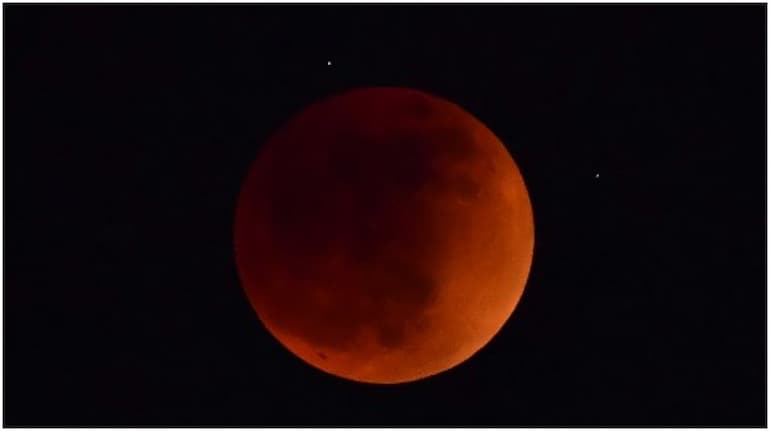

A total lunar eclipse will colour the Moon deep red across several regions worldwide, offering skywatchers a striking celestial display during the early hours on 03 March 2026.
Total Lunar Eclipse Turns Moon Red
In the early hours, the Moon will glow red. The event will occur during a full moon. A total lunar eclipse will take place. Earth will move directly between Sun and Moon. This alignment will cast Earth’s shadow across the Moon. The shadow will gradually cover the lunar surface. As totality begins, the Moon will darken noticeably. It will then shift to a deep red shade.
According to NASA, this event happens only during full moon phases. A lunar eclipse occurs under precise alignment conditions. Earth must sit exactly between Sun and Moon. Its large shadow then falls across the Moon. Most sunlight becomes blocked by Earth’s bulk. Only filtered light reaches the lunar surface. That filtered light carries red and orange tones.
The effect resembles countless global sunsets combined. It appears as sunrise and sunset light reflected. The Moon can look coppery or burnt orange. Some observers call it a blood moon. The colour may vary with atmospheric conditions. Dust and clouds can deepen the red hue.
Where The Red Moon Will Be Visible
Visibility will depend strongly on geographic location. East Asia and Australia will see evening views. The Pacific region will witness it overnight. North America will see it before dawn. Central America will share early morning visibility. Far western South America will also observe totality.
Central Asia will see only partial phases. Large areas of South America get partial views. Africa will not witness this eclipse. Europe will also miss the spectacle entirely. Clear skies will remain essential for viewing. The Moon must sit above local horizons.
How To Watch The March 3 Eclipse
No special equipment will be required. The eclipse can be seen with naked eyes. Observers should find areas with dark skies. Bright city lights may reduce visual clarity. Rural or coastal spots often offer better views.
Binoculars can sharpen the lunar surface details. A small telescope will enhance colour contrasts. The red shade may appear richer through optics. Patience will help during the gradual changes. The entire process unfolds over several hours.
For sky lovers, this remains a rare treat. The glowing red Moon will draw attention. Many will step outside before sunrise. Weather conditions will decide final viewing success. Those under clear skies may enjoy unforgettable moments.
Discover the latest Business News, Sensex, and Nifty updates. Obtain Personal Finance insights, tax queries, and expert opinions on Moneycontrol or download the Moneycontrol App to stay updated!
Find the best of Al News in one place, specially curated for you every weekend.
Stay on top of the latest tech trends and biggest startup news.