






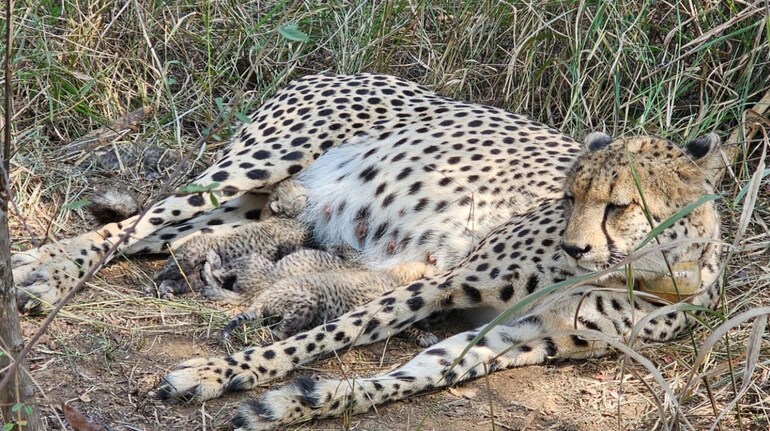

In the grasslands of Kuno National Park, a soft beginning has delivered a powerful message. South African cheetah "Gamini" is now a second-time mother. This is the ninth successful cheetah litter born in India under the reintroduction programme. The mother cheetah gave birth to three newborns. The timing is striking. It comes as India marks three years since cheetahs returned after being declared extinct in 1952.
Meet Gamini: New Mommy in Town!
There is a new mother at Kuno National Park, and her name carries weight. Gamini arrived in India from South Africa as part of the country’s ambitious cheetah reintroduction effort. Her translocation marked a historic return of the species after it was declared extinct in India in 1952.
Now a second-time mother, Gamini has delivered 3 cubs. Her earlier litter had already signalled hope. This new birth strengthens her importance within the programme. She was born in African savannahs that has not only survived Indian terrain but is reproducing in it.
What This Birth Means for India’s Numbers?
With the arrival of these three cubs, India’s cheetah population has reached 38. More significantly, the number of surviving Indian-born cubs has risen to 27. This marks the ninth successful litter under Project Cheetah.
In wildlife restoration, reproduction is the clearest measure of success. Each cub suggests that habitat, prey base and veterinary oversight are aligning well enough to support life. The growing population strengthens the genetic and demographic foundation of the reintroduced species.
Another good news from Kuno🐆🌿Kuno welcomes three new cubs - A roaring new chapter at Kuno on the occasion of completion of 3 years of arrival of cheetahs from South Africa. Celebrations echo through Kuno National Park as Gamini, the South African cheetah and second-time… pic.twitter.com/JpqnfXlpYl — Bhupender Yadav (@byadavbjp) February 18, 2026
Cheetah Mother is being Monitored by Scientists
Wildlife biologists and field teams monitoring the cheetahs are encouraged. Births indicate stability. Satellite collars track movement patterns. Camera traps record hunting behaviour. Health checks assess stress levels and disease risks.
Every cub that survives reduces early doubts surrounding the project. Experts had questioned whether African cheetahs could adjust to Indian grasslands. But it seems like Cheetahs are doing well adjusting Indian climate. Gamini’s cubs are part of the scientific answer.
Can Kuno Sustain a Growing Population?
Cheetahs require large territories and sufficient prey. As more cubs mature, dispersal becomes inevitable and Kuno can provide that for cheetahs. Project Cheetah was started to reverse the historic loss of Cheetah who were once roamed in India. African cheetahs were relocated to suitable Indian reserves. Kuno National Park became the project’s main testing ground.
Beyond Gamini: What's next for Wild Cats of India?
Five tiny cheetah cubs were also born at Kuno National Park from another cheetah mother 'Asha' who arrived from Namibia. They were born on February 7th, marking a major conservation milestone. So total number of cheetahs in India are now increased from 35 to 38 with three newly born cubs.
India will host the first-ever Global Big Cat Summit under the International Big Cat Alliance this year. This event will mark a major milestone in the country’s growing leadership in global wildlife conservation.
Discover the latest Business News, Sensex, and Nifty updates. Obtain Personal Finance insights, tax queries, and expert opinions on Moneycontrol or download the Moneycontrol App to stay updated!
Find the best of Al News in one place, specially curated for you every weekend.
Stay on top of the latest tech trends and biggest startup news.





