






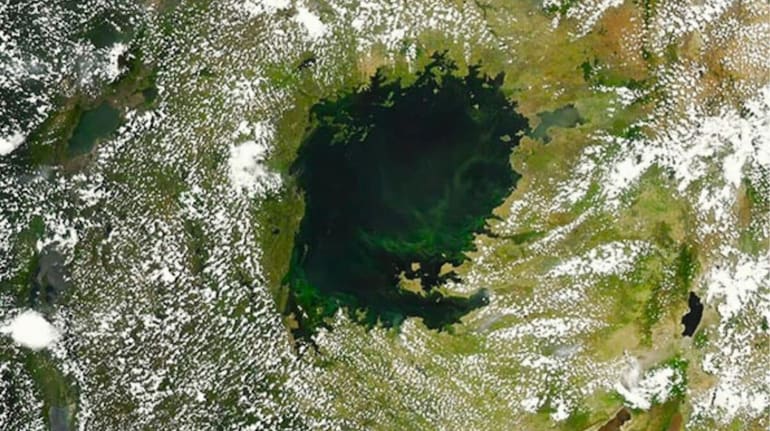

Lake Victoria, the world’s largest tropical lake, has dramatically turned toxic green, alarming scientists and environmentalists. The stunning colour change is caused by a massive bloom of blue-green algae, also known as cyanobacteria.
The bloom has made parts of the lake unsafe for fishing, swimming, or drinking. Local communities that rely on the lake for their livelihood now face serious environmental and health risks.
What happened to Lake Victoria?
Located in East Africa, spanning parts of Kenya, Uganda and Tanzania, lake Victoria has turned toxic green, alarming scientists, conservationists and local communities. This is a home to millions of people who rely on it for fishing, drinking water and agriculture, making its health vital for both humans and wildlife.
Scientists Detect Toxins in the Water
Researchers conducting water tests have confirmed that the cyanobacteria produce harmful toxins. Scientists detected these toxins by analysing water samples from affected areas.
They also identify dangerous compounds that can poison aquatic life and humans. Authorities warn that direct contact, drinking untreated water, or consuming fish from the affected parts of the lake could pose serious health risks.
Why Has the Lake Turned Green?
The algae bloom is primarily caused by nutrient pollution, including nitrogen and phosphorus from agricultural runoff. Urban waste and untreated sewage entering the lake further feed the cyanobacteria. Warm temperatures and stagnant water conditions accelerate algae growth, allowing it to dominate the lake’s surface and give it the striking green colour.
Threat to Human and Animal Life
The bloom is not just a visual problem. Cyanobacteria toxins in Lake Victoria can kill fish, poison birds and sicken humans who drink contaminated water. Local communities, especially fishermen and their families are now at risk.
Scientists warn that if this bloom continues unchecked, millions of people and countless animals depending on the lake could face serious consequences.
What Scientists Are Doing to Find the Cure?
Researchers and environmental authorities are monitoring the situation closely. They are testing water quality across affected regions. The local communities are advised to avoid drinking or using untreated water. They recommended nutrient runoff management from agriculture and urban areas.
Studying long-term methods to reduce cyanobacteria growth and restore ecosystem health. Conservationists emphasise that immediate action is crucial to prevent further ecological damage and protect both wildlife and human health.
Discover the latest Business News, Sensex, and Nifty updates. Obtain Personal Finance insights, tax queries, and expert opinions on Moneycontrol or download the Moneycontrol App to stay updated!
Find the best of Al News in one place, specially curated for you every weekend.
Stay on top of the latest tech trends and biggest startup news.





