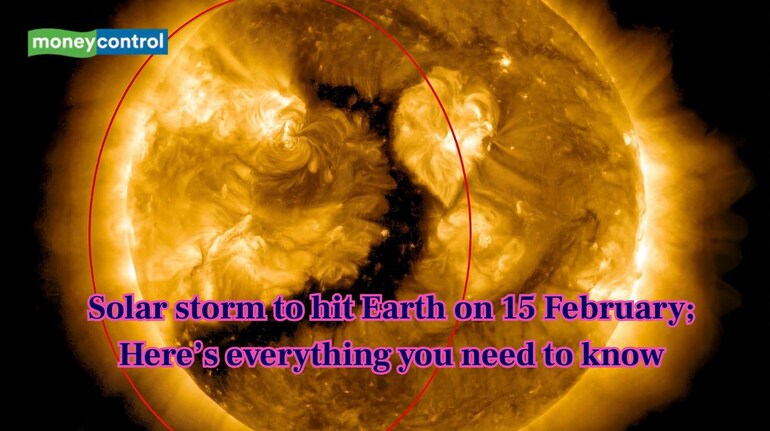

A solar storm is set to reach Earth on 15th February. Space weather forecasters have issued a G1 watch. The storm is considered minor but noticeable. Yet it could light up night skies unexpectedly. A coronal mass ejection is heading our way. High-speed solar wind is also approaching Earth. Both were launched from activity on the Sun. Now, they are interacting with Earth’s magnetic field.
What Is Happening on The Sun?
A large coronal hole opened on the Sun. These holes release fast streams of solar wind. The escaping particles travel millions of kilometres through space. Some of them are now reaching Earth. A coronal mass ejection adds extra charged material.
Together, they can disturb Earth’s magnetosphere. Scientists classify this as a G1 geomagnetic storm which is the lowest level on the storm scale. It means minor geomagnetic activity is expected.
When Will The Storm Peak?
The disturbance is forecast for February 15, 2026. Activity may intensify late in the evening. Peak aurora chances are between 10:00 PM and 2:00 AM EST. Exact timing depends on solar wind conditions. Space weather can shift with little warning.
Will major disruptions occur due to this Solar Storm?
No, based on current forecasts, the expected storm is minor (G1). This means no significant power grid disruptions are expected. Major satellite or communications outages are unlikely to happen. Auroras are possible but would not be as intense as during strong storms.
BREAKING🚨: Solar storm is hitting Earth on February 15. Watch out for unexpected NORTHERN LIGHTS!Because a 400,000 miles across hole just opened up on the Sun! pic.twitter.com/8sPdgsu6AZ — All day Astronomy (@forallcurious) February 14, 2026
Where Could Northern Lights Be Seen?
Auroras are most likely at higher latitudes. Northern Canada and Alaska have strong chances. Parts of northern United States may also see them. States like Washington, Michigan and Maine will see northern lights.
Clear skies will be essential for viewing. A new moon phase helps significantly. Darker skies improve visibility of faint auroras. Even a minor storm can look impressive.
How Do Scientists Track Solar Storms?
Space agencies use solar observatories constantly. Satellites monitor eruptions and coronal holes. Instruments measure solar wind speed and direction. Forecast centres analyse data in real time. Warnings are issued when disturbances seem likely.
What Should Skywatchers Do Tonight?
This night sky events is special for skywatchers. Look north towards the darkest horizon. Allow eyes time to adjust to darkness. Photographs may capture colours more vividly. Even Antarctica still surprises scientists and tonight, the northern skies might too. A minor storm could create major beauty.
Discover the latest Business News, Sensex, and Nifty updates. Obtain Personal Finance insights, tax queries, and expert opinions on Moneycontrol or download the Moneycontrol App to stay updated!
Find the best of Al News in one place, specially curated for you every weekend.
Stay on top of the latest tech trends and biggest startup news.