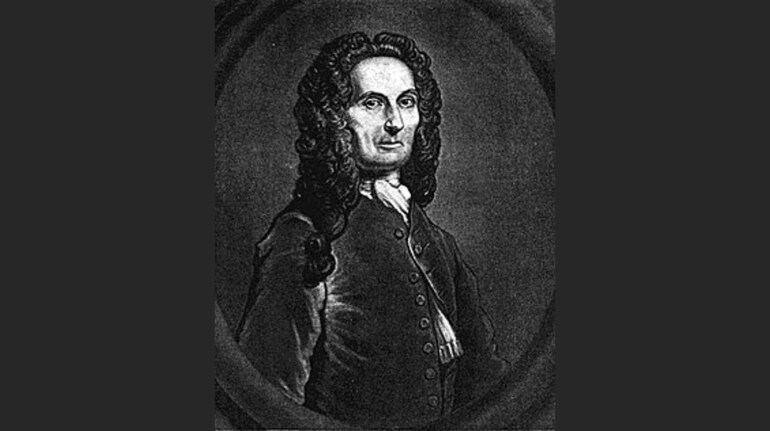

A long repeated tale claims mathematician Abraham de Moivre predicted his own death through calculation, yet historians continue disputing the story centuries after his passing on November 27, 1754. The legend remains popular in books. Scholars, however, question its authenticity today.
The Legend Of Abraham de Moivre’s Prediction
According to the story, de Moivre tracked sleep. He supposedly needed fifteen extra minutes daily. He calculated when sleep would reach hours. The total would equal twenty four hours. That date allegedly matched his death. He indeed died in London that day. He was eighty seven years old then.
The tale appears in many publications. It is often repeated without evidence. Some writers present it as fact. Others describe it as charming folklore. The calculation involves arithmetic progression theory. That detail strengthens its narrative appeal.
Historian Helen M. Walker Questions The Tale
In 1934, historian Helen M. Walker examined the claim closely. Her biography appeared in Scripta Mathematica during August 1934. She wrote the tale lacked proof. Walker called the progression purely apocryphal. She found no contemporary confirmation anywhere.
Walker cited early biographers for evidence. These included Jean Paul Grandjean de Fouchy and Matthew Maty. Their works appeared soon after death. Neither biography mentions such prediction claims. Walker documented sources carefully and thoroughly. She suggested later writers shaped the legend.
Later Accounts And Lingering Doubts
The story resurfaced in later histories. Florian Cajori included it in 1893 writings. His book titled A History of Mathematics offered no clear source. The text targeted general readers mainly. It was not deeply scholarly research.
Another historian, W. W. Rouse Ball, repeated a similar version. He added no supporting reference. That absence leaves historians unconvinced today.
Maty’s 1755 biography in Journal britannique describes declining health. De Moivre required long daily rest. He sometimes slept nearly twenty hours. His sight and hearing weakened gradually. After several days confined to bed, he died peacefully in sleep.
Historians accept his frailty as fact. They doubt the precise mathematical forecast. The prediction story persists through repetition. Yet firm evidence remains notably absent.

Discover the latest Business News, Sensex, and Nifty updates. Obtain Personal Finance insights, tax queries, and expert opinions on Moneycontrol or download the Moneycontrol App to stay updated!
Find the best of Al News in one place, specially curated for you every weekend.
Stay on top of the latest tech trends and biggest startup news.