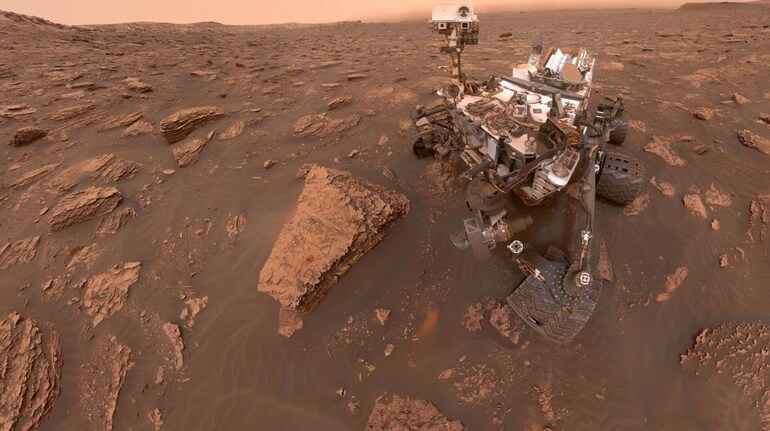

On 4 February 2026, scientists reported in the journal Astrobiology that non biological processes may not fully explain certain organic compounds detected on Mars by NASA’s Curiosity rover, raising fresh questions about the planet’s distant past. The findings build upon earlier rover analyses. Researchers examined whether chemistry alone explains results.
Curiosity rover findings in Gale Crater
In March 2025, scientists identified organic molecules. These included decane, undecane and dodecane. The compounds were detected inside rover laboratories. The samples came from ancient Martian mudstone. The rock was collected within Gale Crater. The rover involved is Curiosity rover.
Researchers described these as largest organics found. They suggested fragments of fatty acids. On Earth, fatty acids mostly indicate life. However, geology can also create them. The question remained whether life existed. Data alone could not confirm origins.
Astrobiology study examines non biological sources
The follow on research tested alternative explanations. Scientists considered meteorites striking the surface. Such impacts can deliver organic material. They evaluated whether this source sufficed. Results were published in Astrobiology on 4 February.
The team combined radiation laboratory experiments. They added detailed mathematical modelling methods. Curiosity data was integrated into analysis. Researchers effectively rewound the geological clock. They estimated about 80 million years exposure. That represents surface radiation timescales.
Long term cosmic radiation destroys organics gradually. Scientists calculated earlier organic abundances accordingly. Estimates suggested much higher original quantities. These levels exceeded typical non biological production. The conclusion suggested life remains plausible. Still, proof remains beyond current evidence.
What the findings mean for Mars life
Researchers stressed caution in interpretation. More work is required under Mars like conditions. They aim to measure breakdown rates precisely. Organic survival times remain uncertain.
The study does not confirm life existed. It states chemistry alone seems insufficient. Scientists emphasise continued rover exploration efforts. Future missions may return Martian samples. Until then, questions about life persist.
Discover the latest Business News, Sensex, and Nifty updates. Obtain Personal Finance insights, tax queries, and expert opinions on Moneycontrol or download the Moneycontrol App to stay updated!





Find the best of Al News in one place, specially curated for you every weekend.
Stay on top of the latest tech trends and biggest startup news.