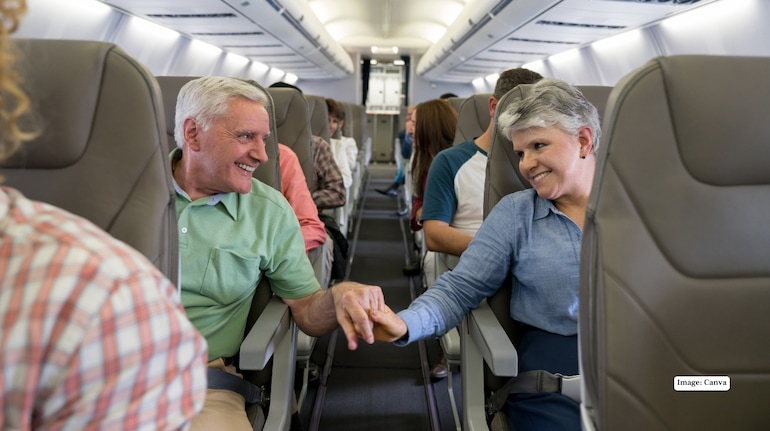

For a long time, flying together didn’t always mean sitting together for passengers in India. Families, couples and honeymooners often found themselves scattered across different rows unless they paid extra for preferred seats. Even bookings made under the same PNR didn’t guarantee adjacent seats, turning what should have been a shared journey into a separated one—unless travellers were willing to spend more.
That may finally be changing.
In a major passenger-friendly move, the Ministry of Civil Aviation has introduced new guidelines aimed at making air travel more transparent, affordable and convenient. The directions, issued through the Directorate General of Civil Aviation (DGCA), focus on reducing add-on costs and improving the overall flying experience.
Under the transformational leadership of Hon’ble Prime Minister Shri Narendra Modi Ji, India has established itself as the world’s third-largest domestic aviation market.Supported by the UDAN scheme, air travel in India has evolved from being an elite privilege to an inclusive… pic.twitter.com/gbr2YmROIb — Ram Mohan Naidu Kinjarapu (@RamMNK) March 18, 2026
What the new rules mean for passengers
The government has laid down a series of measures that airlines will now need to follow:
1. At least 60% of seats on every flight must be offered free of charge, ensuring fair access for passengers.
2. Travellers booked under the same PNR should be seated together, preferably in adjacent seats.
3. Airlines must ensure clear and transparent policies for carrying sports equipment, musical instruments and pets.
4. Strict adherence to passenger rights in cases of delays, cancellations or denied boarding.
5. Passenger rights must be clearly displayed across airline websites, apps, booking platforms and airport counters.
6. Information about passenger entitlements should also be communicated in regional languages for better awareness.
Why this matters
The move comes amid rising complaints from flyers about hidden charges, especially for seat selection. Over the years, ancillary fees have steadily increased, making air travel more expensive than it initially appears.
According to the government, India is now the world’s third-largest domestic aviation market, with more than five lakh passengers flying daily. As more Indians take to the skies, improving affordability and transparency has become a key priority.
A step towards fairer flying
These new guidelines are expected to ease long-standing concerns around seating and extra charges. For families, elderly travellers and couples, the assurance of sitting together without paying extra could make a meaningful difference.
If implemented effectively, the changes could make flying in India not just more predictable, but also more passenger-friendly—something frequent flyers have been hoping for.

Discover the latest Business News, Sensex, and Nifty updates. Obtain Personal Finance insights, tax queries, and expert opinions on Moneycontrol or download the Moneycontrol App to stay updated!





Find the best of Al News in one place, specially curated for you every weekend.
Stay on top of the latest tech trends and biggest startup news.