Dear Reader,
In the long run, as John Maynard Keynes said, we are all dead. But he lived 23 years after writing that, so presumably he would have agreed that forecasts for a decade ahead may not be entirely useless. At least the World Bank seems to think so, which is why it has come out with a study titled, ‘Falling Long-Term Growth Prospects: Trends, Expectations and Policies’, the long-term here referring to the rest of the current decade, up to 2030.
The general tenor of the report is all doom and gloom. It talks of a “lost decade in the making—not just for some countries or regions as has occurred in the past—but for the whole world”. It says, “Nearly all the economic forces that drove economic progress are in retreat.” It warns of “a deepening crisis of development—because all the fundamental drivers of economic growth have faded”.
To be sure, the World Bank report also has policy prescriptions to mitigate the impending disaster, but these are the usual reform proposals plus a call for international co-operation and financing from the global community, the prospects of which appear extremely dim at this juncture.
The study says the global average potential GDP growth rate—the growth rate an economy can sustain over the medium term based on investment and productivity rates without high inflation—is expected to fall to a three-decade low of 2.2 percent a year between now and 2030, down from 2.6 percent in 2011-21 and from 3.5 percent in the first decade of this century. And that’s just the baseline case.
What are the reasons? The biggest one is the ageing of the global population and the shrinking of the working age population, which accounts for half the slowdown. Then there’s a slowing of productivity and investment growth and a sharp weakening of growth in international trade. And then there’s climate change and geopolitics.
If all this reminds you of the Woody Allen quote, “more than any other time in history, mankind faces a crossroads. One path leads to despair and utter hopelessness. The other, to total extinction. Let us pray we have the wisdom to choose correctly”, you’re not alone.
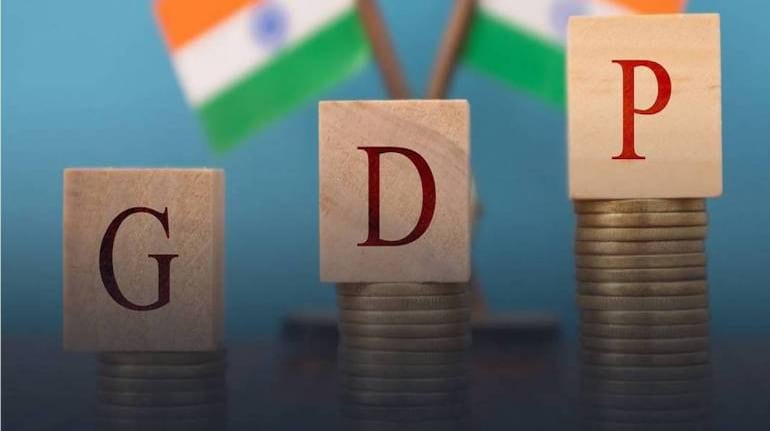
But thankfully, in the midst of this Slough of Despond, there is a sliver of hope. That sliver is India. The World Bank report says the region that will have the highest potential growth for the rest of the decade will be South Asia. And since they can hardly be referring to basket cases like Pakistan and Sri Lanka, by South Asia’s resilience they must mean India and perhaps to some extent Bangladesh. The report says, “Potential output growth in SAR (South Asian Region) is projected to average 6.1 percent a year between 2022-30, a slight slowdown from 6.2-6.3 percent a year in the 2000s and 2010s. This slowdown is less pronounced than in other regions and leaves potential growth well above that in other EMDE (Emerging Market and Developing Economies) regions. Per capita potential growth is expected to rise slightly to 5.1 percent from 5 percent in the 2010s.” India could be a beacon of light in a darkening world.
The report approvingly cites the Indian government’s reforms and push to infrastructure. It applauds the changes in labour laws, the privatisation programme and the improvement in logistics. It says that total factor productivity in the region is expected to be higher, thanks to “assumed improvements in educational attainment, despite pandemic setbacks, as well as improvements in transport connectivity and agricultural productivity”. And if the region can improve its abysmal female labour force participation rate to the developing country average, potential growth would be 1.2 percentage points higher.
The worst affected by the global slowdown is the East Asia and Pacific region, thanks to China. The report says that in the remainder of the current decade, potential output growth in the East Asia and Pacific region is projected to slow to 4.6 percent a year, from 6.2 percent a year in 2011-21. It adds, “China’s potential growth will continue to decelerate on diminishing returns to capital investment and slowing TFP (Total Factor Productivity) growth. Potential growth in the rest of the region is also expected to decline somewhat as a result of slowing labour force growth.”
The usual caveats about this being an age of uncertainty apply, of course. It’s true that slower global growth may benefit India on account of lower commodity and crude oil prices and because India’s growth is mainly dependent on domestic demand. But it would be foolhardy to believe we can escape global uncertainties, the most important one at present being whether the developed country central banks can pull off the near-impossible task of ensuring a soft landing for their economies without inflicting significant damage to financial markets. As our columnist Ajay Bagga says, systemic fragility is still very much in evidence. And in this FT article, free to read for Moneycontrol Pro subscribers, celebrated columnist Martin Wolf writes about “the delusion that there is a simple solution to the failings of our financial systems and real economies”.
Let’s also not forget that India is one of the countries most exposed to the dire consequences of global warming.
Nevertheless, the World Bank study buttresses the claims of the Indian government, the Reserve Bank of India and our own analysis that India is now in a sweet spot. Unfortunately, nobody expects the double-digit growth rates that China achieved in the past.
In the markets, though, what counts is relative performance and, as Bob Dylan sang, shelter from the storm.
Cheers,
Manas Chakravarty
Here are some of the stories and insights we published this week, apart from our technical picks in the equity, commodity and forex markets:
Stocks
Heritage Foods, Weekly tactical pick, Mahindra CIE, The impact of the withdrawal of long-term tax benefit on debt schemes on bank & AMC stocks, Nine high-dividend stocks, Ramkrishna Forgings and the CV upswing, Dwarikesh Sugar, Indraprastha Gas, Sun Pharma, Devyani International, Hindustan Aeronautics, Godrej Consumer Products
Financial Times
Ruchir Sharma: The unstoppable rise of government rescues
Middle East on ‘radar’ of global investors as it enjoys IPO boom
Markets
The markets do not believe the Fed
Adapting day trading in derivatives to a higher STT regime
Economy
Flash PMIs show strong growth in major advanced economies, despite banking panic
Companies and industry
Akasa’s early success a warning to the big boys of Indian skies
The difference between Accenture and Indian IT firms
Is fine print in the Finance Bill amendment a risk for ITC?
Margin recovery for auto components
Will NBFCs bond more with public issues?
Policy
Capital gains tax—is there a method to the madness?
Is there a solution to recurrent bank crises?
SEBI’s announcement will make trading costly and affect discount brokers
India’s gaming ecosystem deserves policy handholding
Debt mutual funds—throwing the baby out with the bathwater
The economic case for a right to health
The Chinese investment problem facing Indian policymakers
Booking a fraudster became a bit more onerous for bankers
SEBI needs to be consistent in how it defines net worth
Charts of the week
A test for the insurance heft in bond market
Why the government wants you to pay more tax on capital gains
Fertiliser subsidy may drop below budget estimates in FY24
Will NBFC funding get hit due to change in debt MF taxation?
Politics
Ruling parties tinker with caste quotas ahead of elections
Heterogenous societies need to learn from the UK
Will Rahul Gandhi become a martyr after his disqualification?
Geopolitics
The Eastern Window: China’s influence in Nepal ebbs
India needs deeper ties with Indonesia to counter China
Others
Personal Finance: Finance bill amendments cast a burden on investors and the capital market
Guruspeak | How Kushal Jain worked his way through college developing and trading Algos

Discover the latest Business News, Sensex, and Nifty updates. Obtain Personal Finance insights, tax queries, and expert opinions on Moneycontrol or download the Moneycontrol App to stay updated!
Find the best of Al News in one place, specially curated for you every weekend.
Stay on top of the latest tech trends and biggest startup news.