-
Meet Tyson: The Indian Army sniffer dog who was shot but helped hunt down 3 terrorists in J&K
Shot in the leg yet still charging forward, Army dog Tyson helped security forces uncover a hidden militant hideout in Kishtwar, turning a dangerous counter-terror mission into a decisive success.
-

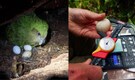
World’s only flightless parrot "Kakapo" enters rare breeding bloom in New Zealand after four years
After four silent years, the world’s only flightless parrot is breeding again. Fertile eggs and healthy chicks signal cautious hope in New Zealand. Scientists believe this unusual breeding season could reshape conservation forecasts.
-
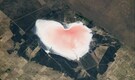
NASA spots stunning heart-shaped pink lake from the International Space Station
A pink, heart-shaped salt lake spotted from space in Argentina is more than a romantic image, as shifting microbes, salt and climate quietly reshape its colour and meaning.
-
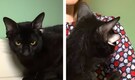
Meet Dobby, not a character from Harry Potter but a "four-eared cat" from Alabama stuns the internet!
Dobby the four-eared kitten is taking the internet by storm. But how can a cat grow extra ears? Scientists explain the rare developmental mutation behind this fascinating feline.
-
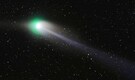
This Sungrazer Comet, brighter than Venus to shine in skies: When and where to see it in India
A newly discovered sungrazing comet could soon outshine Venus in the evening sky, but its fate hangs in the balance as it races towards a fiery, make-or-break encounter with the Sun.
-
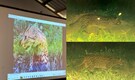
Project Fishing Cat: Kaziranga National Park records 57 Fishing Cats in its first focused survey
Kaziranga National Park records 57 Fishing Cats in its first focused survey, strengthening its status as a crucial freshwater habitat in India. Kaziranga’s wetlands have become stronghold for one of Asia’s most mysterious small cats.
-
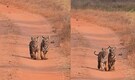
Twin tiger cubs from Tadoba Tiger Reserve steal hearts across the internet
A slow-motion video of tigress Kuwani’s twin cubs playing inside Tadoba Tiger Reserve has melted hearts online, but their carefree prance hints at a bigger conservation story unfolding quietly in India’s forests.
-
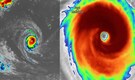
Cyclone Horacio intensifies to first category 5 storm of 2026 — Will it affect India? Here's what to know
Cyclone Horacio has become the world’s first Category 5 storm of 2026, intensifying over the South Indian Ocean with 160 mph winds, though it currently poses no threat to India.
-
Martian ‘spiderwebs’ revealed: Curiosity rover uncovers signs of long-lost groundwater
NASA’s Curiosity rover has uncovered spiderweb-like ridges high on Mars’ Mount Sharp, hinting at long-lasting groundwater. Could these strange formations rewrite what we know about ancient Martian life?
-
NASA's Chandra X-ray observatory captures young "Sun-like star" blowing bubble for the first time ever!
NASA’s Chandra Observatory captured a young Sun-like star blowing a giant X-ray bubble, revealing for the first time how stellar winds shape planets and space environments.
-
Released into the Wild: 5 "critically endangered" vultures were released at Halali Dam wetland in Madhya Pradesh
Madhya Pradesh Chief Minister released five critically endangered vultures at Halali Dam wetland, marking a major step for conservation and ecosystem restoration in central India.
-
307-million-year-old plant-eater: Scientists found "Tyrannoroter heberti" could be the first plant eating animal
A 307-million-year-old tetrapod, Tyrannoroter heberti, is one of the earliest known plant-eaters on land. Its tiny teeth reshaped ecosystems and paved the way for humans’ plant-based meals.
-
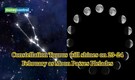
Constellation Taurus shines bright in tonight’s sky — Here’s what makes the ‘Bull’ special
Tonight, look up as the Moon meets the Pleiades in Taurus, a constellation packed with star clusters. Know about scientific significance of the constellation Taurus along with when and where this celestial event will take place.
-
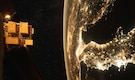
Golden glow over Italy: ISS captures dazzling night lights stretching from Naples to the Alps
A stunning night-time image captured by the International Space Station shows Italy glowing from Naples to the Alps, revealing science, geography and human presence in light.
-
First Time in India: With ISRO and IN-SPACe, India conducts its "first semi-cryogenic engine" cluster test
India has achieved a major space milestone as Agnikul Cosmos successfully test fired three 3D-printed semi-cryogenic rocket engines together, marking a first for the country’s private space sector.
-
Six-Planet Alignment on 28 February: Will India see this "rare sky event" as it approaches in 5 days!
Six distant worlds will briefly share the same evening sky on 28 February. As the rare planetary alignment approaches, skywatchers in India to get ready for a cosmic spectacle and know what makes this celestial event special.
-
Why is the Sun so hot? Science explained for kids behind this phenomenon
Why is the Sun so hot? Discover the simple science behind nuclear fusion, the powerful reaction that makes our star shine and keeps Earth warm.
-
Great Pyramid of Giza: This 4,500-year-old wonder amazes scientists with perfect "solar halo"| WATCH
A viral video captures an incredible “solar halo” forming above the Great Pyramid of Giza. The 4,500-year-old monument appears to meet a 4.6-billion-year-old star in a breathtaking cosmic alignment, creating a rare celestial spectacle.
-
NASA's Artemis II launch delayed again due to helium flow; the launch pushed to April 1
NASA has delayed Artemis II once more after a helium system issue was detected in the Space Launch System rocket, pushing the crewed Moon mission towards April 2026.
-
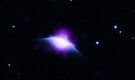
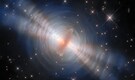
NASA's Hubble captured rare glimpse of the "Egg Nebula" in the stellar transformation
The Hubble Space Telescope has unveiled a remarkable new view of the Egg Nebula, the closest known pre-planetary nebula to Earth. The image captures a Sun-like star casting off its outer layers, freezing a fleeting and rarely observed stage of stellar transformation.
-
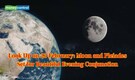
Moon Glides Past the Pleiades: Here’s When, Where and How to watch this stunning sky event on 23 February!
On 23 February, the Moon will appear close to the Pleiades star cluster in a beautiful evening sky conjunction. Visible between 6:00 and 7:00 PM EST, this celestial pairing offers skywatchers a rare chance to see Earth’s nearest neighbour.
-
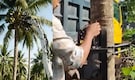
Meet Cocobot – This 11-kilogram robotic device is designed to climb 20-metre palm trees of Kerala
Developed by young engineers in Kerala, Cocobot is a coconut-harvesting robot designed to climb 20-metre palm trees and cut ripe fruit safely from the ground.
-
NASA's James Webb spots 8.5-billion-year-old ‘cosmic jellyfish’ galaxy being torn apart
Astronomers using the James Webb Space Telescope have discovered a rare “jellyfish galaxy” 8.5 billion light-years away, with long gas tentacles formed by cosmic stripping. This sighting suggests galaxy clusters were reshaping galaxies far earlier in the Universe.
-
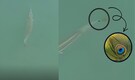
Peacock-like Tail: A rare needlefish with "peacock-like tail" found at Gomti Ghat in Dwarka, leaving internet stunned
A rare needlefish with a striking peacock-like tail has been spotted near Gomti Ghat in Dwarka, drawing both devotional awe and scientific curiosity. Experts say the unusual sighting may reveal fascinating insights into marine biodiversity.
-
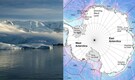
Scientists discover 300 hidden canyons beneath Antarctica – And they could accelerate ice melt
Scientists have mapped over 300 hidden submarine canyons beneath Antarctica, revealing ocean pathways that may speed up ice melt and alter climate forecasts. This research could reshape predictions of future sea-level rise.
-
Inside the Ageing Cell: How a tiny worm revealed a process that may drive ageing in animals?
Ageing may not simply be the result of damage piling up over time. Scientists studying microscopic worms have discovered a striking structural change inside cells that could play a central role in how animals grow old.
-
China tests World’s first megawatt-class flying wind turbine that powered a home for nearly two weeks
A blimp-like turbine rising 6,560 feet above China has generated electricity from powerful high-altitude winds, hinting at a new frontier in renewable energy that could reshape crowded cities.
-
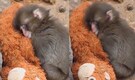
Abandoned at birth, comforted by an orangutan plush toy: Meet Punch, the ‘lonely’ baby monkey making the internet cry
Punch, a Japanese macaque born on July 26, 2025 at Ichikawa City Zoo, was abandoned by his first-time mother and hand-raised by keepers. Comforted by a plush orangutan toy, he became an online sensation. Reported by Mainichi Shimbun, his story touched thousands. In January 2026, he began rejoining the macaque troop. Early interactions were tense, but grooming sessions now signal growing acceptance and hopeful social recovery.
-
NASA unveils dazzling green auroras glowing above Earth in stunning space station view
NASA has released a breathtaking timelapse of glowing green auroras filmed from the International Space Station, revealing how solar particles transform Earth’s skies into a sweeping cosmic light show.
-
NASA plans March 6 launch to send four astronauts around the Moon for the first time in 50 Years
NASA is preparing to send astronauts around the Moon for the first time in decades, as Artemis II moves closer to launch and a new lunar race quietly intensifies.
-
A 410-foot, building-sized asteroid to sweep past Earth today at 21,306 miles per hour, NASA alerts
Asteroid 2025 YU15 will sweep past Earth at remarkable speed this February, drawing global attention and raising questions about how closely scientists are watching the next celestial visitor.
-
Scientists map best- and worst-Case futures for a rapidly warming Antarctica
Scientists have mapped Antarctica’s possible climate futures, revealing how rising emissions could shrink sea ice, threaten penguins and raise sea levels — yet they say the worst may still be avoided.
-
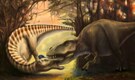
Astonishing Spinosaur unearthed in the Sahara reveals a skull crest unlike any seen before
A newly discovered Spinosaurus species from Niger features a dramatic crest never seen before, raising fresh questions about its semi-aquatic lifestyle and the mysterious purpose of its striking skull display.
-
UN warns Earth has entered ‘water bankruptcy’ as rivers and aquifers run dry
A new UN report warns the world is spending its water “savings” faster than nature can replace them, raising fears of shortages, unrest and collapsing rivers unless urgent action follows.
-
The Southern Indian Ocean is rapidly losing salt, scientists warn of global ripple effects
A huge stretch of the Southern Indian Ocean is rapidly losing its salt, and scientists warn this subtle shift could quietly disrupt global ocean currents and marine life in unexpected ways.
-
Meet Punch, the ‘lonely’ monkey whose orangutan plush toy melted hearts across the internet
Abandoned at birth, a tiny macaque named Punch clung to an orangutan plush toy for comfort, melting hearts online. Now, he’s taking tentative steps toward friendship and belonging.
-
NASA completes Artemis II Moon rocket wet test successfully but is the lunar launch truly ready?
Nasa has completed a full countdown rehearsal for Artemis II, fuelling its giant Moon rocket and stopping just seconds before launch, bringing astronauts one step closer to deep space.
-
5,500 years ago, a teenage girl was buried with her father’s bones on her chest, a DNA study reveals
A Stone Age cemetery in Sweden has revealed surprising burial secrets, as DNA shows hunter-gatherers were often laid to rest with distant relatives rather than immediate family members.
-
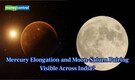
Two Celestial Event: Mercury at its brightest and Moon close to Saturn — Will India witness this on 19th February?
On 19 February 2026, Mercury reaches its greatest eastern elongation, while the crescent Moon appears close to Saturn, creating a striking evening display visible across India, North America, and Europe.
-
A giant hidden gravity hole under antarctica is expanding and Earth’s interior may be driving it
A mysterious gravity dip beneath Antarctica is growing stronger, shaped by deep Earth forces over millions of years. Scientists say it may even have influenced ancient sea levels and ice sheet growth.
-
Gaganyaan 2026 Update: DRDO and ISRO completed "qualification level load test" of drogue parachute in Chandigarh
India’s ambitious human spaceflight mission has cleared another crucial hurdle. A high-intensity qualification test of the drogue parachute system for the Gaganyaan programme has been successfully carried out in Chandigarh.
-
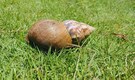
The world's largest snail is nearly one meter long and almost as heavy as a three-year-old child
A pet snail in West Sussex once stunned record keepers with a 27.3cm shell, yet ocean species grow far larger. So which snail truly claims the crown for size?
-
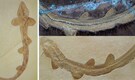
Meet Bavariscyllium: This 25-centimetre shark that lived 150 million years ago forced scientists to re-think shark evolution
A remarkably preserved 150-million-year-old shark fossil is forcing researchers to reconsider how modern sharks evolved. The species, Bavariscyllium, displays a mix of features that do not align with today’s major shark groups.
-
At 71, Romeo the ‘gentle giant’ becomes the oldest manatee ever recorded
At 71 and possibly older, Romeo the West Indian manatee has become the oldest ever recorded. How did this gentle giant outlive the odds and shape decades of conservation?
-
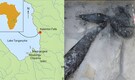
World’s oldest wooden structure is 476,000 years old— And it was built before homo sapiens in Africa
Archaeologists have uncovered a 476,000-year-old wooden structure near Kalambo Falls in Zambia, making it the oldest known timber construction on Earth. The discovery predates Homo sapiens and suggests early human ancestors made this wooden structure.
-
Watch: First confirmed shark recorded in Antarctica’s icy waters stuns scientists
For the first time, scientists filmed a massive shark cruising through near freezing Antarctic waters, where sharks were thought absent. What else could be hiding in the ocean’s coldest depths?
-
Tooth in the bone: Montana Museum fossil reveals face to face Tyrannosaurus attack
A dinosaur skull displayed in Montana holds a broken Tyrannosaurus tooth lodged in its face, revealing a violent encounter 66 million years ago. Did this fossil capture a predator’s final strike?
-
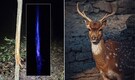
Do Deers have a favourite fragrance? Study finds they choose strong-scented trees
New research reveals deer may deliberately prefer resin-rich trees during the rut. These scented surfaces help carry chemical signals and astonishingly, this may reflect ultraviolet light visible to deer.
-
There is no way to stop thousands of ‘city killer’ asteroids from hitting Earth, NASA scientist warns
NASA officials warn thousands of undetected “city killer” asteroids may be circling near Earth. With limited deflection tools ready, are we prepared if one suddenly shifts onto a collision course?
-
Is the Moon "alive"? Scientists find signs of active tectonics beneath its surface
New research suggests the Moon is still tectonically active, with small ridges and moonquakes revealing ongoing crustal movement. This is a key concern for future Artemis missions that will be launched by NASA.