






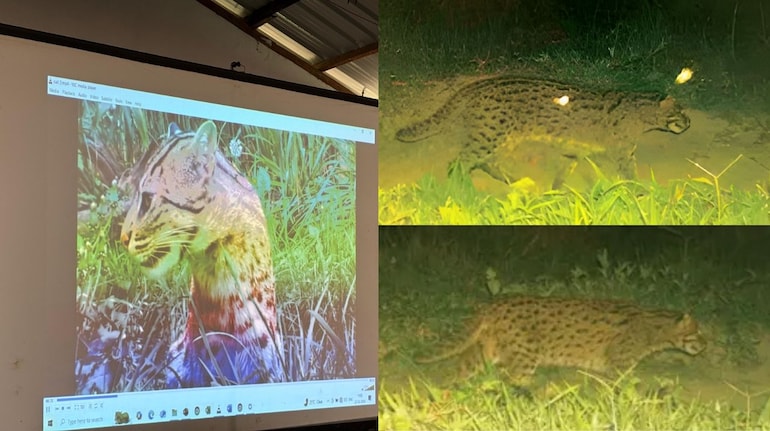

Kaziranga National Park has revealed a remarkable secret to scientists. Recent surveys have recorded 57 individual Fishing Cats moving silently through its vast wetlands. This discovery confirms that Kaziranga is not just a sanctuary for rhinos and tigers, but also a crucial refuge for one of Asia’s most elusive small predators.
The findings come from camera traps originally placed for tiger estimation surveys. Experts believe the real number could be even higher, as smaller cats are harder to detect.
First Dedicated Assessment Unveils Surprising Numbers
For the first time, researchers conducted a focused assessment on fishing cats. The camera traps that were originally set for tigers, captured these elusive cats. Experts suggest the actual population might be even higher.
Smaller cats are often missed in broader wildlife surveys. Kaziranga has recorded over 57 fishing cats. This sighting makes it one of the highest recorded in the floodplain ecosystem.
Fishing Cat Day marked with an Outreach Session at JDSG College, Bokakhat! From expert talks & report releases. 🌿🐾 Kaziranga emerges as a stronghold for the globally vulnerable Fishing Cat with grassland-wetland complex with a minimum of 57 individuals recorded. pic.twitter.com/6KgeSNQqVl— Kaziranga National Park & Tiger Reserve (@kaziranga_) February 23, 2026
Collaboration Behind the Research
This landmark assessment was not the work of a single team. The reserach was conducted by Tiger cell of Kaziranga. They collaborated with Tiasa Adhya who is a scientist monitoring Fishing Cat project. The numbers of these cats were presented in UNESCO World Heritage site. The forest officials from Kaziranga supported field operations and logistics.
A Wetland Wonderland for Small Predators
Fishing Cats, scientifically known as "Prionailurus viverrinus", always prefer wetlands. Kaziranga’s floodplains, rivers and ponds provide ideal hunting grounds for these cats. They are skilled swimmers and hunt fish with remarkable precision.
The park’s marshes, often overlooked, now gain recognition for biodiversity. Kaziranga provides one of the few secure refuges left for them.
Fishing Cat February on the move! 🐾 Local students from forest fringes joined a thrilling Safari with experts #TheFishingCat Project & KNPTR team—exploring floodplains and uncovering the secrets of the elusive Fishing Cat. 🌿🌊 pic.twitter.com/As11qpA8Tn — Kaziranga National Park & Tiger Reserve (@kaziranga_) February 22, 2026
Why Scientists Are Excited?
This survey offers a baseline for future monitoring efforts. It helps track population trends amid climate change threats. Floodplains are sensitive to seasonal shifts and human interference.
Fishing Cats act as a key indicator of wetland health. Scientists plan more detailed surveys using specialised traps. These will provide clearer data on distribution and population size.
Conservation Value Beyond the Famous Rhinos
Kaziranga is known worldwide for its one‑horned rhinos and tigers. But these small cats reveal the park’s hidden ecological treasure. Healthy fishing cat populations indicate thriving wetland ecosystems. Fishing Cats face severe threats across Asia. Protecting the wetlands would benefit countless other species and local communities.
Discover the latest Business News, Sensex, and Nifty updates. Obtain Personal Finance insights, tax queries, and expert opinions on Moneycontrol or download the Moneycontrol App to stay updated!
Find the best of Al News in one place, specially curated for you every weekend.
Stay on top of the latest tech trends and biggest startup news.





