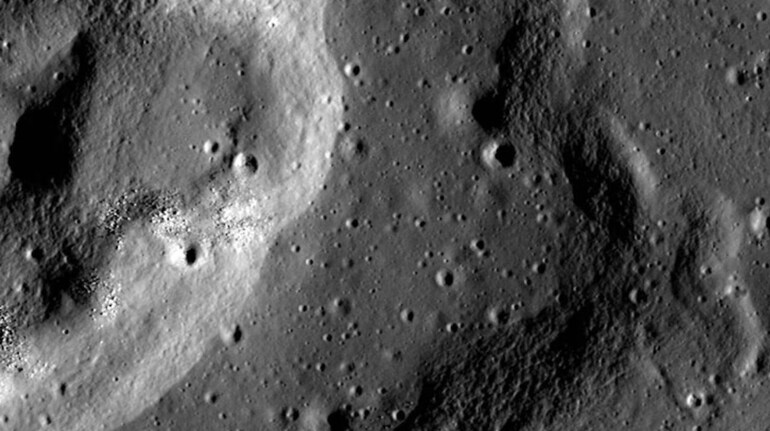

For decades, the Moon was considered a geologically “dead” world. It is a cold, inactive rock preserving scars from ancient impacts and volcanic eruptions. But new findings suggest that beneath its dusty surface, the Moon may still be moving.
Scientists have mapped thousands of tiny wrinkle-like formations called small mare ridges across the lunar surface. These features are signs of tectonic activity meaning that the Moon’s crust is still cracking and compressing.
What Is Causing the Moon to Shift?
The Moon has been slowly cooling for billions of years. As it cools, it contracts and this contraction creates stress in the crust. Earth’s gravity also pulls on the Moon.
This tidal stress can trigger fractures.
Extreme temperature swings add further strain. Together, these forces may generate "moonquakes". These quakes are weaker than earthquakes, but they confirm that the lunar crust still moves.
Lunar Maria: The Mysterious Ridges across Moon
The ridges are found across the Moon’s dark plains, known as the lunar maria. These plains were formed billions of years ago by flowing lava after massive asteroid impacts. NASA researchers identified more than 1,000 previously unmapped small mare ridges, bringing the total known count to over 2,600.
These ridges form when the Moon cools and contracts, causing the crust to buckle and break along shallow thrust faults. What surprised scientists most is their age. Many of these features are estimated to be only about 124 million years old which is extremely young in geological terms.
Moonquakes and Hidden Risks that Shocked Scientists
These ridges are not just surface wrinkles, but they are linked to moonquakes. Seismic data from past missions of Moon recorded moonquakes. Some of them lasted longer than similar quakes on Earth. The Moon’s dry crust allows vibrations to persist. The discovery of widespread young ridges suggests that shallow seismic activity could still occur across various regions.
Why This Matters for upcoming NASA's Artemis Program
NASA’s Artemis program aims to return humans to the Moon and eventually build a long-term presence there. If the lunar surface is tectonically active, even mildly, mission planners will need to carefully assess landing zones and future base locations. The structures built near active fault lines could face stability challenges over time.
The Moon is not dead, it's just quietly evolving
The Moon may not have plate tectonics like Earth, and it certainly doesn’t have shifting continents. But these findings show it is not entirely still. This discovery reshapes how scientists view lunar geology.
It also highlights how planetary bodies evolve differently. The findings challenge the idea of a completely inactive Moon. Instead, it appears to be slowly reshaping itself.
Discover the latest Business News, Sensex, and Nifty updates. Obtain Personal Finance insights, tax queries, and expert opinions on Moneycontrol or download the Moneycontrol App to stay updated!
Find the best of Al News in one place, specially curated for you every weekend.
Stay on top of the latest tech trends and biggest startup news.