-
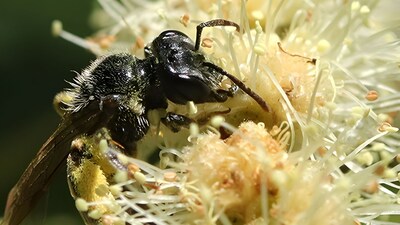
Missing since 1904, Chestnut Mining Bee makes a surprise comeback in New York
Scientists have rediscovered the rare Chestnut mining bee in New York after more than 120 years, raising hope that lost pollinators may still survive in restored chestnut habitats.
-

Who is Ruby Reynolds? The 11-year-old-girl who discovered world’s largest known marine reptile in England’s Coast
An 11-year-old fossil hunter helped scientists discover remains of a giant marine reptile that lived about 202 million years ago and may have been the largest sea reptile ever.
-
Two-Planet Alignment on June 9: Know when, where and how will Venus and Jupiter will appear "extremely close"
A rare planetary conjunction will bring Venus and Jupiter together in the evening sky on June 9, 2026, offering a bright celestial display visible without telescopes.
-
Reintroduced in Romania: 25 giant Griffon Vultures who once disappeared 70 years ago were transferred from Spain
Romania's wildlife thrived again as 25 griffon vultures were reintroduced in the country. These vultures were transferred from Spain as it had disappeared from more than 70 years ago. They are being monitored for conservation programme by Romania.
-
ISRO successfully tests CE20 cryogenic engine at 22-tonne thrust in Tamil Nadu
India’s space agency ISRO fired its upgraded CE20 cryogenic engine for nearly three minutes at Mahendragiri, validating higher thrust performance for the LVM3 rocket and upcoming missions like Gaganyaan.
-
Huge 140-Foot, airplane-sized asteroid to pass near Earth today at high speed, NASA Confirms
A 140-foot space rock, Asteroid 2007 EG, will pass relatively close to Earth soon. Scientists say it’s harmless, yet they’re watching carefully. Why does this flyby matter for future asteroid defence?
-
NASA announces new Artemis II launch schedule to send 4 astronauts to the Moon on this date
NASA is preparing to send astronauts around the Moon for the first time in over 50 years. But after technical issues and delays, can the Artemis II mission finally make history?
-
Massive airplane-sized, 140-foot asteroid to cross paths with Earth tomorrow, NASA alerts
A 140-foot asteroid named 2007 EG is speeding toward Earth at over 17,000 mph and will make a close flyby soon.
-
Tehran’s air is cleaner than Delhi’s despite bombs, burning oil and war in Iran — why is that so?
Despite war and burning oil facilities, Tehran’s air is currently cleaner than New Delhi’s. Why is India’s capital still choking on smog? The surprising reasons reveal a deeper pollution crisis.
-
Black Rain in Iran: What is it? Serious health risks emerge as toxic clouds cover Tehran after US strikes oil facilities
Black smoke, oil-tainted rain and rising health fears are gripping Tehran after strikes on oil facilities. Experts warn the pollution could be unprecedented. Could toxic clouds spread far beyond Iran?
-
Scientists discover a massive 26 kg viper in Greece that weighs three times more than a king cobra
A prehistoric viper discovered in Greece may have outweighed today’s king cobra. Fossils suggest this ancient snake was massive. What do scientists know about Laophis crotaloides and its mysterious past?
-
An asteroid hits the North Sea, triggering a mega 330-foot tsunami, here’s what happened next
A mysterious structure hidden beneath the North Sea puzzled scientists for decades. Now new evidence reveals it formed after a powerful asteroid strike that unleashed a towering tsunami. What exactly happened there?
-
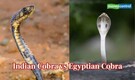
Indian Cobra vs Egyptian Cobra: Which snake reigns supreme in venom, agility and hunting skill?
Feared for deadly venom yet rich in cultural history, the Indian cobra and Egyptian cobra remain among the world’s most fascinating snakes. But their behaviour, hunting methods, and symbolism reveal a far deeper story.
-
Rare "Cougar Shadow" to appear on Superstition Mountains from 15 March in Arizona— Here’s When to See It!
Twice a year, the Superstition Mountains create a rare shadow resembling a cougar. The shadow will be visible from 15th March to 21st march. Visitors near Apache Junction can catch this fleeting sunset illusion during the equinox.
-
Grown in Tibet, this rare ‘Black Diamond’ apple can cost up to $20 each—Here’s what makes it so special
Black Diamond apples are a rare, high-altitude fruit from Tibet with deep purple-black skin and honey-like sweetness. Limited harvests and unique growing conditions make them highly prized and expensive.
-
Rare Hatchling: Meet this Painted River Terrapin, born at Smithsonian Zoo offering hope for critically endangered species
A rare painted river terrapin hatchling discovered at the Smithsonian National Zoo is giving conservationists hope for the survival of one of the world’s most critically endangered turtles.
-
Meet the ‘Mango Man of India’, who grows 350+ mango varieties including Modi and Aishwarya on one 125-year-old tree
In Uttar Pradesh, an extraordinary mango tree produces more than 350 varieties on a single trunk. How did one farmer create this remarkable tree that now attracts visitors worldwide?
-
Cat’s Eye Nebula: NASA’s Hubble and Euclid telescopes captured stunning new images as it marks its final stage
Astronomers have released a new view of the Cat’s Eye Nebula using Hubble and Euclid telescopes, revealing complex gas shells from a dying star in the Draco constellation.
-
Stretching over 40 miles and billions strong: Meet the terrifying power of Earth’s most destructive swarms
Desert locust swarms can stretch 40 miles wide and contain billions of insects. When they descend on farmland, crops vanish within hours. But what triggers these enormous swarms in the first place?
-
March Equinox 2026: Know what, when and how will this global astronomical event happen "worldwide" on 20th March!
The March equinox on March 20 will bring nearly equal day and night across Earth. Here’s what the event means and whether skywatchers in India will experience it.
-
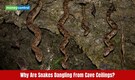
Snakes are hanging from cave walls on this Caribbean island, waiting to kill somthing, here's why
Deep inside Puerto Rico’s caves, a snake hangs silently from the ceiling, waiting. With perfect timing, the Puerto Rican boa lunges mid-air to snatch flying bats. How does this unusual hunting trick work?
-
A Possible World Record: This grapefruit-sized, 6-inch hailstone from powerful storm could become the largest ever recorded in Illinois
A powerful storm in Illinois dropped a massive 6-inch hailstone in Kankakee, which meteorologists say could become the largest hailstone ever recorded in the state.
-
Artemis II update: NASA is all set to reveal human moon mission launch plans tonight!
NASA will provide valuable update on Artemis II launch on 12th March at 3 p.m. EDT. The news conference will stream live on the agency’s YouTube channel. NASA is continuing work on the SLS (Space Launch System) rocket and Orion spacecraft.
-
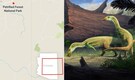
Scientists discovered a 200-million-year-old dinosaur fossil in Arizona; This crocodile cousin walked on 2 legs!
Scientists discovered a crocodile relative that is 200 million years old and had two legs. The diversity of reptiles during the Triassic period is shown by this discovery, which is long before crocodiles came into existence.
-
Alcohol in comet? Rare interstellar comet 3I/ATLAS found packed with Methanol, stunning scientists
Astronomers using ALMA have found large quantities of methanol in comet 3I/ATLAS, making it one of the most alcohol-rich comets ever detected. Scientists are gaining more insights in this case, as methanol is not found in space.
-
Amazon’s Hidden Turtle Paradise: Over 40,000 giant river turtles gathering spotted from the sky with drone
Scientists using drones discovered over 40,000 giant river turtles nesting along the Guapore River in the Amazon, revealing one of the largest known breeding sites for this endangered species.
-
Underwater Waterfall? Earth’s tallest waterfall lies 3,500 metres below ocean surface in Denmark strait
The Denmark Strait waterfall is over three times taller than Angel Falls. Its cold, dense water drives ocean currents, sustains marine life and regulates climate globally.
-
Rare Moment in Gir: Tree-Dwelling "yellow-footed green" pigeon spotted on forest floor in Gujarat
Maharashtra’s state bird, the Yellow-footed Green Pigeon, was spotted on the forest floor in Gir National Park. Scientists call this a rare sighting of the bird as it lives on trees mostly and come down to the forest floor to eat soil or lick minerals.
-
Meet the river older than the dinosaurs: This ancient water body has existed on Earth for 400 million years
A river in Australia may have been flowing for 300 to 400 million years, long before dinosaurs existed. How did the ancient Finke River survive dramatic geological changes for so long?
-
This Great Mormon butterfly is half male, half female —Mystery explained behind this rare condition
The great Mormon butterfly is one in every 10,000 butterflies who is half male and half female. Scientists explained this butterfly have a rare condition known as "Gynandromorphism" which occurs when an organism develops a mix of male and female tissues.
-
ISS captures dazzling view of India's night-time lights from the Arabian Sea to the Himalayas
Astronauts aboard the International Space Station (ISS) captured a breathtaking nighttime image of India glowing with city lights. The photograph shows illuminated urban centres stretching from the Arabian Sea to the Himalayas.
-
Volcano Kilauea erupts for the 43rd time with lava fountains reaching just over 300 feet in Big Island
One of Earth’s most active volcanoes, Kīlauea, has erupted again for the 43rd time in Hawai's Big Island. USGS reported the lava fountain reached up to 300 feet. Scientists have issued ashfall alert in the nearby areas.
-
Lasted for 6 seconds: ESA begun its investigation on the "fireball" that strike a German home in Europe
European Space agency begun its investigation on the fireball meteor that struck a German home in Europe. It entered the Earth's Atmosphere on 8th March and lasted for six seconds in the night sky.
-
Karnataka man grows world’s most expensive mango worth Rs 3 lakh/kg on terrace, here’s how you can grow it at home
A rare Japanese fruit worth up to Rs 3 lakh per kg is now growing on an Indian rooftop. How did a gardener in Karnataka manage to cultivate the famous Miyazaki mango?
-
NASA’s Dragonfly mission takes shape as rotorcraft enters crucial testing phase
The Dragonfly mission by NASA has entered integration testing phase on the rotorcraft in order to explore the Saturn's moon Titan. The launch is planned for 2028 which will happen from NASA Kennedy Space Center in Florida.
-
A bus-sized, 33-foot newly discovered asteroid will fly close to Earth today, NASA confirms
NASA confirms that asteroid 2026 CC3, about the size of a bus, will make a close flyby of Earth on March 11, 2026, at a distance roughly four times that of the Moon’s orbit. Is this asteroid a "danger" to Earth?
-
Who is San San? The 3-coloured eye cat from China become viral sensation with a "rare condition"
San San, the cat from China has a rare form of heterochromia. With its three colour eyes and its playful personality, this cat is winning the internet. Scientists said this rare condition does not harm the cat and can be found in humans too.
-
Jupiter will ‘change direction’ tonight as it reaches a stationary point, know why this happens
Jupiter, the biggest on the solar system will pause and reverse on 10th March 2026. This change according to astronomers is about stationary point and retrogression that happen due to the movement of the Earth around the Sun.
-
NASA’s 1,300-pound satellite is falling back to Earth after 14 Years — Scientists are watching it closely!
NASA’s Van Allen Probe A, launched in 2012 to study Earth’s radiation belts, is now re-entering the atmosphere after completing its mission, with most of the spacecraft expected to burn up.
-
Exotic "prime numbers" inside black holes? Physicists explore a strange link between black holes and mathematics
Scientists found exotic prime numbers may play a role in black hole physics, revealing a surprising connection between number theory and the extreme environments of the universe.
-
Meet Jonathan: This 194-year-old tortoise is the world's oldest living land animal on Earth
Jonathan, a Seychelles giant tortoise living on Saint Helena, has reached the remarkable age of 194, making him the oldest living land animal on Earth. Jonathan remains a beloved resident of Saint Helena and a global icon of resilience.
-
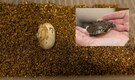
Rare Jurassic Nest: 150-million-year-old dinosaur egg nest discovered on Portugal’s Santa Cruz beach
Scientists discovered a 150-million-year-old dinosaur egg nest on Portugal’s coast, preserving multiple eggs in their original arrangement. This offers rare insights into Jurassic dinosaur reproduction and nesting behaviour.
-
Scientists uncover hidden species of Borneo's "fanged frogs" through DNA analysis
A new genetic study by researchers at Michigan State University reveals that Borneo’s “fanged frogs” may consist of several hidden species, highlighting complex evolution and the importance of DNA in biodiversity research.
-
Meet Buddharoid: An AI-powered humanoid robot that can act like a Buddhist priest made in Japan
Researchers at Kyoto University have developed Buddharoid. This is an AI-powered humanoid robot designed to act like a Buddhist priest, amid Japan’s priest shortage.
-
Astronomers revealed largest 3D map of universe from 11-billion-years-ago using HETDEX
Astronomers have created an enormous 3D map of the universe revealing a glowing “sea of light” from hydrogen gas during the cosmic dawn nearly 11 billion years ago.
-
WATCH | Two giant "Doomsday fishes" were spotted near shore in Mexico in a rare encounter with humans
Two giant oarfish, rarely seen deep-sea creatures sometimes called “doomsday fish,” were spotted near the shore in Cabo San Lucas, Mexico, in an extremely rare sighting.
-
Yellow Alert: IMD issues yellow alert as season’s first heatwave hits Ahmedabad, as temperature reached 40°C
Ahmedabad and several districts of Gujarat are experiencing the season’s first heatwave, with temperatures nearing 40°C. The IMD has issued a yellow alert warning of rising heat.
-
Namibian cheetah "Jwala" gives birth to 5 cubs at Kuno, population of Indian cheetahs climbs to 53!
A Namibian cheetah named Jwala has given birth to five cubs at Kuno National Park, raising India’s cheetah population to 53 and marking a major milestone for Project Cheetah.
-
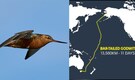
Longest Flight Ever: A Bar-tailed Godwit flies 13,560 km non-stop from Alaska to Australia in 11-day epic migration
The bar-tailed godwit has completed one of the longest non-stop migrations ever recorded, flying 13,560 km from Alaska to Australia in 11 days without landing.
-
Indian scientists found a rare red-coloured microbe in Antarctica that can survive up to 85 minutes of direct UV exposure
Scientists have discovered a rare red-coloured bacterium in an Antarctic lake that can survive extreme cold and intense UV radiation. The microbe could have important applications in biotechnology, medicine and astrobiology.