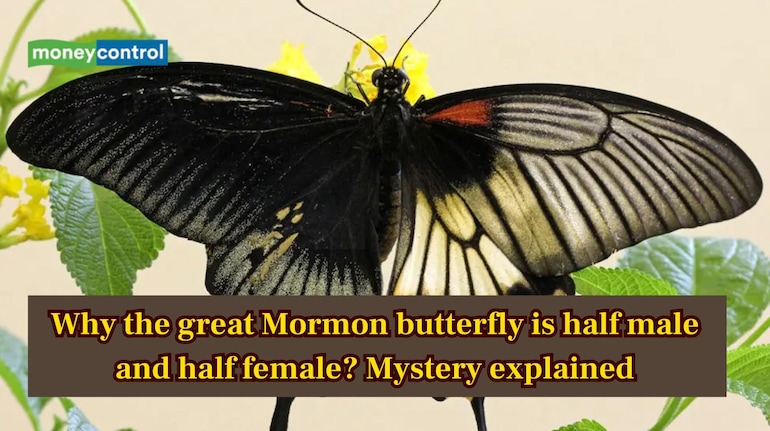

Butterflies depict the beauty of colours in nature. Have you ever come across a butterfly who is half male and half female? This phenomenon is known as bilateral gynandromorphism which is a rare condition in animals.
There is one butterfly species who is half male and half female that still exists in the wildlife. There is a scientific explanation behind this mystery.
A Butterfly with Two Different Appearances
One species often associated with this phenomenon is the Great Mormon butterfly. This large butterfly is found in South and Southeast Asia. Males usually have darker wings with simpler patterns, while females display more complex markings.
In a gynandromorph butterfly, both appearances may exist on opposite sides of the same insect. The insect shows different colours and wing patterns on each side of its body.
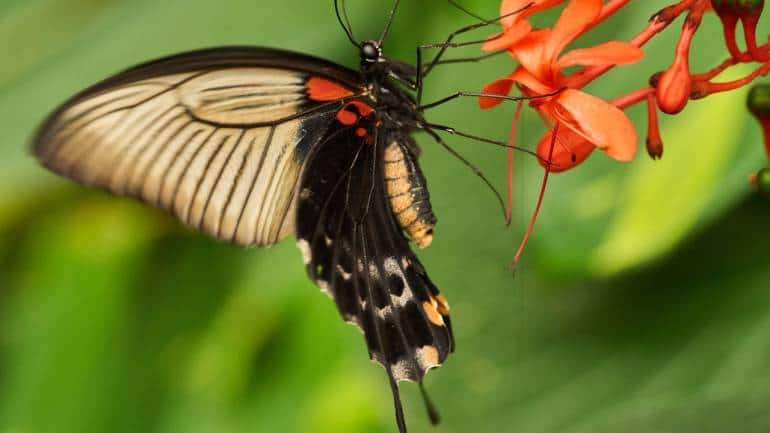 Great Mormon butterfly (Image: Canva)
A phenomenon known as "Gynandromorphism"
This rare condition is known as Gynandromorphism. It occurs when an organism develops a mix of male and female tissues.
In some butterflies, the division is extremely clear, with one side of the body appearing male and the other female.
Because male and female butterflies often have very different colours and markings, the contrast can be striking and easy to notice.
What is the science behind this Rare Condition?
Gynandromorphism happens during the earliest stages of development. It may occur when sex chromosomes fail to separate correctly during cell division.
As the embryo grows, some cells carry male chromosomes while others carry female ones, leading to a body made up of both male and female traits. As insects develop from rapidly dividing cells, a small genetic irregularity can affect a large portion of the body.
Extremely Rare in Nature
Gynandromorph butterflies are extremely rare. The condition is estimated at one in every 10,000 butterflies by researchers. The scientists tend to be interested in such individuals when they are found. They offer good information on development and genetics.
Is this phenomenon found in Butterflies only?
Butterflies are not the only ones who have this rare condition. Gynandromorphism has been recorded in a variety of other animals by scientists, including birds, lobsters and crabs. This is also found in other insect species such as bees and moths.
The study of these atypical animals assists researchers in comprehending the sex determination of cells better. It also gives indications regarding the development of organisms and genetic mistakes that occur in the initial stages of development may affect physical characteristics.
Discover the latest Business News, Sensex, and Nifty updates. Obtain Personal Finance insights, tax queries, and expert opinions on Moneycontrol or download the Moneycontrol App to stay updated!
Find the best of Al News in one place, specially curated for you every weekend.
Stay on top of the latest tech trends and biggest startup news.