-
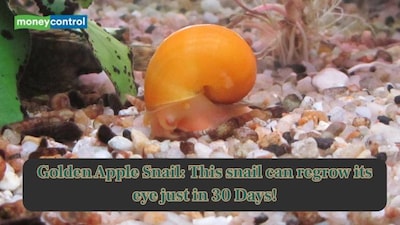
Golden Apple Snail: The snail that can regrow a complete "eye" in just 30 days!
The golden apple snail can fully regrow its entire eye in just 30 days, revealing extraordinary regenerative abilities with potential implications for human vision and medical research.
-

"Farewell Rivaldo": This iconic wild elephant dies at 50 in Mudumalai Tiger Reserve
Rivaldo, the friendly wild tusker of Mudumalai, has died at 50 symbolising rare human-elephant coexistence, reigniting debate over rewilding, conservation ethics and India’s growing habitat pressures.
-
WATCH | Elusive spot-bellied Eagle-Owl also known as "ghost of the forest" sighted within Jim Corbett in Uttarakhand
A rare spot-bellied eagle-owl, known as the “Ghost of the Forest,” has been sighted near Ramnagar in the Corbett landscape, sparking excitement and renewed conservation focus.
-
Meet Aditya Pandya: This 17-year-old became India’s youngest analogue astronaut to complete a lunar mission held in Gujarat
Seventeen-year-old Aditya Pandya becomes India’s youngest analogue astronaut after spending eight days inside a Moon-like habitat in Gujarat. He not only lived in a lunar-like habitat under strict isolation but also designed key hardware systems, including air-quality sensors and biometric monitoring tools.
-
World Hippo Day 2026: Why this massive 1,500-kilogram animal needs protection?
World Hippo Day 2026 is celebrated every year on 15th February. On this day, scientists warn that despite being Africa’s most dangerous mammal, hippos face habitat loss, poaching and climate threats.
-
Eyes on the sky as solar storm hits Earth on February 15: Date, best timings and what you’ll see
A G1 geomagnetic storm is forecast for February 15 as a CME and high-speed solar wind reach Earth, increasing chances of Northern Lights at higher latitudes.
-
First Time Sighting: A rare Southern Sleeper Shark was filmed 490 metres deep in Antarctic waters
Scientists have captured the first-ever footage of a rare southern sleeper shark in Antarctic waters, reshaping what we know about life in extreme oceans.
-
Who was Dennis Bell? Antarctica reveals 66-year-old mystery of "british scientist" missing since 1959
After 66 years beneath Antarctic ice, the remains of British meteorologist Dennis Bell have been recovered, as retreating glaciers reveal a frozen chapter of history.
-
The world’s biggest waterfall is invisible to the human eye but why and how?
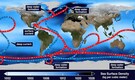
Beneath the icy waters between Greenland and Iceland flows Earth’s largest waterfall, three times taller than Angel Falls — yet completely invisible from the surface. How can something so vast remain hidden?
-
Meet the World’s deadliest cat: A 2-pound hunter hiding in abandoned holes across Africa
In Namibia’s dry grasslands, the tiny black-footed cat survives by borrowing underground homes from springhares. New research reveals a hidden partnership that could decide this rare predator’s fragile future.
-
Meet the World’s largest flower and discover the secret forests it calls home
Deep in Southeast Asia’s rainforests blooms a giant flower that smells like rotting flesh. Rare, parasitic and short-lived, Rafflesia arnoldii survives against the odds, but for how long?
-
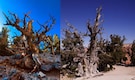
The World’s oldest tree is 5,000 years old and its secret location is closely guarded
Hidden high in California’s White Mountains, a solitary bristlecone pine has survived nearly 5,000 years. Guarded in secrecy, it holds climate secrets that stretch back to early civilisation.
-
NASA detects life’s building blocks streaming from interstellar Comet 3I/ATLAS
An interstellar comet racing through our solar system released methanol, methane and cyanide, NASA says. Could these life linked molecules hint at how worlds across the cosmos are seeded?
-
Are these molecules clues to ancient life? NASA study questions chemical origins of Mars organics
A new Astrobiology study suggests non biological processes may not fully explain organic molecules found by NASA’s Curiosity rover on Mars. Could ancient life be a possible answer?
-
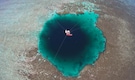
Inside the Dragon Hole of the South China sea, where oxygen vanishes from the ocean
Beneath the calm waters of the South China Sea, the Dragon Hole plunges over 301 metres, hiding twisting tunnels, vanishing oxygen and chemical secrets that scientists are only beginning to decode.
-
Did renowned mathematician Abraham de Moivre predict his death date? Here's the truth
A famous legend claims Abraham de Moivre calculated the exact date of his death using a sleep pattern formula. But did he truly predict it, or is history hiding a myth?
-
NASA’s Crew-12 lifts off successfully on a SpaceX Falcon 9 rocket from Florida
SpaceX has launched Crew 12 to the ISS at 3:45 pm IST, carrying four astronauts for an eight-month mission packed with 200 experiments. What discoveries await them in microgravity?
-
Hubble Space Telescope Captures the Final Breaths of a Dying Star in Stunning Detail
Hubble’s latest image reveals a young pre planetary nebula where a dying star expels dust and light. Why does this brief phase matter so much for understanding stellar evolution?
-
Astronomers detect ‘impossible’ solar system that defies planet formation theories
Astronomers have found a rocky planet where it should not exist, orbiting far from a cool red star. Could this strange “inside out” system rewrite how we think planets form?
-
Bacteria can ‘talk’ and are multilingual, says biologist exploring microbial language
Bacteria can make us sick or keep us alive. A leading scientist says they “talk” using chemical signals. Could silencing their conversations change how we treat deadly infections?
-
NASA’s Crew-12 to lift off soon: Here’s how to watch the SpaceX Falcon 9 launch live
Four astronauts are set to launch aboard SpaceX’s Falcon 9 at 3:45 pm IST, heading to the ISS for an eight-month mission packed with 200 experiments. What discoveries await in orbit?
-
Inside the 'World’s largest snake den': 100,000 red-sided garter snakes huddle beneath Manitoba
Every spring in Manitoba, up to 100000 red sided garter snakes emerge from underground limestone dens, forming swirling mating balls. Why do they gather here in such astonishing numbers?
-
SpaceX Crew-12 set for liftoff today: Four astronauts head to space station on 8 month science mission
SpaceX prepares to send four astronauts to the ISS today at 3:45 pm IST, with over 200 experiments planned. What will Crew 12 discover during their eight-month mission?
-
Two new NASA satellites "STRIVE" and "EDGE" to be launched by 2030 to study Earth’s changing systems
NASA has selected two new Earth observation missions namely STRIVE and EDGE to better understand changes in the atmosphere, ice sheets and ecosystems. These satellites are expected to launch no earlier than 2030.
-
Meet the 3-foot-tall ‘monkey-eating’ bird: The World’s largest Eagle on the verge of extinction
Standing 3 feet tall with a wingspan over 6 feet, the Philippine eagle rules the rainforest skies. But why is this powerful ‘monkey-eating’ giant now critically endangered?
-
"When thunder rolled, they didn’t run"—Giraffes were seen defying nature in this viral video!
As rain pours over the open savannah, giraffes remain still and exposed in a viral Maasai Mara clip. The unusual sight has sparked questions about their resilience and storm survival instincts.
-
Meet General Sherman: The largest tree in the World at 275 feet tall and 2,200 years old, older than the Roman Empire
Towering over California’s Giant Forest, the 2,200-year-old General Sherman tree is the largest on Earth by volume. But how does this ancient giant still grow and survive modern threats?
-
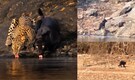
A Rare Sighting: Black Panther and Leopard spotted drinking side-by-side in Karnataka’s Bhadra Tiger Reserve
In a breathtaking wildlife moment at Karnataka’s Bhadra Tiger Reserve, a black panther and a leopard were photographed drinking water together under golden light. The rare sighting, believed to show a mother melanistic leopard with her young, has captivated social media.
-
Do animals celebrate "Valentine’s Day"? Here’s what science says about love in the wild
Animals may not celebrate Valentine’s Day, but courtship rituals, pair bonding and fierce competition shape love in the wild. Here’s what science reveals about attraction, chemistry and survival in nature.
-
Two celestial events in one day? Mercury and Moon to light up February 19 night sky!
February 19, 2026, brings a rare double celestial treat as Mercury reaches its greatest eastern elongation and a crescent Moon passes close to Saturn. Here’s when and where to watch these two-night sky events.
-
Called crazy, now the ‘Forest Man of India’: Meet Jadav Payeng, who turned hot sand into a forest larger than New York’s Central Park
Once mocked as crazy, Jadav Payeng quietly planted trees for decades on a barren sandbar in Assam. Today, his lone effort has grown into a forest larger than Central Park.
-
China’s tree-planting drive turns the harsh Taklamakan desert from a biological void into a carbon sink
China’s vast tree-planting drive around the Taklamakan Desert may be turning shifting sands into a carbon sink. But can forests truly tame one of Earth’s harshest landscapes?
-
Love written in the sky? Mesmerising heart-shaped northern lights spotted over Norway ahead of Valentine’s day
A Norwegian photographer captured a rare heart-shaped aurora glowing above Norway just before Valentine’s Day. Was it coincidence or cosmic timing? The stunning image has left viewers awestruck worldwide.
-
Darwin Day: How Charles Darwin cracked the "code of evolution"—And scientists still use this today!
Charles Darwin’s theory of evolution by natural selection transformed biology and continues to guide modern science, from genetics to medicine and conservation.
-
Hidden Under Ice: 175-million-year-old "pink granite" emerged beneath Antarctic ice, stuns scientists
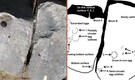
Scientists studying pink granite boulders in West Antarctica have discovered a massive, ancient granite structure hidden beneath the ice for 175 million years. This offers clues about ancient landscapes and ice behaviour.
-
Ancient wonder returns: "Lighthouse of Alexandria" stones found after 1,600 years underwater in Egypt
After more than 1,600 years underwater, massive stones from the legendary Lighthouse of Alexandria have been recovered. Using photogrammetry and 3D modelling, scientists are digitally reconstructing this ancient wonder.
-
What is the viral ‘Hiroshima Romance’ fireworks? Science explained behind this viral trend
A 27-second fireworks clip from Liuyang, China, has gone viral, earning the nickname “Love in Hiroshima.” The viral video showcases cutting-edge pyrotechnic science, where chemistry, physics and engineering combine to produce new type of fireworks.
-
Extinct for 100 years, this giant tortoise was found alive, and its comeback could change everything
Declared extinct for over a century, a lone giant tortoise has resurfaced on a remote volcanic island, raising urgent questions about survival, hidden populations, and whether a lost lineage can truly return.
-
Is Indian Ocean is losing its salt? Scientists warn of climate impact in India
Scientists have detected a major drop in salinity in one of the world’s saltiest ocean regions. The change could affect monsoons, marine life and global climate systems, raising new concerns about the impact of warming seas.
-
The ocean’s biggest mystery solved: Who’s really saving "blue crabs" from dying?
Scientists have discovered that oysters can protect young blue crabs from a deadly marine parasite by filtering harmful spores from seawater. The finding highlights the importance of oyster reef restoration for healthy coastal ecosystems.
-
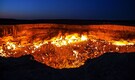
Meant to burn for few days but ‘Door to Hell’ has blazed for over 50 years — The mystery of Darvaza Gas Crater
Lit in 1971 to burn for weeks, Turkmenistan’s “Door to Hell” has blazed for over 50 years. Now fading, the fiery crater still hides mysteries beneath its flames and desert myths.
-
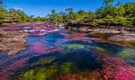
There is a river of five colours in this world that looks like a flowing rainbow; find out where it is
Hidden in Colombia, Caño Cristales turns into a liquid rainbow each year, glowing red, yellow and blue. But what rare plant and perfect conditions create this magical transformation?
-
Discovered in Chile, comet C/2026 A1 to skim the Sun on 4th April; This may shine brighter than Venus
A newly discovered sungrazing comet C/2026 A1 is heading for a perilous close encounter with the Sun in April. If it survives, it could become bright enough to shine in daylight, offering a rare celestial spectacle.
-
A rare nine-coloured Himalayan monal spotted flashing beautiful rainbow feathers in Bhutan
A rare nine coloured Himalayan monal was spotted soaring over Bhutan’s mountains, flashing rainbow feathers in sunlight. But what makes this high altitude bird shimmer so brilliantly in flight?
-
Annual solar eclipse 2026: Date, Time and will India witness the stunning ‘ring of fire’ eclipse?
A rare ‘ring of fire’ solar eclipse will blaze over Antarctica on 17 February 2026. But will India see anything at all? The answer may surprise many skywatchers.
-
First Time Ever: CDFW biologists captured and GPS collared "Red Fox" hunting in snow mountains of California
Scientists have successfully GPS-collared a rare Sierra Nevada red fox in California’s snowy mountains for the first time. The historic discovery offers new hope for conserving one of North America’s most endangered mammals.
-
One week left for the ‘ring of fire’ eclipse: Where annular solar eclipse will be visible around the world
In just one week, a rare “ring of fire” solar eclipse will blaze above Antarctica, visible to only a handful of people — but its timing and global ripple effects make it even more intriguing.
-
Viral video shows rare ‘sun candle’ illusion that looks like a portal to another world— Know why this happens
A viral video from Mongolia shows a breathtaking “shining snow” phenomenon, also knwon as Sun candle illusion describes where sunlight reflects off tiny ice crystals, creating a sparkling, dreamlike winter scene that looks like a portal to another world.
-
The glacier that bleeds: Why is this Antarctic glacier bleeding red? The real truth of so-called 'Blood Falls'
Antarctica’s eerie Blood Falls isn’t blood at all. Scientists have uncovered iron particles and hidden microbes beneath the ice, raising a bigger question: could similar life survive on Mars?
-
"Egg inside an Egg": 68-million-year-old dinosaur fossil found in India, stuns scientists
Scientists have discovered a rare 68-million-year-old dinosaur egg containing another egg inside it in Madhya Pradesh, India. The extraordinary fossil of Titanosaur reveals new clues about dinosaur reproduction.