






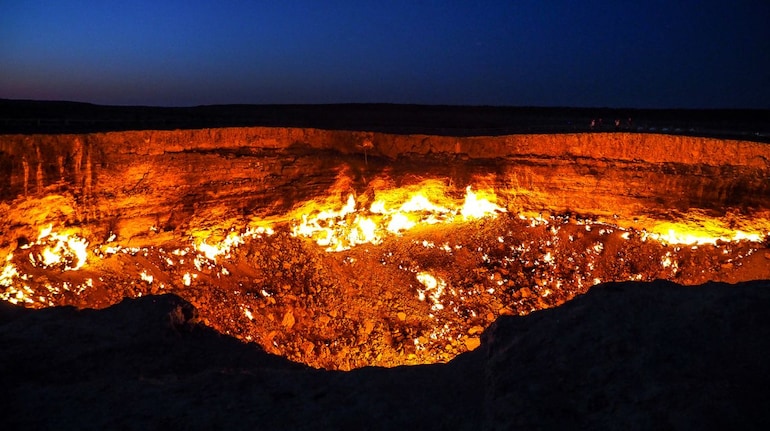

For more than 50 years, flames have flickered from a vast crater in Turkmenistan’s Karakum Desert, creating one of the world’s strangest landscapes. The Darvaza gas crater, widely called the “Door to Hell”, was never meant to last. It was expected to burn for days. Instead, it became a fiery symbol of human miscalculation and nature’s stubborn force.
How The Darvaza Gas Crater Began Burning
The crater formed in 1971 after a Soviet drilling accident. Engineers were exploring for natural gas reserves. The ground collapsed into a hidden cavern below. Fearing poisonous methane could spread rapidly, geologists ignited the escaping gas deliberately. They believed the fire would fade quickly. There are no official Turkmen records confirming details. Yet the blaze continued for decades.
The pit measures about 70 metres wide. It reaches roughly 30 metres deep. It lies near Darvaza village. The site sits deep inside Karakum Desert sands. Underground gas reserves kept feeding flames constantly. The crater glowed brightly for generations. It became a surreal tourist attraction. Visitors travelled to witness the roaring inferno. Many described it as otherworldly.
Why The “Door to Hell” Still Burns
Officials have debated extinguishing the fire repeatedly. Since 2022, orders were issued to close it. Environmental and economic concerns increased pressure. Methane emissions worried energy authorities greatly. At a hydrocarbon conference in Ashgabat, new developments emerged. Irina Luryeva of Turkmengaz addressed delegates directly. She said fire reduction was nearly threefold. Reports in 2025 suggest flames are weakening. Some describe only faint fires remaining today.
Despite this, the crater still burns visibly. Vast underground gas pockets remain active. Containment efforts are gradually progressing.
Spiders And The Crater’s Strange Ecology
Life near the crater appears improbable. Heat and sulphurous fumes dominate surroundings. Yet anecdotal accounts describe spiders nearby. No scientific study confirms spiders inside crater. However similar environments show spiders tolerate extremes. A 2010 Journal of Thermal Biology study noted temperature influences spider behaviour patterns.
Travellers claim webs line the rim edges. Ground temperatures can exceed 50°C nearby. The glow attracts insects at night. This may provide feeding opportunities. Camel spiders inhabit surrounding desert regions. Their presence near the rim seems plausible. Some blogs suggest spiders leap into flames. No peer reviewed evidence supports such claims.
The Darvaza crater remains mysterious today. Once expected to burn briefly, it endured decades. Now its flames may finally fade. Whether extinguished or not, its legend persists.

Discover the latest Business News, Sensex, and Nifty updates. Obtain Personal Finance insights, tax queries, and expert opinions on Moneycontrol or download the Moneycontrol App to stay updated!
Find the best of Al News in one place, specially curated for you every weekend.
Stay on top of the latest tech trends and biggest startup news.





