






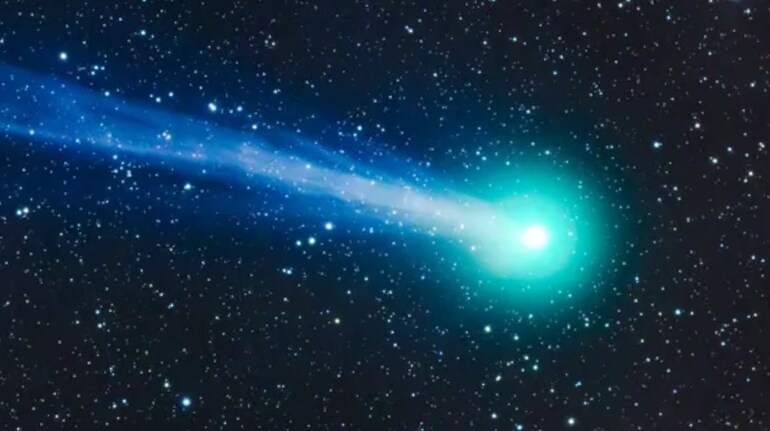

Discovered on January 13 this year, a team led by Alain Maury detected a new comet in Atacama Desert. This mysterious visitor that goes by the name Comet C/2026 A1 is racing silently towards the blazing Sun. Scientists worldwide are watching closely, waiting for an extraordinary cosmic spectacle.
This fragile traveller carries secrets from the birth of our Solar System. Its fate will soon unfold under intense heat and gravitational forces. Scientists from NASA is tracking this comet.
A Discovery in the World’s Driest Desert
On January 13, amateur astronomers working in Chile’s Atacama Desert detected a new comet moving rapidly towards the Sun. The team is led by Alain Maury. The Atacama, known as one of the driest and clearest places on Earth, offered perfect conditions for the search.
The object was soon identified as a Kreutz family sungrazer. Comet C/2026 A1 is famous for dramatic encounters with the Sun. These comets are fragments of a giant comet that broke apart more than 1,700 years ago. Many of them end their journey in fiery destruction. But some survive long enough to put on a spectacular show.
Where will this Comet be seen?
If the comet survives its close pass by the Sun, observers in countries like Chile, Argentina, southern parts of Australia, New Zealand and South Africa can see this comet.
People in the Northern Hemisphere might be able to see the comet as well, but conditions will be more difficult. Northern countries like United States (southern and western states), Mexico, Southern Europe and North Africa may see this comet.
Could It Shine in Daylight?
If the comet remains intact, something extraordinary could happen. Computer models suggest it may reach a brightness of magnitude -4 to -6.7. This is similar to the brightness of planet Venus or even the full Moon. At this level, the comet could be visible with the naked eye during daylight. Such events are extremely rare to see.
A Dangerous Journey Towards the Sun
This newly found comet is now racing towards its closest approach. On April 4, it will pass just 125,000 kilometres above the Sun’s surface. This is closer than most satellites orbit Earth. At this distance, temperatures rise to extreme levels.
Solar radiation and tidal forces become overwhelming. For most comets, this is the end and many break apart before reaching this point. Scientists are watching closely to see whether this visitor can survive.
How to Watch this Comet?
Observers might need binoculars and an unobstructed western sky at sunset. NASA’s SOHO spacecraft will also track the comet from space. It will capture detailed images of the comet’s approach and possible disintegration. These observations will help scientists study how comets behave near the Sun.
Discover the latest Business News, Sensex, and Nifty updates. Obtain Personal Finance insights, tax queries, and expert opinions on Moneycontrol or download the Moneycontrol App to stay updated!
Find the best of Al News in one place, specially curated for you every weekend.
Stay on top of the latest tech trends and biggest startup news.





