-
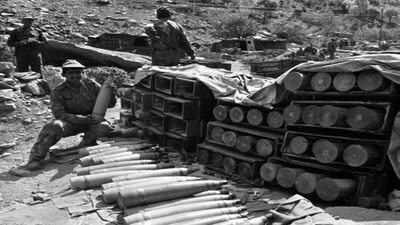
Batalik and the Dras sector: Artillery dominance and infantry persistence in Kargil in 1999
Away from the spotlight of Tiger Hill, the battles in Batalik and Dras showed how sustained artillery fire and slow, punishing infantry advances broke some of the most resilient positions of the Kargil war.
-

Alarm bells for India? China ramps up construction near Pangong Tso buffer zone, shows new satellite image
While the activity is within Chinese-held territory, it consolidates Beijing's physical presence post the 2020 border dispute
-
The Nagaland and Mizoram counterinsurgency campaigns and the battalion commanders who rewired doctrine
A battlefield of patrols that quietly became the Indian Army’s most durable school of small unit war
-
Operation TRIVID and the eastern navy’s blockade: Cutting off sea lanes in 1971
Long before Dhaka fell, the Indian Navy’s eastern fleet had already sealed Pakistan’s fate at sea, isolating East Pakistan through a quiet but decisive campaign of patrols, interdiction and control of the Bay of Bengal.
-
Operation Blue Star in 1984, explained through the military timeline
A day-by-day operational chronology of how the Golden Temple operation unfolded, and why constraints and miscalculation shaped the outcome.
-
Guns ready, bunkers built: How Indian Army is training villagers, including women, in Kashmir's Chenab Valley | WATCH
Officials said the initiative is aimed at equipping local volunteers with essential skills to safeguard their villages and function as a first line of defence in vulnerable areas.
-
Carbines to torpedoes: All about Centre's mega Rs 4,666 crore deals to bolster Army, Navy
The ministry said the contracts reflect strong synergy between the government and private industry, further accelerating the Make-in-India programme in the defence sector.
-
Indian Army in 2025: Operation Sindoor to Brahmos testfire - 10 defining milestones
Beyond the operation, 2025 saw accelerated modernisation, deep indigenisation, new force structures, enhanced firepower, and expanded global military engagement-cementing the Indian Army's readiness for future conflict across domains.
-
Dhruv NG makes maiden flight in Bengaluru, powering India's indigenous aviation leap | WATCH
Union Civil Aviation Minister Ram Mohan Naidu flagged off the helicopter and described it as a powerful reflection of India's growing technological prowess and self-reliance in aviation
-
Agni 5, BrahMos deals, 'Desi' Iron Dome & Op Sindoor: Inside India's high-impact defence year
At a time when the world was witnessing multiple conflicts-from Ukraine to Gaza - India resolved a major geopolitical tension in its own neighbourhood and did so with an iron hand.
-
The Battle of Asal Uttar: Patton tanks, sugarcane fields and Indian armour’s breakout moment in 1965
A decisive clash in the Punjab plains where Indian commanders turned flooded fields and patience into weapons, breaking Pakistan’s armoured thrust and reshaping how India thought about tanks, terrain and modern ground warfare.
-
The Meghna heli-bridge: The air assault that cracked East Pakistan’s defensive depth in 1971
When a blown bridge threatened to slow the dash to Dhaka, Indian commanders and Air Force helicopters turned a wide river into an air corridor, leapfrogging a strong Pakistani position and compressing the campaign’s timeline.
-
Basantar: The engineers, armour and infantry who forced a crossing under fire during 1971 war
In the Shakargarh bulge in mid-December 1971, an Indian river crossing became a live- fire test of combined arms, where sappers cut lanes through mines, infantry held a fragile bridgehead, and tanks arrived in time to break a counterattack.
-
Battle of Walong 1962: How 6 Kumaon held the eastern front in Arunachal
An often-overlooked eastern front of the 1962 war, the battle of Walong saw Indian infantry fight along the Lohit valley under extreme logistical and terrain constraints, offering one of the clearest ground-level accounts of courage, delay and sacrifice in India’s Himalayan conflict.
-
Battle of Longewala, 1971: BSF, artillery and IAF in Thar desert
In the early hours of December 4-5, 1971, a small Indian outpost in the Thar Desert absorbed a mechanised thrust meant to crack open Rajasthan’s western flank, then turned survival into a textbook on air ground coordination.
-
Battle of Hilli: The grinding eastern front fight that shaped Bangladesh’s liberation (1971)
Long before the images from Dhaka, Indian and Pakistani troops fought a slow, punishing battle in northern East Pakistan that tied down forces, drained morale, and quietly tilted the 1971 war.
-
8 Sikh at Ichhogil Canal: The charge that became legend (1965)
An infantry action on the Lahore front where the Ichhogil Canal’s prepared defences forced men into close-quarter rushes against bunkers and machine guns, leaving behind a trail of casualties, gallantry awards, and stories that outlasted the official record and became part of Sikh regimental memory.
-
Chart of the Day: Defence contract awards to exceed Rs 2 lakh crore for the second straight year
The government is likely to award contracts for at least Rs 10 lakh crore worth of defence equipment in the next five years
-
Hajipir Pass: A mountain capture, and the politics of giving it back (1965)
A daring mountain assault that delivered a clear tactical victory, Hajipir became a lasting reminder that in wars between states, what soldiers win on the battlefield can still be surrendered at the negotiating table when diplomacy, international pressure, and political priorities take over.
-
Dograi: The night assault that stunned Pakistan in 1965
A lightning night assault by 3 Jat across the Ichhogil Canal briefly put Indian infantry inside Dograi, near Lahore, before punishing counter-attacks forced a withdrawal, leaving behind a hard lesson on how speed and surprise can win ground but not always keep it.
-
After Operation Sindoor, Army doubles down on drones: 850 'kamikaze' buys near DAC nod
It is likely to be cleared soon by a high-level meeting of the Defence Acquisition Council scheduled to be held in the last week of this month.
-
Nathu La and Cho La, 1967: The three days that changed how India deterred China in Sikkim
A fierce, localised clash over a ridgeline fence became a turning point after 1962, testing India’s readiness and signalling that the mountain border would no longer be conceded by default.
-
Brig John Dalvi and the forgotten story of Namka Chu, 1962
A commander’s-eye view of how terrain, logistics and misreading the threat shaped the first major clash of the India-China war.
-
Forgotten fronts of 1947-48: How Skardu, Poonch and Tithwal held line when Kashmir hung in balance
Skardu’s eight-month siege, Poonch’s year-long resistance and the hard-won Kishanganga positions at Tithwal rarely headline the war’s story, but they consumed enemy strength, bought India time, and helped shape the ceasefire map.
-
Vice Admiral SM Nanda and the missile-boat commanders of Operation Trident
How bold leadership, young commanders and a revolutionary naval doctrine reshaped India’s maritime war in 1971.
-
Company and platoon leaders in the Pattan-Baramulla-Uri advance: How small-unit actions stopped the 1947 drive on Srinagar
As raiders pushed down Kashmir’s main western road in October 1947, the fight to secure Pattan, clear Baramulla and stabilise Uri became a test of junior leadership. Company and platoon commanders held bridges, cleared villages and bought time for Srinagar.
-
The pilots of the Poonch and Srinagar airbridges: The Dakota crews who saved Kashmir in 1947-48
The unsung Dakota crews who flew into hostile valleys day after day kept Srinagar and Poonch alive, turning fragile airstrips into lifelines that helped decide the first Kashmir war.
-
Infantry leaders at Tithwal on the Kishanganga front: The ridge-by-ridge fight that shaped north Kashmir in 1948
From the climb over Nastachun Pass to the bitter defence of riverline posts, the Tithwal sector tested India’s young infantry leadership in the first Kashmir war. Brigade, battalion and section commanders fought for heights whose names still echo along the LOC.
-
The Baramulla defenders: Dogra troops, policemen and volunteers who bought India time in 1947
As tribal raiders closed in on Srinagar in October 1947, an improvised mix of Dogra troops, policemen and Baramulla townspeople fought, fell and delayed the advance, buying just the crucial hours India needed to airlift soldiers and save the Valley.
-
Top Indian arms makers held rare meetings in Russia on potential joint ventures: Report
The meetings took place during the first visit of India's defence business leaders to Russia since Moscow's 2022 invasion of Ukraine
-
The defender of Poonch: How Captain Pritam Singh turned a doomed hill town into a year-long fortress
In the winter of 1947, a young captain arrived in a remote garrison expected to fall within weeks. What followed was one of the longest and most improbable defences in the first Kashmir war — a siege held together by grit, airlifts, local militias and a commander who refused to surrender.
-
The stand that saved Srinagar: Major Som Nath Sharma at Badgam in1947
Major Som Nath Sharma’s outnumbered company of 4 Kumaon held the line at Badgam on November 3, 1947, with his arm in plaster, buying the hours India needed to secure Srinagar airfield, fly in reinforcements and turn the war’s tide.
-
Su-57 for India: How Russia's F-35 rival can be a gamechanger for Indian Air Force
While the US may want India to buy the F-35, the Russian offer raises the stakes. Moscow has stated that "unrestricted technology transfer" of its Su-57 fifth-generation stealth fighter is on the table, along with the hardware.
-
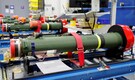
US clears $93-mn sale of Javelin missiles and Excalibur precision artillery rounds to India
The Defense Security Cooperation Agency in a statement said that the US State Department has authorised a possible $45.7 million sale of FGM-148 Javelin anti-tank guided missile system
-
US-Saudi defence pact and F-35 sale explained: How it could empower Pakistan and why India can't ignore it
Saudi Arabia’s tilt toward the United States and its deepening ties with Pakistan could complicate New Delhi’s efforts to maintain neutrality and strong economic relations with the Gulf.
-
Hindustan Aeronautics to begin delivery of 8 Tejas Mk1A jets in next 24–36 months
The HAL–GE agreement signed on November 7 will see a slow initial rollout, with production accelerating from 2029.
-
Ukraine signs deal with France to buy 100 Rafale jets, drones and air-defence systems
Zelenskyy and Macron sign a 10-year defence agreement, marking a major boost to Ukraine’s military capabilities.
-
India, US sign 'ambitious' 10-year defence framework: 'Significant step for our militaries'
India and US have ramped up security ties in recent years amid China's expansionist ambitions in the Indo-Pacific region.
-
Defence Acquisition Council clears arms proposals worth Rs 79,000 cr to boost military power
Approval has been given for procurement of new missile systems, high mobility vehicles, naval surface guns and other equipment for the armed forces
-
An Ode To My Beloved First Love: MiG-21
The workhorse of the IAF will be decommissioned today, with Air Chief Marshal AP Singh set to lead the farewell flypast. The MiG-21 is the most produced supersonic jet aircraft in aviation history. A former IAF fighter pilot who flew the MiG-21 shares his experience and feeling for the aircraft that served the Air Force for six decades