






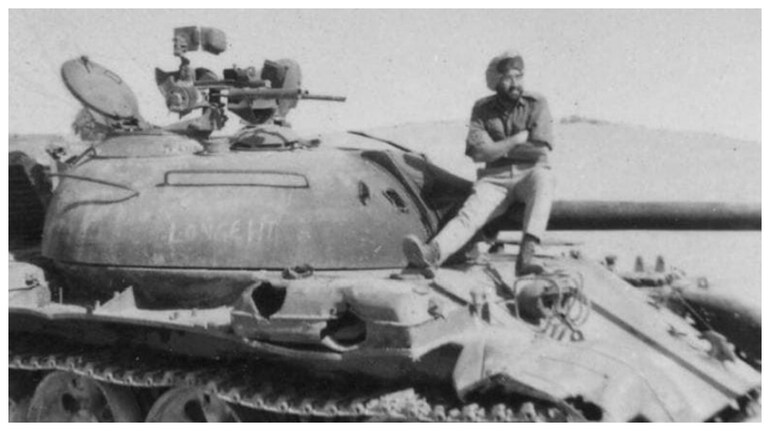
Longewala was not a fortress. It was a forward border post sitting on hard, open ground, with long sightlines by day and deceptive distances by night. In the opening days of the 1971 war, Pakistan attempted to create pressure in the western theatre by pushing armour and mechanised infantry along the Ramgarh axis, seeking a quick tactical gain and, just as importantly, a psychological one. The logic was familiar: move fast, overwhelm small posts, and force India to divert attention from the main campaign in the east.
The attack that came towards Longewala on the night of December 4 was built for speed and shock. Tanks, supporting infantry, and vehicles moved through the desert with the expectation that an isolated post would either be bypassed or collapse quickly. The post, however, did not oblige. A company of 23 Punjab under Major Kuldip Singh Chandpuri held ground, with BSF elements attached in the sector, and began doing what good defenders do when outnumbered: buy time, deny momentum, and keep the enemy visible.
A small post’s biggest advantage was time
Longewala’s most valuable resource was not firepower. It was the ability to delay. In mechanised warfare, minutes can matter more than numbers, because an attacker’s edge lies in tempo. The defenders’ task was to rupture that tempo. Even before the main assault hit, patrolling and early warning in the area helped establish that something large was moving. The result was not a perfectly scripted defence, but an early shift from surprise to anticipation, which is often the thin line between an overrun position and a holding action.
Chandpuri’s central decision that night is often reduced to a cinematic question: retreat or stand. In operational terms, it was a choice between abandoning a forward post to preserve a company, or holding a choke point long enough for reinforcements, artillery weight, and air power to turn the engagement. Longewala’s defenders chose the latter, and then did the harder part: they organised the ground so that the enemy’s armour could not simply roll through.
BSF in the western desert context
The BSF’s role along the border in 1971 was not ornamental. In many stretches, BSF detachments were the first uniformed presence on the line, operating in harsh conditions, doing patrol work, maintaining observation, and, when required, fighting as part of a larger defensive grid. At Longewala, BSF personnel in the vicinity were part of the ecosystem that made early warning, local knowledge, and perimeter defence possible. In a desert fight, where tracks can be misleading and navigation errors can multiply under stress, such local familiarity matters.
It is also worth noting what the desert does to everyone equally. The same terrain that exposes defenders in daylight can punish attackers at night. Soft sand, uncertain routes, and the need to keep a column coherent can turn an armoured thrust into a staggered arrival. That matters because a staggered arrival is a gift to defenders: it prevents a clean, concentrated blow and creates opportunities to pick targets, channel movement, and stretch an attacker’s command and control.
Artillery as the unseen scaffolding
Longewala is remembered for the sight of aircraft striking tanks, but the engagement is better understood as layered fire. Ground defence in 1971 did not mean a lone post firing into the night and hoping for dawn. Artillery support was part of the plan, even if limited by distances, communications, and the urgency of the moment. Fire support helped in two ways: it imposed friction on the attacker’s assembly and movement, and it reassured the defenders that they were not fighting in isolation.
In desert warfare, indirect fire does more than destroy. It shapes. It forces vehicles to halt, disperse, or bunch up in poor ground. It breaks the rhythm of an advance. It also creates the psychological effect of being under observation and engagement, which can make commanders more cautious at exactly the moment they need to be decisive. Contemporary military accounts of Longewala describe the defenders’ anti-tank resources as modest, and therefore dependent on coordinated support to hold off armour until daylight brought the larger force multiplier.
The moment air power became decisive
By first light, Longewala’s open terrain turned from a vulnerability into an advantage. In the desert, concealment is scarce. Armour and vehicles that might blend into trees or folds of ground in other theatres become clear targets from the air once the sun comes up. That is when the Indian Air Force’s role moved from helpful to decisive.
IAF fighter aircraft, including Hawker Hunters operating in the sector, attacked Pakistani armour and soft skinned vehicles in conditions that heavily favoured the attacker from above: clear visibility, limited cover, and constrained movement corridors. Air strikes in such a setting do not need to be perfect to be effective. If tanks are forced to halt, turn, or seek cover in soft sand, the column’s cohesion breaks. Once cohesion breaks, withdrawal becomes disorderly, and losses compound.
One detail that often gets missed in popular retellings is that successful close air support is rarely just about pilots being brave. It is about someone on the ground seeing the same battlefield, talking the same language of grids and headings, and feeding aircraft the targeting picture in time. The Longewala story is therefore also about air ground coordination under pressure: communication that holds, targeting that is prioritised, and timing that aligns with the defender’s need to survive the night and punish the attacker at dawn.
Why the attack faltered
Pakistan’s difficulties at Longewala were not solely a matter of courage on one side and deficiency on the other. The failure had operational characteristics that desert warfare tends to amplify.
First, night movement in the desert is unforgiving. A mechanised column that cannot maintain clean navigation and spacing risks arriving in packets, not as a single hammer blow. Second, frontal pressure against a post that has been alerted, even if lightly held, increases the chance that tanks will be exposed to close range anti tank fire, obstacles, and confusion. Third, once daylight arrives, the same open desert that enables fast advance becomes a killing ground if the attacker has not secured air defence cover or dispersed intelligently.
The fourth factor is more subtle: decision making under uncertainty. When a plan is built on speed, any delay forces choices. Do you press harder and accept higher exposure, or do you pause and regroup and risk losing the initiative altogether. Longewala forced that dilemma early, and the defenders’ ability to hold on ensured that the attacker faced the worst possible version of it, under air attack, on open ground.
A battle remembered, and what it actually teaches
Longewala has become a symbol of the smaller force standing firm. That is true, but the deeper lesson is institutional. The engagement is best read as an example of how a thinly held position can become disproportionately strong when three things happen together.
The first is discipline in defence: a commander who controls arcs of fire, prevents panic, and uses limited anti-tank resources for effect rather than noise. The second is layered support: artillery that shapes the fight even when it cannot physically sit at the post. The third, and decisive one, is air power employed as close support, not as theatre level spectacle: aircraft arriving when visibility and targeting allow, and being guided by ground -based awareness.
In that sense, Longewala is not only about the IAF destroying tanks, or about infantry holding a post. It is about how the Indian system in that sector, Army, BSF in the border grid, artillery fire support, and IAF strike and support, came together quickly enough to make an enemy’s numerical advantage less relevant. That is what force multiplication looks like in practice: not more weapons, but better connection between the weapons you already have.
After the firing stopped
The battle’s aftermath is part military and part memory. Longewala’s defence became widely cited as a defining episode of the western front in 1971, and Chandpuri’s leadership remains central to how the engagement is remembered in India. The site itself has been memorialised in Rajasthan, reflecting how the fight entered public consciousness as both history and legend.
Discover the latest Business News, Sensex, and Nifty updates. Obtain Personal Finance insights, tax queries, and expert opinions on Moneycontrol or download the Moneycontrol App to stay updated!
Find the best of Al News in one place, specially curated for you every weekend.
Stay on top of the latest tech trends and biggest startup news.




