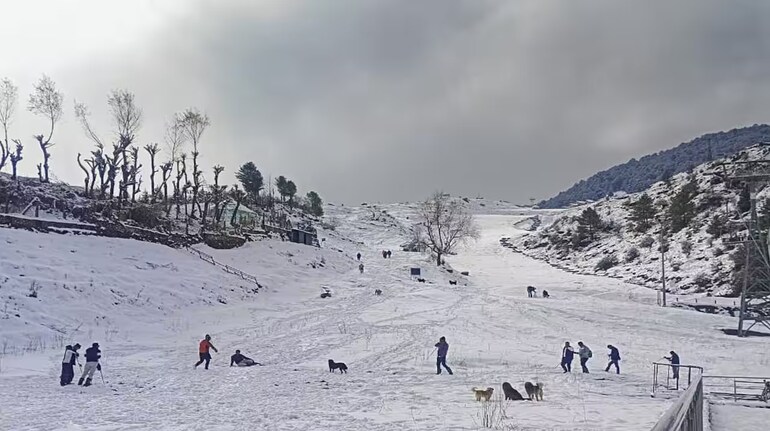
In the summer of 1948, a narrow valley in north Kashmir became a proving ground for India’s young Army, where brigade commanders, battalion leaders and small-team infantrymen fought for a riverline that still shapes the map.
The river that became a frontline
Tithwal sits on the Kishanganga, the fast mountain river known downstream as the Neelum. In 1948, it was more than geography. It was a corridor. On one side lay Kupwara and the approaches into the Kashmir Valley. On the other lay the pull of Muzaffarabad, close enough on the map to tempt planners and alarm opponents. When the first Kashmir war widened beyond the immediate crisis of 1947, the Kishanganga sector turned into a hard, technical battle of ridges, passes and small villages that mattered because they controlled movement.
By May 1948, the Indian Army’s task was clear in outline and punishing in detail: push up from the Handwara Kupwara axis, cross the difficult Nastachun Pass, seize Tithwal, then hold the place against counter-attacks aimed at pushing Indian troops off the river and back into the valley.
Harbaksh Singh and the brigade that climbed in
The infantry leadership story in this sector begins with 163 Infantry Brigade, commanded by Brigadier Harbaksh Singh, later one of India’s most respected field commanders. The approach to Tithwal was not a clean road advance. It involved high-country movement, narrow tracks, long supply lines and weather that could flip a plan overnight. The brigade’s entry over Nastachun in late May 1948 was an example of operational leadership that is easy to admire on paper and far harder to execute on the ground: moving men, weapons and basic supplies across a pass, then switching immediately into attack posture.
In the days that followed, battalions were pushed forward in a sequence designed to establish a base, seize key heights and then take the village. The capture of Tithwal on May 23, 1948 gave India a foothold on a contested river sector that the other side would try repeatedly to claw back. It was also a reminder that in Kashmir, “captured” rarely meant “settled”. Once a post is taken, the real test often begins in the defence.
Battalion commanders and the work of taking ground
The advance and early consolidation around Tithwal involved units including 1 SIKH and 1 MADRAS, with subsequent fighting drawing in others such as 3 GARHWAL. This was the infantry’s kind of terrain: steep features overlooking bends in the river, narrow approaches vulnerable to fire, and positions that had to be held in cold, wet conditions with limited shelter.
The leadership challenge for battalion and company commanders was twofold. First, they had to take ground without being channelled into obvious killing zones. Second, they had to organise defences quickly enough to survive the counter-strokes that would come once the enemy regrouped. In such battles, the map is never just lines. A single spur can dominate a track. A
small saddle can control movement between valleys. A minor-looking height can become the hinge on which a sector turns.
Richmar Gali and the ethic of holding on
After Tithwal was taken, the battle shifted to strengthening the defence by holding features that protected access to the valley and blocked approaches. Richmar Gali became one of the names that endured, partly because it sits in that classic infantry category of “small place, big consequence”.
On 13 October 1948, as the enemy mounted a determined effort to retake Richmar Gali and bypass Tithwal toward the valley, leadership at section level became decisive. Lance Naik Karam Singh’s stand at Richmar Gali, for which he received the Param Vir Chakra, is remembered as a demonstration of the infantry’s core reality: battles are often decided not only by the plan, but by who holds when the line is at its thinnest. The award citation, and the official commemoration of the action, place his leadership in the most direct terms, rooted in refusal to yield a position under pressure.
Piru Singh and the cost of closing in
The Tithwal sector also carries another Param Vir Chakra story, that of Havildar Piru Singh. His action in July 1948, in the fighting tied to the Tithwal front, is among the starkest examples of battlefield leadership in close terrain: an infantryman moving under fire to take on enemy positions at short range. In a sector dominated by ridgelines and long sightlines, assaults still came down to the last few metres, where courage and initiative mattered as much as fire support.
These are not sentimental stories. They are reminders of how leadership functioned at the lowest level in Kashmir: junior leaders reading ground quickly, keeping small groups moving, and absorbing losses without losing coherence.
Chunj and the dangerous temptation of Muzaffarabad
If Tithwal was the foothold, Chunj became the warning. After the capture of Tithwal, Indian planning naturally looked westward. Muzaffarabad was not far, and the logic of pushing the advantage had its appeal. But the enemy response was sharp and tactically astute, focused on dominating heights and pushing Indian troops back from exposed positions across the river.
Accounts of the Chunj fighting describe a prolonged, costly contest through June to November 1948, involving repeated attempts to hold or recover commanding features. The sector shows how quickly the tactical balance can change when an opponent concentrates on height domination and uses infiltration, artillery and local knowledge to unpick forward positions. For infantry leaders, it was an education in restraint as much as aggression: knowing when to advance, and when holding what you have is the more defensible choice.
Leadership in a war of nerves and logistics
What the Tithwal and Kishanganga front demanded from leaders was not only battlefield courage, but administrative grip. Posts had to be fed. Ammunition had to climb where vehicles could not. Casualties had to be evacuated along narrow tracks. Communications had to work in weather and terrain that broke wires and scattered signals. Even morale was linked to logistics: a company that has not eaten or slept will not hold like one that has.
At brigade and battalion level, leadership meant an ability to do two things at once: run operations and run sustainment. At company and platoon level, it meant discipline under shelling, fieldcraft at night, and the ability to keep men steady when the landscape itself felt hostile.
Why Tithwal still matters
The Kishanganga front at Tithwal matters because it illustrates how India’s early infantry leadership was forged in a war that was both conventional and improvised. It was not fought on wide plains with clear arcs of armour movement. It was fought in a tight valley, with infantry climbing for advantage, defending isolated posts, and learning what it means to hold a line that will be tested again and again.
It also matters because the sector’s outcomes helped shape the line that followed. Tithwal remained a forward, sensitive area for decades, its very name tied to border proximity and periodic firing. The geography that forced 163 Brigade to fight for ridges and passes in 1948 is the same geography that keeps the sector strategically relevant today.
The infantry leaders the story should remember
There is a tendency to tell Kashmir 1947–48 as a sequence of big moves and political turns. The Kishanganga front offers a different lens. It is a story of leaders at multiple levels, from brigade commanders managing difficult approaches and limited resources, to battalion leaders taking and holding ground, to section and platoon commanders whose actions decided whether a feature stayed Indian-held or changed hands.
In Tithwal, leadership was rarely theatrical. It was practical. It was cold. It was often anonymous until a citation, a diary, or a unit history brought a name back into view. But it was leadership all the same, and without it the riverline would not have held.
Discover the latest Business News, Sensex, and Nifty updates. Obtain Personal Finance insights, tax queries, and expert opinions on Moneycontrol or download the Moneycontrol App to stay updated!
Find the best of Al News in one place, specially curated for you every weekend.
Stay on top of the latest tech trends and biggest startup news.