






In the last week of October 1947, Baramulla was a quiet trading town on the Jhelum Valley Road, a stop on the way to the summer capital of Srinagar. For two desperate days, it became something else: a killing ground where scattered Dogra state troops, policemen and hastily armed civilians tried to slow a tribal lashkar long enough for India to fly soldiers into Kashmir and save Srinagar.
Today, that improvised stand is remembered, if at all, as a prelude to the Indian airlift of October 27. Yet the story of the Baramulla defenders is central to understanding how the first Kashmir war opened – and how close the Valley came to falling in the first week.
A tribal invasion and a collapsing frontier
The crisis began on October 22, 1947, when several thousand Pashtun tribesmen, backed by Pakistani elements, crossed into the princely state of Jammu and Kashmir. A long-planned operation, coordinated by Pakistani officer Major General Akbar Khan, aimed to topple Maharaja Hari Singh, seize Srinagar and force accession to Pakistan.
The first blow fell on Muzaffarabad, where a single battalion of the Jammu and Kashmir State Forces was overwhelmed. Communications were cut, officers were killed or deserted, and the defensive line along the Jhelum Valley Road disintegrated.
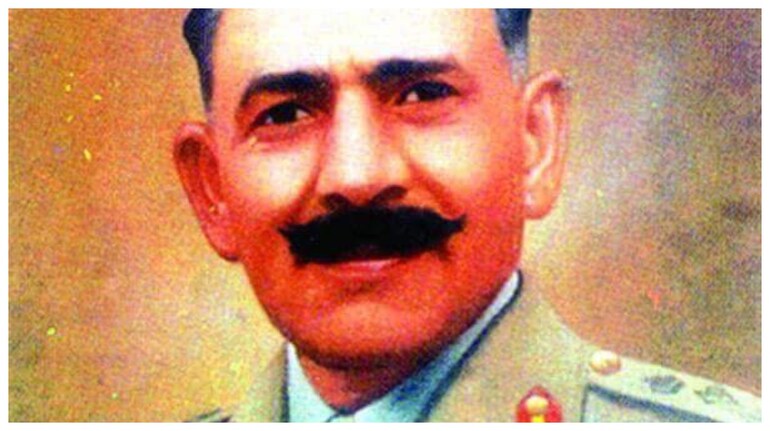
Brigadier Rajinder Singh of the state forces, a Dogra officer, pulled together small detachments and fought a rearguard action at Uri between October 22 and 24. His stand delayed the raiders but cost him his life; he would later be awarded independent India’s first Maha Vir Chakra for those actions.
By October 25, the lashkar had broken through towards Baramulla. Refugees streamed into Srinagar, carrying stories of burning villages and massacres in Muzaffarabad and along the road. The Maharaja had few troops left, many of them Dogra units already mauled on the frontier. The road to Srinagar – and its crucial airfield – ran straight through Baramulla.
Why Baramulla mattered
Geography made Baramulla pivotal. Sitting on the banks of the Jhelum, it was the last major town on the old Rawalpindi–Srinagar highway before the road turned east towards the Valley’s heart. Whoever held Baramulla controlled the gateway to Srinagar.
A 2025 official history summary by India’s gallantry awards portal notes that the Indian plan to save Kashmir depended on a rapid airlift into Srinagar on October 27, once the Maharaja signed the Instrument of Accession on October 26. That airlift was only possible if the airfield remained in Indian hands for a narrow window of time.
A recent reconstruction of the battle in Baramulla describes the town as neither fortified nor prepared for a major engagement. The Jammu and Kashmir State Forces had suffered heavy losses at Muzaffarabad and Uri, leaving only scattered detachments – largely Dogra troops – to hold the town. Ammunition was short, communications were unreliable, and morale was strained as the sound of distant gunfire crept closer.
Yet that same reconstruction underlines a key point: the defence of Baramulla was never about holding ground indefinitely. It was about buying hours.
Dogra state troops, police and an improvised line
The formal order of battle for Baramulla is fragmentary; many state records were lost in the upheaval of 1947–48. What emerges from memoirs, later histories and official notes is a picture of a patchwork defence.
Remnants of state force units falling back from Uri and smaller posts were pulled into Baramulla. These were predominantly Dogra troops – the backbone of the Maharaja’s army – used to mountain warfare but exhausted after days of retreat and skirmishing.
They were joined by elements of the local police, some of whom had already been engaged in trying to keep order as refugees flooded the town. As news of the lashkar’s approach spread, civilians – Hindus, Sikhs and Muslims – armed themselves with desi rifles and whatever weapons they could find, manning barricades on lanes and rooftops. Contemporary and later Kashmiri accounts describe villagers converging on threatened settlements with their own weapons to supplement the small state units.
One of the most remembered civilian figures associated with the defence is Maqbool Sherwani, a 19-year-old National Conference worker from Baramulla. Historical accounts agree that Sherwani opposed the Muslim League and Pakistan’s demand for Kashmir, and that he actively organised local resistance to the raiders.
The lashkar reaches Baramulla
The tribal columns reached the town on October 26. By then, Dogra detachments had taken up positions on the western approaches and at key choke points inside Baramulla – road junctions, stone houses and narrow alleys that offered cover for small-arms fire.
Initial clashes were sharp. The defenders tried to block the highway with hasty roadblocks and used the built-up area to force the raiders to dismount and fight street by street. For a force designed for fast movement and shock, this kind of resistance was costly and time-consuming.
In parallel, local volunteers attempted to slow the advance beyond direct combat. Several accounts – official, popular and contested – describe Sherwani misleading a group of raiders, sending them away from the direct road to Srinagar and towards a longer route, and helping organise the destruction or obstruction of bridges and culverts.
The precise military effect of these actions is debated by historians, and Kashmiri scholars have pointed out how later political narratives sometimes exaggerated or underplayed Sherwani’s role. What is less disputed is that the raiders did not reach Srinagar as quickly as they had planned – and that both local resistance and their own indiscipline contributed to this.
Looting, massacre and a fatal pause
Once the tribal fighters broke into Baramulla, the nature of the operation changed. Instead of pushing through towards Srinagar, large sections of the lashkar turned to looting. Indian government statements, missionary accounts and later scholarship converge on the picture of a town given over to violence: houses stripped and torched, minorities hunted down, women abducted, and whole neighbourhoods destroyed.
The most internationally visible atrocity took place at St Joseph’s Hospital and convent, run by Mill Hill missionaries. Missionaries’ diaries and later studies describe how nuns, nurses and the hospital’s British doctor, Colonel Tom Dykes, were shot or bayoneted, and the compound looted. These events, sometimes called the “Baramulla tragedy”, were widely reported abroad and hardened opinion against Pakistan’s claim over Kashmir.
Baramulla’s civilian toll was staggering. One summary based on contemporary Indian reports estimates that the town’s population fell from around 14,000 to nearly 1,000, with thousands killed and many women and children carried away by the raiders.
For the defenders – Dogra soldiers, policemen and volunteers – this was effectively the end of organised resistance inside the town. Many were killed in their positions; others tried to escort civilians out along side roads and footpaths. But strategically, the sacking of Baramulla created something else: time.
Instead of continuing straight to Srinagar, the raiders remained in Baramulla for almost two days, looting, celebrating and fighting among themselves. A Pakistan-backed force that had moved with great speed from the frontier now stalled on the cusp of its objective.
The airlift that Baramulla made possible
Those lost days became decisive. On 26 October, as Baramulla burned, Maharaja Hari Singh signed the Instrument of Accession to India. In Delhi, Indian leaders and military planners scrambled to organise an air bridge to Srinagar using Dakota transports.
Official Indian summaries and later military histories stress that every hour mattered. If the raiders had bypassed Baramulla, or if the town had fallen in a matter of hours without distracting them, the Srinagar airfield could have been overrun before the first aircraft landed.
Instead, at dawn on 27 October, the first companies of 1 Sikh flew into Srinagar and disembarked unopposed. Through that day and the next, more Indian troops, weapons and supplies arrived. Elements were rushed straight towards Baramulla to block any renewed lashkar advance.
Indian troops would fight major engagements with the raiders at places like Shalateng in early November, gradually pushing them back along the road and recapturing Baramulla on 9 November 1947.
In official Indian telling, the defence – and subsequent recapture – of Baramulla thus sits within a chain: Rajinder Singh’s sacrifice at Uri, the Baramulla delay, the Srinagar airlift, and the counter-offensives that stabilised the Valley through winter.
Remembering the Baramulla defenders
Compared to iconic battles like Budgam or Naushera, the Baramulla stand remains less documented, in part because no single unit or commander could claim it cleanly. It was, by most accounts, a fragmented defence by depleted Dogra companies, local police and civilians caught in the path of a larger war.
The memory of individual defenders survives in different ways. Brigadier Rajinder Singh’s earlier delaying action on the road from Muzaffarabad is commemorated in official Indian military narratives and at war memorials.
Maqbool Sherwani is remembered in Baramulla itself – with an auditorium, a memorial and Indian Army commemorations at his grave – as the “Lion of Baramulla” who misled the raiders and died under their bullets and nails. His story, however, is also contested in Kashmiri political writing, where scholars dissect how different regimes have framed his role to suit their narratives of Kashmir’s past.
Beyond these figures, the ordinary Dogra soldiers of the Jammu and Kashmir State Forces, the anonymous policemen on roadblocks and the villagers who picked up rifles are harder to trace. Some appear in scattered oral histories; others are hinted at in local accounts of specific mohallas that fought back.
Their legacy, though, is woven into the strategic outcome. As a 2025 analysis of the campaign put it, Baramulla “was never a conventional defensive triumph. It was a desperate action that succeeded in the one measure that mattered – time.”
From a distance of nearly eight decades, the Baramulla defenders can be seen not as heroes of a clean battlefield victory, but as participants in a messy, brutal, improvised stand – Dogra state troops, police and volunteers who, in the chaos of invasion and massacre, held the line just long enough for a new army to arrive from the sky and change the course of the first Kashmir war.
Discover the latest Business News, Sensex, and Nifty updates. Obtain Personal Finance insights, tax queries, and expert opinions on Moneycontrol or download the Moneycontrol App to stay updated!
Find the best of Al News in one place, specially curated for you every weekend.
Stay on top of the latest tech trends and biggest startup news.




