






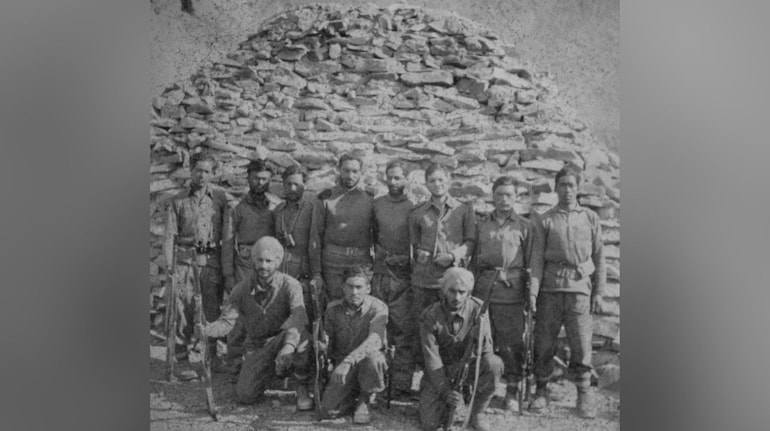
In the autumn of 1962, months before the Sino-Indian War would erupt across the Himalayas, a small and isolated Indian brigade found itself deployed along the Namka Chu river in the remote Thag La ridge area of the North-East Frontier Agency, now Arunachal Pradesh. At its head was Brigadier John Parashuram Dalvi, a professional soldier whose subsequent account would become one of the most important primary sources on how India stumbled into its first major clash with China. The battle at Namka Chu, fought on October 20, 1962, was brief, violent and disastrous for India, but its roots lay in decisions taken far from the battlefield.
Dalvi’s experience, later recorded in his memoir Himalayan Blunder, offers a rare ground-level view of how strategic assumptions, political pressure and logistical neglect combined to place an under-prepared formation in an untenable position.
The strategic context before shots were fired
By the late 1950s, India and China were already locked in a deepening dispute over their undefined Himalayan border. The eastern sector, around the McMahon Line, had seen growing Chinese patrol activity north of Tawang, particularly near the Thag La ridge. Indian policy, articulated through what came to be known as the “Forward Policy”, sought to assert territorial claims by establishing small posts as far forward as possible.
According to official Indian histories later published by the Ministry of Defence, the assumption in New Delhi was that China would avoid major military escalation and that limited Indian deployments would deter further advances. This assessment would prove catastrophically wrong.
In June 1962, 7 Infantry Brigade, commanded by Brig John Dalvi, was ordered to move into the Namka Chu sector. The brigade’s task was politically clear but militarily ambiguous: to establish a presence south of the Thag La ridge and prevent Chinese consolidation north of the Namka Chu. What was missing was clarity on how this was to be done against a numerically superior and better-supplied adversary.
A brigade pushed into the mountains
Dalvi’s brigade was lightly equipped, short of artillery and dependent on tenuous supply lines that ran through mule tracks and footpaths. In Himalayan Blunder, Dalvi describes repeated warnings sent up the chain of command about the impossibility of sustaining troops in such terrain without roads, winter clothing or heavy weapons.
The Namka Chu itself was not a defensive line but a fast-flowing river at the bottom of a bowl-shaped valley, overlooked by commanding heights held by Chinese forces. Indian positions were scattered along the riverbank, exposed to observation and fire from above. Military historians such as Srinath Raghavan, writing in India’s War, have noted that the siting of Indian posts violated basic principles of mountain warfare.
Dalvi was acutely aware of this vulnerability. He argued for a withdrawal to more defensible ground south of the river, but these requests were overruled. Higher headquarters, under pressure to hold ground deemed politically non-negotiable, insisted that posts be maintained.
Intelligence warnings that went unheeded
By early October, Chinese troop concentrations across the river were visible to Indian patrols. Dalvi recorded that Chinese soldiers were well clothed, heavily armed and constructing defences, suggesting preparation for offensive action. These observations were reported, but the prevailing belief in Delhi and at Corps Headquarters was that China would not initiate a full-scale attack.
The official Henderson Brooks–Bhagat Report, excerpts of which have entered the public domain, later confirmed that Indian intelligence assessments underestimated both Chinese intent and capability. Dalvi’s brigade, by contrast, was already operating under the assumption that contact was inevitable.
October 20, 1962: The collapse at Namka Chu
At first light on October 20, the Chinese offensive began across the eastern sector. At Namka Chu, artillery and mortar fire rained down from the heights, followed by infantry assaults that quickly overwhelmed isolated Indian posts. Communication lines failed almost immediately, severed by shelling and terrain.
Dalvi himself was wounded early in the fighting but continued attempting to coordinate a defence that was rapidly disintegrating. Units fought bravely but were outflanked, cut off and forced into chaotic withdrawals. Without artillery support or air cover, resistance collapsed within hours.
By midday, 7 Infantry Brigade had effectively ceased to exist as a fighting formation. Hundreds of soldiers were killed, wounded or captured. Dalvi, unconscious from his wounds, was taken prisoner by Chinese forces.
Captivity and reflection
Dalvi spent nearly seven months as a prisoner of war, during which time he observed the professionalism and preparation of the Chinese army at close quarters. He noted that Chinese troops were well briefed on Indian units, leadership and even political debates in Delhi, an insight that further deepened his conviction that India had fundamentally misread its adversary.
When Dalvi returned to India in 1963, he found little appetite for honest reckoning. The dominant narrative emphasised heroism and sacrifice, while systemic failures were quietly buried. Dalvi’s decision to write Himalayan Blunder, published in 1968, was therefore controversial. The book was effectively suppressed, and Dalvi’s career suffered as a result, a fact acknowledged by later scholars and journalists, including accounts in The Indian Express and Frontline.
What Namka Chu revealed about India’s war preparation
The battle exposed multiple structural flaws. Logistics were dangerously inadequate, with troops lacking winter clothing and ammunition reserves. Command structures were rigid, discouraging initiative and suppressing dissenting assessments from the field. Most critically, political objectives were allowed to override military judgement.
As historian Neville Maxwell observed in India’s China War, Namka Chu symbolised the consequences of deploying forces to satisfy diplomatic signalling rather than battlefield logic. Dalvi’s brigade was asked to hold ground that could not be held, against an enemy that had already decided on escalation.
Why Brig Dalvi’s account still matters
More than six decades later, Namka Chu remains a cautionary tale. Dalvi’s narrative is not about blame at the tactical level but about the dangers of strategic denial. His insistence that soldiers were placed in impossible situations resonates in contemporary debates on civil-military relations and border management.
The Indian Army has since transformed its approach to mountain warfare, investing heavily in infrastructure, surveillance and logistics along the Line of Actual Control. Yet, as analysts writing in The Hindu and Indian Express have noted, the central lesson of 1962 remains unchanged: wars are lost long before the first shot is fired, when assumptions replace analysis and warnings from the ground are ignored.
Namka Chu was India’s first major clash of the 1962 war, and it ended in defeat within hours. Brig John Dalvi’s voice ensures it is not forgotten, not as an episode of humiliation, but as a hard-earned lesson in how nations must listen to those they send to fight.
Discover the latest Business News, Sensex, and Nifty updates. Obtain Personal Finance insights, tax queries, and expert opinions on Moneycontrol or download the Moneycontrol App to stay updated!
Find the best of Al News in one place, specially curated for you every weekend.
Stay on top of the latest tech trends and biggest startup news.




