-
New experiments suggest RNA, life’s essential molecule, could have formed naturally on early Earth and even arrived from space, raising intriguing questions about how easily life might begin elsewhere.
-

Asteroid 2024 YR4 is about 60 metres long, may hit the Moon in December of the year 2032. Scientists assured that Earth is safe, but lunar debris could affect satellites and missions.
-
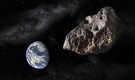
NASA confirms building-sized asteroid 2025 XV, 290 feet wide, will safely pass Earth on December 18 offering scientists a rare chance to study near-Earth objects closely.
-
Near-Earth asteroid Eros will appear near the Andromeda Galaxy on 30 November, offering a rare sky alignment livestream for global astronomy enthusiasts.
-
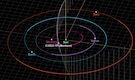
A newly discovered comet, C/2025 V1 (Borisov), will pass Earth on November 11, offering astronomers rare insights into objects from the Solar System’s edge.
-
NASA on alert as two are approaching on 11th November, while three asteroids safely passed on 10th November. The asteroids and comets that approach Earth are periodical and safe.
-
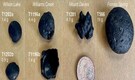
Scientists discover strange glassy beads in southern Australia, revealing a previously unknown asteroid impact around 11 million years ago.
-
Astronomers have detected a skyscraper-sized asteroid hidden near the Sun, racing around our star extremely fast and raising planetary defence concerns.
-
NASA’s Hubble Space Telescope captured a surprising asteroid trail while observing a distant spiral galaxy 102 million light-years away.
-
NASA confirms 2025 TF passed just 266 miles above Earth on 1st October, highlighting the challenges of tracking small near-Earth objects.
-
European Space Agency’s Gaia mission deciphers asteroid rotation patterns, revealing structural secrets and implications for planetary defence missions.
-
Asteroid 2024 YR4 poses a small risk to Earth but higher chance of striking the Moon, prompting nuclear defence discussions.
-
NASA estimates around 44 tonnes of meteoritic material fall towards Earth each day. Almost all of it is vaporised in the atmosphere, leaving glowing streaks visible across the night sky.
-
The rock, named 1997 QK1, is nearly 990 feet wide. The asteroid is travelling at 21,994 miles per hour.
-
NASA reports that the space rock, measuring around 1,200 feet across, is expected to make its closest approach on Thursday, 11 July.
-
The asteroid, titled 387746 (2003 MH4), is gigantic. It is 335 metres in width, approximately 1,100 feet.
-
NASA's $1.4 billion NEO Surveyor telescope aims to detect and monitor dangerous asteroids, providing early warnings to prevent catastrophic impacts and protect Earth.
-
A newly discovered asteroid, Asteroid 2024 YR4, has raised concerns with a 3.1% chance of striking Earth in 2032.
-
Asteroid 2016 AX165, a 260-foot near-Earth object, will come closer to Earth on 20 February 2025, with NASA's Jet Propulsion Laboratory closely monitoring its trajectory.
-
NASA scientists are closely watching asteroid 2025 CV as it nears Earth.
-
A giant asteroid, 2024 YR4, may collide with Earth on 2 December 2032.
-
Initially, the probability of an impact was 1 in 83, which represented a 1.2% chance of collision. The odds have now increased to 1 in 43, or a 2.3% chance of impact.
-
NASA's Jet Propulsion Laboratory (JPL) is monitoring asteroid 2025 CG, which will pass by Earth on 8 February.
-
NASA tracks asteroid 2025 CZ1 as it makes a close flyby to Earth. Learn about asteroid safety and planetary defense strategies.
-
A small asteroid will soon make a close approach. NASA's Jet Propulsion Laboratory is tracking its journey.