






For many years, astronomers have puzzled over a discrepancy in asteroid behaviour, some tumble chaotically while others rotate with clockwork precision. This has become easy now as the European Space Agency’s Gaia mission has given some clarity on asteroid rotation gap.
A research team led by Dr Wen-Han Zhou has discovered a distinct “rotation gap” based on brightness data from thousands of asteroids. The data gathered by Gaia has prompted scientists to rethink how these space rocks behave and evolve.
When Light Curves Tell the Story
By analysing how much sunlight is reflected from asteroids observed across the sky, the team plotted size against rotation speed and found a clear separation. Smaller asteroids tend to tumble slowly, taking more than 30 hours to complete one spin, while larger ones rotate faster and more steadily. This “rotation–diameter gap” appears to be a physical threshold shaped by microscopic interactions acting over immense cosmic timescales.
Cosmic Collisions and Solar Whispers
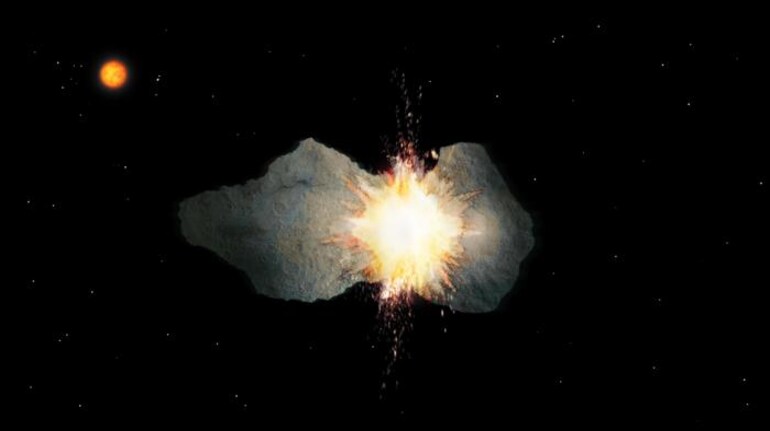
The research shows a fine balance between collisions, which spin up asteroids into chaotic motion, and damping forces, such as internal friction and solar torque, which gradually slow them down. For loosely bound “rubble-pile” asteroids, these effects differ markedly from those in dense, solid bodies, leading to more erratic spins.
Gaia’s Hidden Talent: Probing Asteroid Interiors
Originally designed for star mapping, Gaia has unexpectedly become a powerful tool for exploring asteroid interiors. Its continuous light-curve data reveal details about density, structure and internal cohesion. This provides fresh insights into the building blocks of the Solar System and their evolution.
Peering Inside Worlds of Stone and Dust
Linking an asteroid’s motion to its internal structure improves predictions of how it might respond to impact or deflection missions. This knowledge is crucial for planetary defence strategies.
With the upcoming Vera C. Rubin Observatory set to expand Gaia’s observations, scientists aim to study tens of thousands more asteroids deepening our understanding of Solar System history and bolstering efforts to safeguard Earth.
Discover the latest Business News, Sensex, and Nifty updates. Obtain Personal Finance insights, tax queries, and expert opinions on Moneycontrol or download the Moneycontrol App to stay updated!
Find the best of Al News in one place, specially curated for you every weekend.
Stay on top of the latest tech trends and biggest startup news.









