-
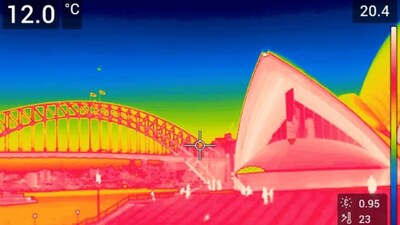
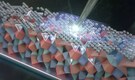
Australian scientists create night-time solar power to run satellites without sunlight
Scientists have developed a way to generate electricity from Earth’s radiant heat at night, potentially powering satellites even in darkness and opening new frontiers for space renewable energy.
-

Project Dolphin 2.0: India begins second nationwide dolphin census to protect river giants
India launched second nationwide dolphin census under Project Dolphin, beginning in Bijnor, aiming to update populations, map habitats and strengthen conservation of endangered river and estuarine dolphins.
-
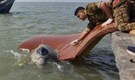
‘Beyond Reckless’: Drunk fishermen climb onto dead whale for photos as viral video triggers outrage
A viral clip showing drunk fishermen posing on a dead whale has sparked widespread outrage, raising questions about wildlife respect, hidden dangers of carcasses, and the growing impact of clout-driven behaviour online.
-
Sunita Williams visits IIT Delhi, reflects on what space taught her about life during her 27-year astronaut journey
After 27 years in space, Sunita Williams retires as she visits India, reflects on record missions, unexpected challenges in orbit, and how viewing Earth transformed her perspective on humanity.
-
Green Hydrogen explained: India’s bold step toward a carbon-free future
India is racing to scale green hydrogen, producing clean fuel from water using renewables, aiming to decarbonise industry, boost energy security and become a global clean-energy hub.
-
Sunita Williams meets Kalpana Chawla’s 90-year-old mother, hugs her and shares emotional memories
An emotional Delhi reunion between astronaut Sunita Williams and Kalpana Chawla’s mother blended space exploration memories, an extended ISS mission, and personal bonds that continue to shape India’s connection with space.
-
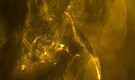
ESA's solar orbiter captured "magnetic avalanches" on the Sun, triggering powerful solar flares
ESA’s Solar Orbiter discovered cascading magnetic avalanches on the Sun, triggering powerful solar flares and particle storms, revealing hidden processes that could protect satellites and advance space science.
-
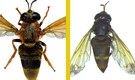
Scientists discovered two hidden rare ant-fly species in Delhi and Western Ghats
Scientists discovered two rare ant-fly species in India, hiding inside ant nests. Metadon ghorpadei was found in Delhi and Metadon reemeri was found in Western Ghats, highlighting hidden biodiversity and the urgent need to protect fragile habitats.
-
World Record: Haryana's Rohtash Khileri become first human to stay 24 hours without oxygen on Mount Elbrus
Indian mountaineer Rohtash Khileri sets a world record by surviving 24 hours on Mount Elbrus without oxygen, offering rare insights into human endurance science.
-
India’s next space move: To launch 52 new spy satellites sfter night-time blind spots exposed, says report
India is rushing to upgrade its spy satellites after night-time blind spots surfaced during a brief conflict, prompting new technology shifts, overseas stations plans and deeper questions about future space security.
-
One of the World’s largest Ganga–Brahmaputra deltas is sinking amid rising seas and human pressure
A vast Asian delta is quietly sinking beneath millions of people, scientists warn, and the danger is not just rising seas but what is happening underfoot across India and Bangladesh.
-
India is making its mark in clinical trials amid changing global landscape
Clinical trial activity has increased in India
-
Skyroot’s Vikram-1 stage 2 “Kalam-250” arrived at Sriharikota for maiden flight
Skyroot Aerospace’s Kalam‑250 rocket stage reaches Sriharikota, showcasing advanced propulsion technology, fueling India’s private space revolution, and paving the way for Vikram‑1’s historic orbital launch.
-
ESA’s new “Space Phone Line” can hear missions from millions of kilometers away
ESA’s New Norcia 3 antenna in Australia will track deep-space missions, send commands across millions of kilometres, and enhance Europe’s planetary exploration, scientific data collection and mission safety.
-
From fiction to reality: Chinese scientist creates real-life Harry Potter–like invisibility cloak
A Chinese scientist’s viral demonstration shows how simple optics can make body parts vanish, sparking global debate over whether real-world invisibility is science, illusion, or something in between.
-
A long-billed white-backed vulture released back into the wild in Maharashtra after its recovery
J132, a long-billed vulture rescued weak near Nashik, has been rehabilitated and released on 20th January at Anjaneri Reserve. This highlights India’s conservation success and scientific tracking of endangered birds.
-
Scientists reveal the secret behind one of the World’s most expensive and rarest 'elephant-poop coffee’s' unusually smooth taste
Scientists found elephant gut bacteria reduce coffee bitterness, explaining Black Ivory’s smooth taste. How digestion alters flavour, and what it means for future food science, is only beginning to unfold.
-
Largest solar storm in over 20 years lights up skies with rare auroras while disrupting signals worldwide
A rare solar storm, the strongest in over 20 years, disrupted signals and lit skies with vivid auroras worldwide, raising questions about the Sun’s growing intensity and its impact.
-
Scientists discovered 'plastic clouds' in China that can actually affect weather patterns
Scientists discovered massive microplastics forming plastic clouds over Chinese cities, raising concerns about human health, atmospheric pollution and climate impacts, revealing plastics are now part of the skies.
-
Meet Veronika: This Austrian cow just made scientific history with first documented tool use
Veronika, a cow from Austria, uses sticks to scratch herself, amazing scientists worldwide, going viral online and revealing surprising intelligence in cattle. This is something never officially recorded in cattle before.
-
A supermassive black hole reawakens after 100-million-years like a cosmic volcano in distant universe
Scientists observed a supermassive black hole awaken after 100 million years, launching plasma jets across a million light-years like a cosmic volcano, revealing secrets of dormant black hole behavior.
-
From spacewalks to marathon in orbit: A look back at Sunita Williams’ historic 608 days in space and 27-year astronaut career
After an unexpected nine-month mission, NASA legend Sunita Williams retires after 27 years, leaving behind 608 days in space, record spacewalks, and a legacy that reshaped human spaceflight.
-
NASA astronaut Sunita Williams retires after 27 years, with historic mission records from 608 days in space
NASA astronaut Sunita Williams retires after 27 years, completing 3 ISS missions. She spent more than 600 days in space performing historic spacewalks and inspiring millions through her remarkable journey from naval pilot to space commander.
-
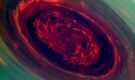
Polar storms on Jupiter and Saturn revealed about their hidden layers
Jupiter and Saturn have strikingly different polar storms. Scientists suggest these swirling vortices may reveal what lies deep inside the planets, offering a rare window into hidden gas giant interiors.
-
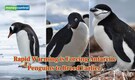
Antarctic Penguins are changing their breeding calendars — And it’s risky
Rapid warming is forcing some Antarctic penguin species to breed earlier. While this helps them survive, researchers warn it could disrupt food supply and threaten delicate ecosystems.
-
Low-calorie sugar breakthrough: Bacteria turn glucose into D-tagatose with minimal blood sugar spike
Unlike sucrose, D-tagatose delivers nearly the same sensory experience. It is about 92% as sweet as table sugar, yet provides only "one-third of the calories".
-
Global aurora alert issued after powerful G4 solar storm hits Earth, know which countries could see Northern Lights tonight
A rare solar storm is lighting skies far from the poles, thrilling observers while quietly threatening satellites, power grids, and navigation systems, as scientists track what happens next worldwide closely.
-
World's first hydrogen drone takes surveillance to a new level in Ukraine
Created in Ukraine, "Raybird" is the world’s first hydrogen-powered drone that flies silently and efficiently. Fuel-cell technology replaces batteries, proving how science is unlocking a new era of sustainable and long-endurance aviation.
-
A river in India flows backwards, breaking geographical rules, know where it is
While most Indian rivers rush east, the Narmada quietly moves west, shaped by ancient geology, sustaining farms, faith, and cities, and challenging what geography lessons long taught for generations today.
-
Indian scientists develop "PhotonSync" for long-distance Quantum communication
Indian scientists develop PhotonSync, turning ordinary telecom fibre into a phase-coherent quantum channel. It stabilises photons, enabling long-distance secure quantum communication and marking a breakthrough in India’s quantum research.
-
Meet Dhaval Laksmi: This rescued Olive Ridley turtle has travelled 1000 km since her release
Dhaval Lakshmi, a rehabilitated Olive Ridley turtle, has swum 1000 km in the Arabian Sea. Satellite tracking shows successful rewilding, active foraging and adaptation, marking a conservation milestone in Palghar.
-
What is below Earth when every direction leads into space?
What is “down” in the vastness of space? Scientists reveal how gravity, cosmic planes, and perspective redefine direction, showing that below Earth is not what you might expect.
-
Mars was once blue with vast oceans and rivers, scientists reveal
Scientists have traced ancient Martian shorelines inside a giant canyon, revealing where a vast ocean once stood and why these hidden coasts could hold clues to Mars’s lost, possibly habitable past.
-
300-year-old Black Coral discovered in New Zealand, which make it largest ever recorded
Scientists have discovered a 300-year-old giant black coral off New Zealand. Its massive size and age reveal hidden deep-sea ecosystems, highlighting urgent conservation needs and centuries of marine biodiversity waiting to be explored.
-
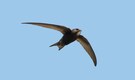
Living in clouds: Meet the bird that eats, sleeps and lives almost entirely in the sky for 10 months
A remarkable bird spends up to 10 months airborne, eating, sleeping, and even resting mid-flight, pushing biological limits and raising new questions about how life can thrive almost entirely in the sky.
-
Study finds "nanoscale silver coating" can protect solid-state batteries from cracks
Scientists discovered that a nanoscale layer of silver strengthens solid-state batteries. This breakthrough prevents cracks, improves durability and could revolutionise renewable energy storage globally.
-
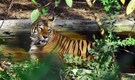
Kaziranga loses another tiger to infighting, marking third death in 5 months
A female tiger’s death inside Kaziranga highlights rising territorial clashes, as officials investigate repeated infighting incidents in India’s densest tiger reserve, raising questions about conservation challenges behind growing success.
-
Send your name to the Moon and be part of history as NASA’s Artemis II prepares for February launch
NASA’s Artemis II will carry astronauts around the Moon in February, but millions worldwide can also join the journey, sending their names aboard the spacecraft for a historic lunar flyby.
-
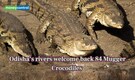
Crocodiles Comeback: Odisha’s rivers welcomed 84 crocodiles after conservation push
Similipal National Park records a rare rise in mugger crocodile numbers. The small increase signals improving ecosystem health, successful conservation and growing hope for India’s threatened freshwater predators.
-
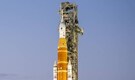
NASA’s Moon-bound Artemis II rocket arrived at launch pad in Florida
NASA’s Artemis II rocket has reached Launch Pad 39B in Florida, marking a critical milestone for the first crewed lunar flyby. Four astronauts will orbit the Moon in 2026.
-
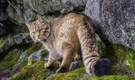
Europe’s Ghost Cat: Images captured of this rare and secretive forest predator
Rare photos reveal Europe’s “ghost cat,” the elusive wildcat thought nearly extinct. Rediscovered in 2020, these sightings highlight its survival, importance for science and the urgent need for conservation.
-
Do Dolphins really play with this poisonous fish to "get high"? Here's what science says
Dolphins play with toxic pufferfish, showing unusual behaviour. Science reveals curiosity, nervous system effects, and intentional experimentation, debunking myths about dolphins “getting high” like humans do.
-
India’s first Public-Private Earth Imaging Satellite could launch sooner than expected!
India is set to approve its first public-private Earth observation satellite project, allowing private companies to monitor climate, disasters, agriculture and national security using advanced space imaging technology developed and operated domestically.
-
Electricity Through Air? Finland scientists made electricity that flows in air without wires
Scientists in Finland transmitted electricity through air using sound waves, lasers, and radio frequencies, creating “acoustic wires” that could revolutionize homes, industry and IoT devices without plugs or traditional cables.
-
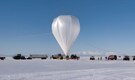
NASA's Balloon Campaign in Antarctica completed successfully, which is designed to search for "antimatter"
NASA completed its Antarctic balloon campaign using high-altitude balloons to study cosmic rays, anti-matter and high-energy particles, gathering critical data to complement satellites and advance astrophysics research globally.
-
European scientists opened the world's first Ice-core vault in Antarctica
European scientists opened the Ice Memory Sanctuary in Antarctica, preserving glacier ice cores to study past climate, track environmental change, and safeguard disappearing glaciers for future generations of researchers.
-
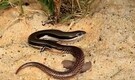
Meet the "armless reptile" hiding in Northern Australia who have a snake-like body shape
Scientists in Australia have discovered a rare new lizard species with no front arms and only back limbs, revealing how evolution shapes unusual bodies in hidden, remote ecosystems.
-
NASA's Hubble capture images of the "stars being born" in cosmic cradles
NASA’s Hubble telescope has captured rare images of newborn stars hidden inside dusty cosmic clouds, revealing how massive suns form, grow and shape the future of our galaxy.
-
Gaganyaan Delayed: ISRO withdraws support from Hawaii, after PSLV failure
India’s Gaganyaan mission may face a slight delay after ISRO withdrew a Hawaii ground-station request. Officials deny links to the PSLV failure, confirming the human spaceflight programme remains on track.
-
When the World’s driest desert suddenly turns into a "flower paradise"
Rare winter rains have transformed Chile’s Atacama Desert into a vibrant sea of wildflowers. Scientists explain how dormant seeds survive extreme dryness and bloom suddenly when unusual weather brings precious moisture.