


co-presented by
ASSOCIATE SPONSORS
co-presented by


ASSOCIATE SPONSORS




Jobs, an informal reference to the employment or occupation of individuals, is a key metric to assess the health of an economy. The demand for jobs cuts across both rural and urban regions. In the latter, the jobs that are in demand are a mix of white and blue-collar jobs, whereas, the countryside offers jobs that are mostly related to farm labour. The demand for jobs also reflects the prevalent rate of unemployment in a country. A high unemployment rate reflects an increased demand for jobs. According to the Centre for Monitoring Indian Economy (CMIE), the unemployment rate dropped to 6.57 percent in January 2022. This was the lowest since March 2021. The highest unemployment rate was recorded in Haryana, at 23.4 percent, as per the CMIE data for January, followed by 18.9 percent in Rajasthan. The lowest for the month was recorded in Telangana, at 0.7 percent. The lack of jobs, however, is not entirely encapsulated by the prevalent unemployment rate. The issue of underemployment also exists in an array of economies, where the highly educated individuals fail to secure jobs as per their calibre. By lack of jobs, the youth also refer to the lack of employment opportunities as per their calibre or in accordance to their wage expectations. More
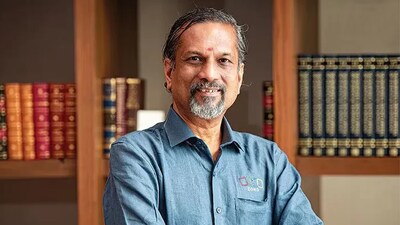
The Zoho co‑founder's response was prompted by a professor from the London School of Economics who argued for cautious, conviction‑based decision‑making especially at workplaces affected by AI.

Japan’s MinebeaMitsumi to invest Rs 1,980 crore in semiconductor and motors facility in Tiruvallur; Aequs Group commits Rs 4,000 crore for aerospace and defence complex in Krishnagiri

'The mentality of Indians who are just not ready to adjust, work without cutting corners, and finally get sadistic pleasure by making others miserable is draining me out,' the techie wrote.

Jad Tarifi, who earned his own PhD in AI in 2012, told the publication that young people risk 'throwing away' years of their lives pursuing degrees that cannot keep up with how quickly AI is advancing.

One wealth advisor said that although billionaires 'have the financial resources to support their children, but they sometimes struggle to determine what else is needed for their children to succeed.'

Yue Li has endured stormy weather, leaking roofs, high winds that prevent cooking, infrequent supply shipments, and even persistent rat infestations — one chewed through her toothpaste the day after she arrived. But for her, the trade-off is clear: 'I have sought my freedom and inner peace in this simple and harsh environment.'

A majority of professionals across generations said they respond to toxic work culture by quietly disengaging, with 39 percent of Gen Z and Gen X, 33 percent of Millennials, and 29 percent of Boomers choosing to step back rather than escalate issues.

Akshay Saini lives with his family in his hometown, Dehradun, and works a small but strong strong remote team. 'I spend time with my family. I live a slow life, and I genuinely enjoy my work,' he said.

'I did not disclose my pregnancy because there is no written rule on when you’re supposed to, and I did not think it necessary to share that information before they made an offer,' Komal Khemani, 35, said.

'If there is no restriction associated with the role, then the employees can deliver from anywhere. I want them to be the most productive they can be,' Ankkit Jain, director of sales at Matters.AI, said.

Anthropic co-founder Daniela Amodei believes the integration of AI into the workforce will make jobs more meaningful and productive, rather than eliminate them. She also acknowledged that technical skills such as coding may become less central as AI tools grow more capable, but said this shift does not diminish the importance of people.

Although the Yemeni journalist did not specify when the layoff took place, his post triggered a wave of reactions on X, with journalists and media workers drawing parallels with broader job cuts across the industry, including that at 'The Washington Post'.

For Aditya Agarwal, the moment is not just economic or technological, but deeply personal. 'If anything,' he said, 'this whole period is showing me what it is like to be human again.'

At 20, Lauryn Williams was earning six figures annually through sponsorship deals, including with Nike. But, she said a 20 percent cut taken by agents, along with taxes and short career spans, meant the income did not stretch as far as commonly believed.

FedEx CEO Raj Subramaniam, IIT Bombay alumnus, was hired as an associate analyst in Memphis 30 years ago. FedEx is the only company he has ever worked for.

The US Labor Department announced a delay in key jobs data due to a partial government shutdown. President Trump urged the House to quickly pass a spending bill to end it.

After losing her job, the 32-year-old had a difficult choice: find another role or try to build something of her own. She chose the latter. 'The choice, for me, was simple. I had to at least try to make a name for myself, doing what I loved most, which was helping dogs,' Isabel Klee said.

Hands-on exposure to frontier AI systems is critical for building a competitive talent base and training must begin early and cannot remain limited to postgraduate or specialised programmes, says the survey .

Rapid platform-led expansion has pushed gig work into more sectors, but low pay, income volatility and limited social security continue to shape the workforce, the Survey says.

The journey hasn’t been easy, Abi Caswell said. She often worked 18‑hour days in the early months, but she describes the shift as rewarding and energising.

After Yasuko Tamaki's story went viral, reactions on social media have been split between admiration for her stamina and concern about what the Guinness World Record she earned represents.

'I would set aside the day to help meet with an MBA student who has questions about my career and how I got here. Or a trainer who’s working somewhere who wants to open up their own place,' Joey Gonzalez said.

'I hated that my boss wouldn't let me leave before 5, even if I'd finished all my work,' New York-based entrepreneur Luisa Zhou said. Now, the 36-year-old works only four hours a day.

Kruthika Jayatheertha, a former senior user experience researcher at Microsoft in Bengaluru, also acknowledged that the decision was possible largely due to her family’s financial situation.

'I needed to secure a job within 60-90 days after graduation, or I would be forced to return to India,' Rishab Jolly said. 'I ran out of money, asked a friend if I could crash on their couch, and felt a constant sense of anxiety.'


