-
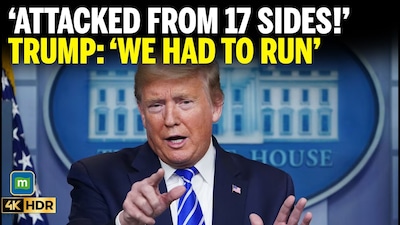
‘Attacked from 17 Directions’: Trump Says Ford Carrier Crew ‘Ran for Their Lives’
US President Donald Trump made a dramatic claim stating that a US aircraft carrier—believed to be the USS Gerald R. Ford—was attacked from “17 directions,” forcing personnel to “run to save their lives.”
The statement comes amid heightened tensions in the Middle East, with ongoing conflict involving Iran and US forces in the region. Trump described the situation as chaotic, saying “it was all over,” raising questions about the scale and intensity of the reported incident.
While details remain unclear, the remarks have sparked widespread attention and debate over security risks and military engagement in the region.
-

Rubio Says US ‘On Track’ in Iran War, Warns World Over Strait of Hormuz Threat
US Secretary of State Marco Rubio says Washington is “on or ahead of schedule” in its military operation against Iran, with objectives focused on crippling its missile, drone, air force, and naval capabilities. Speaking after G7 meetings, Rubio claimed the mission could conclude within weeks, not months, and stressed that no ground troops are needed.
He also issued a strong warning over the Strait of Hormuz, cautioning that any attempt by Iran to impose a “toll system” would be illegal and unacceptable. Rubio urged global powers to prepare a coordinated response to ensure free navigation through one of the world’s most critical energy routes.
-
Trump MOCKS MBS in Public? ‘Kissing My A*S’ Remark Sparks Storm Amid Middle East Crisis
US President Donald Trump has sparked controversy with remarks about Saudi Crown Prince Mohammed bin Salman during a discussion on the Middle East crisis. His comment, perceived by many as a sharp jibe, has triggered strong reactions online and in political circles.
The statement comes at a time of heightened tensions in the Middle East, with ongoing conflicts reshaping regional dynamics and alliances. Trump also spoke about expanding the Abraham Accords, suggesting more countries could join in the near future.
While some see the remark as typical blunt rhetoric, others view it as diplomatically sensitive given the strategic importance of US-Saudi relations. The moment has quickly gone viral, adding another layer of controversy to an already tense geopolitical situation.
-
Trump Claims Iran ‘Being Decimated’, Says Talks Underway for Deal
US President Donald Trump said that Iran is “being decimated” as tensions remain high, while also confirming that talks are now underway and Tehran wants to make a deal.
Speaking to reporters, Trump highlighted US military strength, calling it “the greatest in the world,” and suggested that ongoing pressure is forcing Iran toward negotiations.
The President also shifted focus to domestic issues, strongly criticising Democrats over immigration policies and claiming his administration has tightened border controls and deported large numbers of undocumented migrants.
-
Iran-US War Update: “No War” Starmer Rejects Iran Conflict, Announces £53M Support Plan
Keir Starmer has ruled out Britain joining a wider conflict with Iran, stating that the UK will not be drawn into war despite rising tensions.
-
US-Iran War Update: “We Didn’t Start This” Germany Rejects Trump’s Push for Action Against Iran
-
Netanyahu Responds To Fake Rumours, Shows He Is Alive
Israeli Prime Minister Benjamin Netanyahu posted a video on March 15 showing himself at a cafe on the outskirts of Jerusalem, joking about false online rumors claiming he was dead. The rumors, spread widely on Iranian state TV and social media, prompted Netanyahu’s aide to ask about them in the clip, to which Netanyahu responded with a Hebrew pun while reaching for coffee. Reuters verified the cafe’s location and the recording date using file imagery and corroborating photos and videos from the cafe. No earlier versions of the video were found online. Netanyahu has visited several sites targeted by Iranian missile strikes, but media access has been limited, with footage released only by his office. Rarely giving interviews, he held a video press conference on March 12, similar to a format used during Israel’s 12-day war with Iran. Emergency restrictions since February 28 have closed schools and limited public gatherings across the country.
-
Hormuz Strait Tensions: Why India’s LPG, CNG & Fertilizers Supplies Could Be Under Pressure
A new crisis may be brewing for India — not oil, but natural gas. With tensions in West Asia rising and disruptions near the Strait of Hormuz, LNG supplies and prices are under pressure. Could this impact LPG cylinders, CNG transport, fertilizers and industries in India? Here’s the full geopolitical and economic breakdown.
-
Iran Fires Missiles Across Middle East As Ships Hit In Gulf | Hormuz Crisis Deepens
Iran has launched fresh missile attacks across the Middle East, targeting Israel and locations linked to the United States as the conflict intensifies. Several merchant ships in the Gulf were also hit, raising concerns about maritime security.
The Strait of Hormuz remains disrupted, threatening one of the world’s most critical oil supply routes and fueling fears of a wider energy shock. Markets are closely watching whether the conflict could escalate further and impact global energy flows.
-
ON CAM: Iran ‘BURNS’ Two Israeli Hermes Drones; IRGC Mocks IDF | Watch
Iran says it has shot down two more Israeli Hermes 900 drone as the aerial battle between Iran and Israel intensifies.
Iranian officials claim the drones were intercepted over Lorestan Province and Qom, marking another round of UAV interceptions since hostilities began on February 28. Lorestan has reportedly seen the highest concentration of drone shoot-downs during the conflict, with multiple UAVs downed in a single day at the peak of fighting.
-
Why The U.S.-Israel War With Iran Is Driving Oil Prices Higher | Explained
The war between the United States, Israel and Iran has triggered sharp volatility in global oil markets. Prices surged to multi-year highs as fears grew over disruptions to energy supplies from the Middle East.
A key concern is the Strait of Hormuz, one of the world’s most important energy routes where around 16 million barrels of oil pass every day. Limited tanker movement through the strait and attacks on energy infrastructure have tightened supplies and pushed prices higher.
Analysts warn that if the conflict continues, the impact could spread across global supply chains, raising fuel prices, transportation costs and even food inflation.
-
IRAN UNLEASHES ‘HELLFIRE’ On Israel: 150 Cluster Warheads Fired | IDF Makes Big Admission
Iran’s Islamic Revolutionary Guard Corps claims it launched a massive missile barrage on Israel, firing up to 150 cluster-warhead projectiles toward multiple Israeli cities as tensions in the Middle East continue to escalate.
According to Iranian state-linked sources, the strike targeted key Israeli locations including Tel Aviv, triggering air-raid sirens and sending residents rushing to shelters. Iran described the attack as part of its ongoing military campaign against Israel.
-
What Is White Phosphorus? The Weapon Israel Is Accused Of Using
Human Rights Watch has accused Israel of using white phosphorus during an attack on a village in southern Lebanon. The rights group says it analysed images showing artillery shells dispersing the substance over residential buildings in Yohmor village.
-
U.S.-Iran War Intensifies; Trump Reveals Next Step, What Will Be His Next Target?
U.S. President Donald Trump spoke at the White House with the Inter Miami soccer team, outlining his foreign policy priorities. He said the United States aims to finish the conflict in Iran first before addressing Cuba, asserting that Cuba “wants to make a deal so badly.” Trump described Iran’s military as severely weakened, claiming that U.S. forces have destroyed a large portion of Tehran’s missiles, drones, navy, air force, and air defenses, with rapid retaliatory strikes neutralizing missile launchers within minutes. He said Iran had attempted to negotiate a deal but “a bit late,” emphasizing that the U.S. now seeks to fight harder. Trump also urged Iranian diplomats worldwide to request asylum and participate in shaping a “new and better Iran.” Regarding Venezuela, he praised acting President Delcy Rodríguez and said the situation had stabilized, noting that U.S.-imported Venezuelan oil was being refined and revenues returned. The Iranian mission to the UN declined to comment on these statements.
-
U.S. Gives India 30-Day Waiver To Purchase Russian Oil
United States Secretary of the Treasury Scott Bessent tweets, "... To enable oil to keep flowing into the global market, the Treasury Department is issuing a temporary 30-day waiver to allow Indian refiners to purchase Russian oil... India is an essential partner of the United States, and we fully anticipate that New Delhi will ramp up purchases of U.S. oil. This stop-gap measure will alleviate pressure caused by Iran’s attempt to take global energy hostage."
-
Trump Plans To Secure Strait Of Hormuz, Weighs U.S. Role Post Iran War: White House
White House Press Secretary Karoline Leavitt has stated that the United States is actively planning to secure the Strait of Hormuz to ensure safe passage for oil tankers amid rising tensions with Iran. While no timeline was provided, the Departments of Defense and Energy are coordinating closely and briefing President Donald Trump, with the U.S. Navy ready to escort tankers if needed. Leavitt clarified that deploying ground troops to Iran is not part of current plans, though military options remain on the table depending on developments. She denied reports that the administration is arming Kurdish forces to provoke an uprising in Iran, confirming only that Trump has communicated with regional partners, including Kurdish leaders in northern Iraq. U.S. intelligence is monitoring Iran’s leadership turmoil after Supreme Leader Ali Khamenei’s death, including reports of his son as a potential successor. Israeli intelligence influenced U.S.–Israeli strike timing, and the State Department is arranging evacuations for Americans in the region.
-
Putin Hints At Cutting Gas Supply To Europe, Eyes New Profitable Markets
Russian President Vladimir Putin suggested that Russia could consider halting gas supplies to European markets and redirecting energy exports to more promising and profitable markets. Speaking to Russian state TV reporter Pavel Zarubin, Putin described the idea as “thinking out loud” rather than a firm decision, but stated he would instruct the government to explore the option with Russian energy companies. He reaffirmed Russia’s reputation as a reliable energy supplier and stressed continued cooperation with dependable partners, specifically naming Slovakia and Hungary. The remarks come amid rising tensions over European reliance on Russian energy. Separately, the European Commission is planning to submit a legal proposal on April 15 to permanently ban Russian oil imports, just three days after Hungary’s parliamentary election. Putin indicated that opening up to alternative markets outside Europe could be more profitable, signaling a potential strategic pivot in Russia’s energy exports.
-
PM Modi Condemns Attacks on Qatar, Reaffirms Peace and Stability
Prime Minister Narendra Modi condemned recent attacks on Qatar and spoke with the Amir of Qatar, reaffirming India’s support for peace, stability, and dialogue amid escalating Middle East tensions.
-
“Too Late” for Talks: Trump Says Iran Military, Leadership Gone
US President Donald Trump declared Iran’s Air Force, Navy, and leadership including Supreme Leader Ali Khamenei eliminated following US-Israel strikes. The attacks triggered Iranian missile and drone retaliation, hit military and civilian sites, and caused disruptions at the Strait of Hormuz and Dubai airport, impacting global energy and travel.
-
Trump Unleashes 'Full Force' Operation Mode Against Iran, Warns Of More Casualties
Donald Trump announced that U.S. combat operations in Iran are continuing and will proceed until all of Washington’s objectives are fully achieved. In a video message posted on Truth Social on Sunday, March 1, Trump emphasized that military actions are ongoing “in full force,” signaling a sustained and determined campaign. He confirmed that three U.S. service members have been killed in the fighting and cautioned that additional casualties are likely as operations continue.
-
US-Israel Strike Wipes Out Iran’s Top Leadership Including Khamenei | Khamenei News
-
U.S.-Iran Conflict Will Have Huge Impact On Global Markets, Businesses, Supply Chain: Nalin Mehta
U.S. President Donald Trump has confirmed America’s involvement in military action against Iran, stating that the United States has initiated “major combat operations” in the country. Israel announced it carried out a “preemptive strike” on Iran after multiple explosions were reported in Tehran on Saturday. Nalin Mehta, Managing Editor, Moneycontrol is of the opinion that this new endgame between U.S. and Iran will have huge global impacts in terms of markets, businesses and supply chains. India will also be impacted out of this conflict as oil prices will surge, adds Mehta.
-
PM Modi In Israel: Modi & Netanyahu Seal Big Deals; PM Dedicates Knesset Honour to 140 Crore Indians
Israeli Prime Minister Benjamin Netanyahu praised Indian Prime Minister Narendra Modi, calling his government “amazingly efficient” during high-level talks that also saw the signing of multiple agreements between India and Israel.
Addressing PM Modi as “my friend Narendra,” Netanyahu highlighted India’s governance model and the rapid expansion of India–Israel cooperation across sectors such as innovation, agriculture, and technology.
-
‘Humanity Must Not Suffer’: PM Modi Backs Gaza Peace Plan With Netanyahu at His Side
Indian Prime Minister Narendra Modi delivered a strong humanitarian message as he voiced India’s support for a Gaza peace plan during a joint press conference with Israeli Prime Minister Benjamin Netanyahu.
Stressing that “humanity must never become a victim of conflict,” Modi reaffirmed India’s commitment to peace, dialogue, and stability while also underscoring the importance of long-standing India–Israel strategic ties.
-
PM Modi Embarks On 2-Day Israel Tour, Knesset Illuminated In Tricolour
Prime Minister Narendra Modi left New Delhi on Wednesday for a two-day visit to Israel, where he will meet Prime Minister Benjamin Netanyahu and President Isaac Herzog. The visit aims to review and strengthen the India-Israel Strategic Partnership, highlighting progress in areas such as science and technology, innovation, defence, security, agriculture, water management, trade, and people-to-people exchanges. The leaders will also discuss regional and global issues of mutual interest, reaffirming the long-standing cooperation between the two resilient democracies. Israeli Prime Minister Netanyahu described Modi’s visit as “historic,” noting the growing strategic alignment and calling Modi a “dear friend.” In a symbolic gesture, the Knesset was illuminated in the colors of the Indian flag to mark the occasion. The visit is expected to deepen bilateral ties, realign collaborative efforts, and enhance shared vision for strategic, economic, and cultural cooperation between India and Israel.
-
Trump Reveals 'Untold Story'; Stopped India-Pakistan Nuclear War? Saved Pak PM's Life!
In his 2026 State of the Union Address, President Donald Trump claimed that during his first 10 months back in office, he ended eight wars worldwide. He said his intervention prevented a catastrophic conflict between India and Pakistan, which could have escalated into a nuclear war. Trump asserted that the Pakistani Prime Minister personally told him that 35 million lives would have been lost without his involvement. He also claimed that his actions directly saved the life of Pakistan’s leader. Trump framed this as a major foreign policy achievement, highlighting his role in global conflict prevention.
-
“FIFA, GO HOME!” Mexicans Kick ‘Trump’s Head’ in World Cup Protest
World News | Activists staged a football tournament in Mexico City’s Zócalo as a form of protest against what they called the “World Cup of dispossession.”
Footage shows participants playing football with balls covered in masks of Donald Trump, alongside slogans reading “dispossession,” “resistance,” and “FIFA go home.”
-
“We Will Not Back Down” — Macron, Stubb Step Up Ukraine Support
World News | French President Emmanuel Macron welcomed Finnish President Alexander Stubb to the Élysée Palace as Ukraine marked four years since the start of the war with Russia.
Macron reaffirmed France’s commitment to implementing the European Union’s €90 billion loan package for Ukraine, with €60 billion earmarked for military equipment and strengthening the defence industry in Ukraine and Europe. He also pledged increased pressure on Russia through EU sanctions and a proposed maritime blockade on Russian oil.
-
EU Rejects Higher US Tariffs After Supreme Court Ruling | Trump Tariffs
The European Commission has urged the United States to honor the existing EU US trade agreement after the US Supreme Court struck down former President Donald Trump’s global tariffs. Following the ruling, Trump announced new temporary tariffs, raising them to 15 percent. Brussels said EU exports must not face duties beyond the previously agreed ceiling and called for clarity from Washington, warning that tariff uncertainty disrupts global markets and transatlantic trade.
-
Pope Leo Calls For Immediate Ceasefire In Ukraine
Pope Leo issued a strong appeal for an immediate ceasefire in the Ukraine conflict, warning that war leaves a “trail of pain that marks generations.”
-
Trump Hikes Global Tariffs To 15% From 10%, To Announce New Levies Soon
Donald Trump announced that the United States will immediately raise its worldwide tariff rate from 10% to 15%, calling the new level “legally tested.” His decision follows a 6–3 ruling by the Supreme Court of the United States that struck down his earlier sweeping tariffs, saying he had exceeded his authority. Chief Justice John Roberts wrote that the International Emergency Economic Powers Act does not authorize the imposition of such duties. Trump strongly criticized the verdict on Truth Social and vowed to continue pursuing new, legally permissible tariffs. The move affects countries worldwide, including India. After the court ruling, Indian imports were set to face a reduced 10% tariff, down from 18% under a recent US–India interim trade framework. With the new announcement, Indian goods will now be subject to a 15% tariff, adding fresh uncertainty to global trade relations.
-
Trump Announces New 10% Global Tariff; Invokes Sections 122, 232 And 301 | Explained
President Donald Trump announced plans to restore tariffs after the Supreme Court struck down much of his previous trade measures. He said he would use Section 122 of the Trade Act of 1974 to impose a 10% global tariff, aimed at addressing trade imbalances, while continuing to use Section 301 to investigate “unfair” foreign trade practices, which could trigger additional tariffs. Trump emphasized that existing national security tariffs under Section 232, such as 25% on steel and 10% on aluminum, remain in place. The Supreme Court ruling creates uncertainty for U.S. trade agreements with countries like China, Canada, and the UK, potentially prompting renegotiations or legal challenges. Section 122 allows temporary tariffs for balance-of-payments deficits, Section 232 targets imports that threaten national security, and Section 301 addresses intellectual property theft and anticompetitive practices. Trump’s actions signal a continued aggressive approach to protecting U.S. economic interests, while international partners reassess their trade strategies.
-
US Supreme Court Rejects Trump Global Tariffs, Rules Emergency Powers Were Exceeded
The Supreme Court of the United States has struck down global tariffs imposed by U.S. President Donald Trump under emergency authority, ruling that the move went beyond presidential powers. In a 6–3 decision, the court said tariff authority rests with Congress and requires clear legislative approval. The case followed legal challenges by businesses and multiple states, and the ruling could affect tariff collections and future U.S. trade actions.
-
Trump Asks Pakistan PM To Stand Up Mentioning PM Modi, Sharif Complies
At the first meeting of his Board of Peace on February 19 in Washington, U.S. President Donald Trump emphasized international cooperation on major global conflicts. He asked Pakistani Prime Minister Sharif to stand and noted that Indian Prime Minister Narendra Modi was watching, highlighting the importance of Pakistan-India relations. Trump announced that nations had contributed $7 billion to a Gaza reconstruction fund, intended to rebuild the enclave once Hamas disarms and Israeli troops withdraw.
-
US Iran War Update: US Military Buildup in Middle East | Trump Prepares for Strike Soon? | Explained
-
Explained: Why Hindu & Buddhist Ministers in Bangladesh Cabinet Matter
angladesh has a new government under Prime Minister Tarique Rahman, and for the first time in decades, the Cabinet includes minority leaders.
Nitai Roy Chowdhury, a prominent Hindu politician, has been appointed Minister of Cultural Affairs, while Dipen Dewan, a Buddhist Chakma leader, is now Minister for Chittagong Hill Tracts Affairs.These appointments come amid rising communal violence and attacks on minority communities. Analysts say including Hindu and Buddhist ministers sends a message of inclusion and reassurance, both domestically and internationally.
-
Tarique Rahman Sworn In as Bangladesh PM After Landslide Win, Opposition Protests Erupt
-
U.S-Iran Deal: Rubio Says 'We’ll Try'- But What Happens If Talks Fail?
U.S. Secretary of State Marco Rubio expressed cautious optimism about reaching a nuclear deal with Iran, despite acknowledging that previous attempts have failed. Speaking at a news conference in Bratislava, Rubio said the U.S. would try to negotiate a successful agreement. An Iranian diplomat confirmed that Tehran is pursuing a nuclear deal with Washington that would deliver economic benefits for both sides, ahead of a second round of talks. The renewed negotiations aim to resolve the decades-long dispute over Iran’s nuclear program and prevent a potential military confrontation. In response to rising tensions, the U.S. has deployed a second aircraft carrier to the region and is preparing for a possible sustained military campaign if diplomacy fails. Rubio emphasized that President Donald Trump favors a negotiated settlement but acknowledged that a deal may not materialize. Iran, which has previously threatened U.S. bases, took a conciliatory tone in recent statements.
-
Iran Says Ready For Nuclear Compromise If US Lifts Sanctions | US-Iran Nuclear Talks Geneva
Iran and the United States are entering the second round of indirect nuclear talks in Geneva after no breakthrough in Muscat.Tehran signals conditional flexibility, including potential dilution of its 60% enriched uranium stockpile, but rejects zero enrichment. The U.S., led by envoy Steve Witkoff, prefers a negotiated deal while increasing military readiness. Israel and Trump have also signaled key positions. Stay tuned for the latest updates on the Iran-US nuclear negotiations.
-
Live: Davos 2026 Day 4 Highlights | AI, TRUMP, INDIA INSIGHTS & Global CEO Voices
Live highlights from Davos 2026 Day 4: At Davos 2026, Moneycontrol brings you exclusive interviews and highlights: Trump delivers his speech at Davos, Union Minister Ashwini Vaishnaw shares India’s AI strategy ahead of the India AI Impact Summit, Rishi Kapoor, VC & CIO of Invescorp, talks about India’s investment opportunities and sectoral trends, Kim Baroudy, McKinsey’s Global Head of Tech in Asia, discusses AI and tech investments in Europe and Asia, and Rajan Bharti Mittal, Vice Chairman of Bharti Enterprises, on India’s role in the global economy, telecom growth, and investment potential.
-
Trump Hints at Big India-US Trade Deal | Moneycontrol MEGA Exclusive
MEGA EXCLUSIVE: US President Donald Trump spoke to Moneycontrol at Davos 2026, expressing optimism about India-US trade relations. Praising Prime Minister Narendra Modi as a friend, Trump signaled that a positive bilateral trade deal is on the horizon, even as negotiations over tariffs, market access, energy, and agricultural trade continue.
-
Live: Davos 2026 Day 3 Highlights | AI, India Deals & Global CEO Voices
Live highlights from Davos 2026 Day 3: Global leaders unite as Macron responds to Trump’s Greenland ambition, top Indian CEOs share insights on AI, industry, and growth. Featuring Rajiv Memani (EY India), Shashwat Goenka (RPSG), Yezdi Nagporewalla (KPMG India), Parth Jindal (JSW Cement, MG Motor). Plus Ericsson job cuts, telecom tariffs, industrial AI, data center boom, and India’s future role.
-
Live: Davos 2026 Day 2 Highlights | AI, India Deals & Global CEO Voices
Day 2 LIVE from Davos 2026 brings insights from top global leaders. PwC Global Chair Mohamed Kande and PwC India Chair Sanjeev Krishan discuss CEO uncertainty amid geopolitical turmoil and AI-driven productivity. Cerebras CEO Andrew Feldman says AI is spreading across the economy and “not a bubble,” while HCLTech CEO C Vijayakumar warns IT must reinvent itself to remain a major job engine. Maharashtra CM Devendra Fadnavis highlights MoUs worth ₹16 lakh crore, alongside key perspectives from global and Indian leaders shaping the future of growth, technology, and partnerships.
-
Live: Davos 2026 | Day 1 Highlights of World Economic Forum with Top Global Voices
Moneycontrol brings you live from Davos 2026! Day 1 of the World Economic Forum featured top global voices: Dr Andrew Ng on AI innovation, Nick Tzitzon on trusted enterprise AI platforms, Sir Martin Sorrell on Modi, Trump & US-centric geopolitics, and Matthew Blake on the global economy, the US dollar, and digital finance. Stay tuned for live updates from the WEF.
-
Trump Warns Iran at UN: 'All Options on the Table' as Protests Rage
BREAKING: The U.S. has issued a stark warning at the United Nations as protests continue across Iran. Ambassador Mike Waltz says President Trump stands with the Iranian people and that “all options are on the table” to stop the violence—raising global tensions and fears of escalation.
-
Iran Erupts — But the Opposition Is Tearing Itself Apart | Opposition Divided as Iran Burns
Mass protests in Iran have energized opposition groups abroad—but a long-standing split between monarchists backing Reza Pahlavi and the Mujahedin-e Khalq raises questions about unity, leadership, and what comes after the Islamic Republic.
-
Nifty Reclaims 25,700 Amid Expiry Day Volatility| Banks Back In Green| Closing Bell Live
Catch Nandita Khemka in conversation with Sandip Agarwal, Fund Manager, Sowilo Investment Managers and Osho Krishan, Sr. Analyst, Technical & Derivative Research, Angel One Ltd
-
'Bring this nightmare to an end' - US to Russia at UN on Ukraine
The U.N. Security Council warns that Russia has escalated attacks on Ukraine’s energy infrastructure, leaving millions without heat, electricity, or water during a harsh winter freeze.
U.N. officials say Russian strikes are disproportionately affecting children, the elderly, and vulnerable civilians, while the use of a nuclear-capable Oreshnik missile near Poland signals a dangerous escalation.
Ukraine and its European allies condemn the strikes as deliberate attacks on civilians, while Russia insists it targets military infrastructure. The humanitarian crisis continues to deepen as temperatures plunge below minus 20°C, with citizens forced to melt snow for water and heat homes over candles.
-
Iran Protests Explained: Unrest Spreads to 100+ Cities, Calls for Regime Change
Iran is facing unprecedented nationwide protests, spreading to over 100 cities as citizens voice anger over soaring prices, shortages, and political restrictions. What began as economic unrest in Tehran’s Grand Bazaar has grown into a broader anti-government movement, with calls for regime change gaining momentum.
Reports indicate over 340 demonstrations so far, with at least 38 people killed and more than 2,200 arrested. Iran’s economy is in crisis, with the rial plunging beyond 1.4 million per U.S. dollar and inflation nearing 40%. UN sanctions, combined with Western pressure, have further strained the economy, while the government’s political and social authority faces mounting challenges.
The protests highlight deep political frustration, weakened regional influence, and ongoing concerns over Iran’s nuclear program. Watch to understand why Iran is protesting, the economic crisis, political tension, and the growing calls for change.
#IranProtests #IranUnrest #RegimeChange #MiddleEastNews #IranEconomy #GlobalPolitics #BreakingNews #TehranProtests #InflationCrisis #USForeignPolicy
-
Live: Will Nifty reclaim 26,000-mark amid record low inflation in Oct? | Opening Bell
The Nifty extended its rally for the third straight session, ending near the day’s high with a gain of 180 points after a strong gap-up opening. Asian Paints, Adani Enterprises, and Tech Mahindra led the gains, while Tata Motors, Tata Steel, and Shriram Finance witnessed profit-taking. Sectorally, IT, Auto, and Pharma outperformed, whereas Metal and Realty indices lagged behind. Broader markets moved in tandem, with both the Midcap and Smallcap indices rising 0.8%. Optimism over a potential US trade deal and exit polls indicating an NDA win in Bihar lifted sentiment, even as investors turned their focus to key global data and upcoming Q2 results from major companies. Catch Lovisha Darad in conversation with Chandan Taparia, Senior Vice President, Head - Derivatives & Technical Research , Motilal Oswal and Karan Aggarwal, Co-founder & CIO, Elever.