In 2005, when India was reeling under the Tsunami onslaught, Lancet, the weekly peer-reviewed general medical journal, among the world's oldest and the best, observed pithily: “The Tsunami,” it said, “has brought to the fore a less visible side of India's much-maligned health-care system. The crisis managers in the health ministry mobilized several networks from within the government and its success in averting epidemics until now is largely due to the collaborative spirit in which government and private doctors have worked.”
For far too long, government agencies, the health bureaucracy in India and the disempowered municipal corporations assigned with tackling urban primary health, have been the subject of much derision by pundits and the laity alike for their sloth and general indifference. The daily media diet of their follies and foibles, endless tales of work shirking, subterfuge and corruption, are enough to drive everyone, except the most incurable optimist, up the wall.
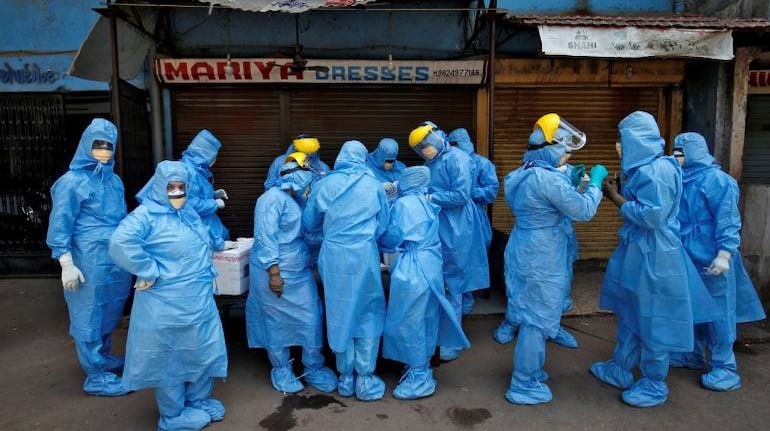
Three weeks into the lockdown and a general fear of the unknown that has come to grip the country, it is this class of health volunteers and workers (euphemistically referred to as health warriors in broadcast media these days) that are putting up a stoic resistance against the seemingly unstoppable coronavirus.
India’s total health workforce of over 4 million (according to 2016 NSS data) and its 205 municipalities, emasculated as many of them are, are proving – if any proof was indeed required - that privatisation may not be the panacea to all ills. Add to it about 77,000 MBBS students, 1.7 million nurses and roughly 57,000 final year nursing students, many of whom have been drafted for emergency duties.
The government is at the forefront of fighting the pandemic with little sign of private medical honchos who like to wax eloquent before the electronic media on most subjects, except when it matters the most.
India currently has more or less adequate number of healthcare professionals, but their distribution across the country is lopsided. According to a 2019 study, although the overall size of health workers’ population in India is smaller than that of many developed countries, these numbers are close to the World Health Organisation’s (WHO) minimum threshold of 22.8 doctors and nurses per 10,000 population.
Dearth of doctors
However, there remain serious problems related to their distribution across states and rural-urban settings, the study conducted by researchers from the Indian Institute of Public Health (IIPH), Gurugram, pointed out.
“The bulk of doctors and nurses are located in major cities, leaving a significant gap in rural areas and in poor states,” wrote the IIPH researchers led by Anup Karan in a paper published in British Medical Journal, BMJ Open.
Despite 70 percent of the country being predominantly rural, the proportion of doctors and nurses in rural areas is 34 percent and 33 percent, respectively, the study noted. More than 80 percent doctors and 70 percent paramedics work in the private sector, which makes collaboration between them and government medics mandatory. Sadly, this partnership made a slow and uncertain start in India this year when news from Wuhan, China, first came in.
The researchers used the 2016 NSS data as well as national registries of professional practitioners till 2015 to arrive at their numbers.
Healthcare services are offered by a varied range of professionals trained in different specialties of medicine and healthcare. The entire health workforce includes many informal medical practitioners, with or without any formal education or skills training. They are often the first point of contact for treatment for a large proportion of population living in rural and remote areas and in this fight against coronavirus such practitioners have played a vital role.
The density of health professionals is highest in Kerala and Delhi at 52.7 and 49.9 (per 10,000), respectively. The number of doctors is highest in Delhi with 34.4 per 10,000 people, followed by Maharashtra (19.7) and Chhattisgarh (18.3). The lowest density of physicians and surgeons is in Assam and Himachal Pradesh at a lowly 1.8 and 1.9 per 10,000 people.
Unlike higher-level health care, primary care is by law a municipal government obligation in India, observes Radhika Gore in `Market Reform, Medical Care, and Public Service: Dilemmas of Municipal Primary Care Provision in Urban India’, her PhD thesis at Columbia University.
While there is no estimate of the number of municipal doctors in India - municipalities being a state subject with no known collation of figures at the central level - Gore in her estimated proportions of medics - municipal, other public sector, qualified private and unqualified private doctors in Pune of 2013 - reveals that municipal doctors constituted the tiniest percentage. It is an average that would well apply to the rest of the country.
Gore demonstrated that municipal doctors face multiple challenges: “a legal obligation to deliver urban primary care from within an outdated urban governance structure; a largely unregulated private sector that residents widely prefer and rising commercialisation in medical practice, under which specialised medicine has crowded out primary care in popular ideas about `good’ medical care.”
Trying conditions
Yet the onus to take the battle into the COVID-19 camp lies precisely with these primary health centres, which work under extremely trying conditions. For instance, earlier this month, a group of doctors and nurses working on contract at a municipal hospital in Delhi were warned of action after many of them refused to apply for their renewal allegedly over defective personal protective equipment or PPEs. The administration of the Hindu Rao Hospital, which comes under the North Delhi Municipal Corporation, has said that the resignation letters of doctors and nurses will not be accepted and they will face disciplinary action.
But owing to the rapid rise of COVID-19 cases across the country, state health departments and large and small municipalities are coming up with strict surveillance mechanisms to ensure that those quarantined adhere to the norms and stay at home. Health surveillance in this context seems to be taking multiple forms — a mixture of human intelligence and technology.
In Kerala, which is being held as a case study to fight the pandemic, contact tracing of COVID-19 patients involved `virus detectives’. In other words, ground-level human workers have gone door to door tracing the movements of positive patients, besides using CCTV footages for clues. When reports of the first student who returned from Wuhan emerged in Kerala in the last week of January, the state government moved fast; it had already put in place a strategy to isolate people who showed symptoms in hospitals, trace their contacts and put them in home quarantine. Twelve teams that included medical workers, police and volunteers worked for days to prepare the travel path of families that had returned from abroad using GPS data from their phones, eventually tracing more than 4,000 people who were then placed under observation and quarantine, many of them Kerala students studying in China.
In states like UP, Karnataka and MP, similar exercises have led to violent physical attacks on health workers. At least in one case, basic information requested for by a volunteer was misconstrued as data being collected for purposes of filling in a National Population Register (NPR) form, revealing the extreme odds that the workers and volunteers are working against.
Murderous attacks on health workers, who are diligently trying to collate information that is critical in fighting the virus, reveals that these volunteers, for a relatively small sum of money, are risking their very lives. Strangely, despite the public outrage, the attacks are continuing as a matter of pattern.
The tracking of coronavirus positive cases is taking other forms. In Maharashtra and Karnataka, large municipalities like the Brihanmumbai Municipal Corporation (BMC) and the Bruhat Bengaluru Mahanagara Palike (BBMP) are deploying technology, including smartphone apps with geo-tagging features to ensure strict observance of home quarantine. In these states and metros, the apps are under development, or in some cases, already in use.
Ranjit Bhushan is an independent journalist and former Nehru Fellow at Jamia Millia University. In a career spanning more than three decades, he has worked with Outlook, The Times of India, The Indian Express, the Press Trust of India, Associated Press, Financial Chronicle, and DNA.
Discover the latest Business News, Sensex, and Nifty updates. Obtain Personal Finance insights, tax queries, and expert opinions on Moneycontrol or download the Moneycontrol App to stay updated!
Find the best of Al News in one place, specially curated for you every weekend.
Stay on top of the latest tech trends and biggest startup news.