-
NCERT may remove controversial portion on judiciary from class 8 textbook, say sources
A three-judge bench comprising Chief Justice of India Surya Kant and Justices Joymalya Bagchi and Vipul M Pancholi has taken suo motu cognisance of the ”objectionable” statements about the judiciary in NCERT textbooks
-

OPINION | Balancing Faith and Equality: How the review of Sabarimala case will influence Indian secularism’s character
In April, a nine-judge bench will hear a review of the 2018 Sabarimala verdict that deemed as unconstitutional the prohibition of entry of women in their “menstruating years” into the temple. But at stake are questions that extend well beyond this temple or even a single religion
-
'Licenses to do absolutely terrible things': Trump launches fresh attack on US Supreme Court over tariff ruling
President Donald Trump criticised the Supreme Court, saying its recent ruling unintentionally expanded his authority on tariffs and licensing, while warning of future decisions he believes could harm US interests.
-
Rupee rises 18 paise to 90.76 as dollar dips after US Supreme Court scraps Trump tariffs
The currency rose after the US Supreme Court struck down tariffs imposed by President Donald Trump, who subsequently slapped a 15% tariff on all trading partners
-
Trump retains tariff powers through alternative laws: Here’s what he plans
President Donald Trump can still impose tariffs despite the Supreme Court striking down his emergency powers, using Section 301, 122, 232, and potentially Depression-era Section 338 authorities, according to experts.
-
Trump accuses Supreme Court of being 'swayed by foreign interests' after tariff ruling
US President Donald Trump accused the Supreme Court of being influenced by “foreign interests” after it struck down his authority to impose sweeping global tariffs under the International Emergency Economic Powers Act.
-
Will Court’s ruling on Trump’s tariffs trigger trade and election-year turmoil?
The Supreme Court blocked President Trump’s emergency tariffs, ruling he exceeded authority, raising questions over trade stability and potential economic fallout ahead of the election, as Democrats and Republicans weigh political implications.
-
Supreme Court strikes down Trump’s tariffs: What this means for over $150 billion in potential refunds
The Supreme Court struck down Trump’s emergency tariffs under IEEPA, putting $175 billion in collections at risk of refunds, while Treasury plans for reimbursement and alternative tariff measures.
-
Uttar Pradesh government cites Supreme Court ruling 'no loudspeakers during night hours' to clarify mosque announcements for Ramzan
Referring to the tradition of mosque announcements for ‘sehri’ and ‘iftar’, Khanna said the practice originated when clocks were not common and people estimated time by the position of the sun
-
Vikram Bhatt, wife Shwetambari Bhatt get relief as SC allows regular bail in alleged Rajasthan fraud case
The Supreme Court of India granted regular bail to Vikram Bhatt and Shwetambari Bhatt in a fraud case filed by Rajasthan Police, offering temporary relief amid financial misappropriation allegations.
-
'Bad message' to society if celebrities allowed to use 'voiceless victims': SC in snake venom case
YouTuber Elvish Yadav was arrested for the alleged use of snake venom at a rave party in Noida.
-
SC spectrum ruling hits recoveries for banks, but the real damage is on lending to telcos
The real damage from SC’s ruling on spectrum is not recoveries but the caution on lending to telcos now
-
SC flags 'alarming' trend of lawyers using AI to draft petitions
A Bench led by Chief Justice of India (CJI) Surya Kant expressed grave concern over the growing use of AI in court filings without proper authentication.
-
SC flags 'alarming' trend of lawyers using AI to draft petitions
The Court’s observations form part of broader concerns within the judiciary on how artificial intelligence was beginning to shape legal work.
-
SC declines plea on 'constitutional morality', suggests broader code: 'Don't target select individuals'
The plea alleged discriminatory remarks by Assam Chief Minister Himanta Biswa Sarma and Uttar Pradesh Chief Minister Yogi Adityanath.
-
Supreme Court declines Abu Salem's plea against 'illegal custody': 'Sentence not for not doing something good to society'
Abu Salem’s counsel argued that he had completed the 25-year incarceration period when remission earned for good conduct was factored in.
-
Supreme Court refers data protection law amendment of RTI Act challenge to larger bench: 'No question of stay'
Central to the dispute is Section 44(3) of the DPDP Act, which amends Section 8(1)(j) of the RTI Act under which personal information could be disclosed if it bore a relationship to public activity or was justified by a larger public interest.
-
'Most have tariff cards for bribes': Mohandas Pai rebuts Shamika Ravi after Supreme Court says ‘better abolish’ RERA
"Except facilitating the builders in default, this institution is doing nothing. Better abolish this institution, we don't mind that," CJI Surya Kant made scathing remarks on RERA on Thursday.
-
SC raps Neeraj Pandey on 'Ghooskhor Pandat': You can't denigrate section of society by such title
You cannot denigrate a section of society by using such a title, the Supreme Court remarked on Thursday while rapping filmmaker Neeraj Pandey on his film 'Ghooskhor Pandat'.
-
Dargah approaches Supreme Court over Shivaratri Puja bid, alleges pattern to alter religious character
The shrine at the centre of the controversy is linked to 14th century Sufi saint Hazrat Shaikh Alauddin Ansari, also called Ladle Mashaik, as well as 15th-century Hindu saint Raghava Chaitanya.
-
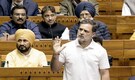
Supreme Court refuses to order disclosure of LoP Rahul Gandhi’s dissent on CIC appointments
The bench led by CJI Kant said that the limited purpose of the case was to ensure that vacant posts were filled, not to scrutinise the internal deliberations of the selection committee.
-
Supreme Court's Tiger Global verdict triggers tax probe into treaty benefits claimed by overseas PE, VC funds
Over the past two weeks, notices have been issued to at least seven foreign venture capital and private equity funds.
-
‘Completely fit and well’: Imran Khan’s lawyer confirms health after top court grants jail meeting
Imran Khan’s lawyer Salman Safdar met him in Adiala Jail after Supreme Court orders, said he was fit, and will submit a report limited to Khan’s living conditions soon there.
-
'Problem is part of election is fought in Supreme Court': CJI on plea against Himanta Sarma's gun video
The post, shared of February 7, was deleted by the BJP after it received widespread outrage and condemnation.
-
Supreme Court to states: 'Won't let SIR be stalled, or genuine voters left out'
The apex court, however, categorically stated that it was open to suggestions to ensure genuine voters are not left out of the process. The bench also allowed the deadline for scrutiny of documents to be extended by a week in West Bengal.